Many patients come into our Burnaby clinic believing that 20/20 vision means “perfect eyesight.”
It doesn’t.
Others worry when they hear terms like 20/40 vision prescription or 20/200 vision prescription and assume something is seriously wrong. Some even ask whether they have the worst eye prescription their optometrist has ever seen.
The reality is that these numbers are often misunderstood.
Understanding what 20/20 vision mean can help you better interpret eye exam results, recognize changes in your vision, and know when it’s time to see an eye care professional.
At Real Eyes Optometry, one of the most common questions we hear during an eye exam in Burnaby is:
“My vision is 20/20 now, but does that mean my eyes are healthy?”
The answer may surprise you.
In This Guide
You’ll learn:
- What does 20 20 vision mean
- How a visual acuity test works
- What 20/40 vision means
- What 20/200 vision means
- Whether 20/20 vision is considered perfect eyesight
- How prescription strength differs from visual acuity
- When changes in vision warrant an eye exam
Quick Answer: What Does 20/20 Vision Mean?
20/20 vision means you can see at 20 feet what a person with standard visual acuity can see at 20 feet. It’s a measurement of visual clarity, not overall eye health. Someone with 20/20 vision may still have:
- Dry eye disease
- Cataracts
- Retinal disease
- Eye strain
- Color vision deficiencies
- Glaucoma
- Peripheral vision loss

Medically Reviewed by Dr. Amit Sahota, Registered Optometrist (BSc, OD)
July 25, 2026
What Does 20/20 Vision Mean Compared to Perfect Vision?
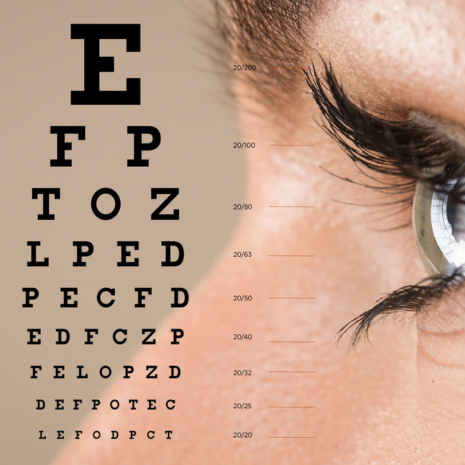
One of the biggest misconceptions about 20/20 vision is that it represents perfect eyesight. It does not. Visual acuity measures only one aspect of vision.
A person may have:
- Excellent distance vision
- Poor night vision
- Reduced peripheral awareness
- Difficulty with depth perception
- Eye coordination problems
- Early eye disease
In other words, 20/20 vision measures clarity, not the complete performance or health of your visual system. This is why comprehensive eye exams remain important even if you can read the smallest line on an eye chart.
At a Glance: Understanding Common Vision Measurements
| Vision Level | What It Means | Daily Impact |
|---|---|---|
| 20/15 | Better than average visual acuity | Can see finer detail than most people |
| 20/20 | Standard visual acuity | Clear distance vision |
| 20/30 | Slightly reduced clarity | Often manageable without noticeable issues |
| 20/40 | Moderate reduction in clarity | Road signs and distant objects may appear blurry |
| 20/70 | Significant visual blur | Daily activities become more difficult |
| 20/200 | Severe vision impairment | Meets legal blindness criteria in many situations |
Given these examples, let’s dive into what each of the two numbers means on an eye exam:
The First Number
The first number represents the distance from which you are being tested.
In North America, visual acuity is typically measured at 20 feet.
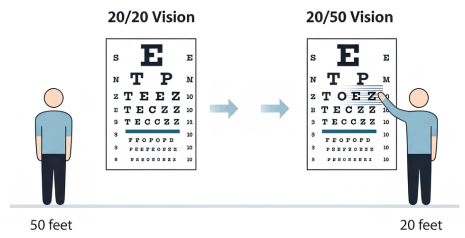
The Second Number
The second number represents the distance at which someone with standard vision can see the same object.
For example:
- 20/20: You see at 20 feet what most people see at 20 feet.
- 20/40: You must be 20 feet away to see what someone else can see from 40 feet away.
- 20/200: You must be 20 feet away to see what someone else can see from 200 feet away.
The larger the second number, the poorer the visual acuity
For someone with a 20/40 vision prescription, this means:
- Objects at a distance appear less sharp
- Street signs may become difficult to read
- Driving may feel more challenging, especially at night
- You may squint more frequently
For Someone With 20/200 Vision This Means
A 20/200 vision prescription often causes understandable concern, they can see at 20 feet what a person with standard vision can see at 200 feet; however, this level of vision is considered significantly impaired.
In many jurisdictions, including Canada and the United States, 20/200 visual acuity is one of the criteria used when determining legal blindness.
Two people with identical visual acuity may have very different underlying causes, including:
- Severe nearsightedness
- Cataracts
- Corneal disease
- Retinal conditions
- Neurological issues
This is why comprehensive testing is essential.
When Was Your Last Eye Exam?
Changes in visual acuity often happen gradually, making them easy to overlook.
If road signs seem less clear, screens feel harder to focus on, or you’re noticing more eye strain than usual, a comprehensive eye exam can determine whether your prescription has changed or whether another eye health issue is contributing to your symptoms.
Book an eye exam with Real Eyes Optometry in Burnaby to assess your vision and eye health before small changes become larger problems.
How a Visual Acuity Test Measures Vision
The test typically involves reading letters that gradually become smaller on an eye chart. The purpose of a visual acuity test is to determine:
- How clearly you see
- Whether corrective lenses are needed
- Whether vision has changed since your last visit
- Whether further testing may be necessary
A visual acuity test is quick to do, but it provides valuable information about how well your eyes function. At Real Eyes Optometry, the visual acuity test is only one component of a comprehensive eye examination.
Visual Acuity vs Prescription Strength
| Measurement | What It Tells Us | Example |
|---|---|---|
| Visual Acuity | How clearly you see | 20/20, 20/40, 20/200 |
| Prescription | Lens power needed for correction | -1.00DS, -3.50DS, +2.25DS |
| Eye Health Assessment | Health of eye structures | Retina, optic nerve, cornea evaluation |
| Functional Vision Testing | How vision performs in daily life | Night driving, depth perception |
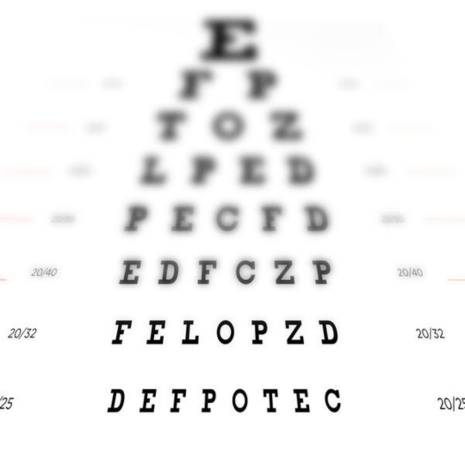
This distinction frequently creates confusion because a patient can have all of the below at once:
- A strong prescription and excellent corrected vision
- A mild prescription and poor visual function
- 20/20 vision with an undiagnosed eye disease
This is why optometrists evaluate far more than just your results from the classic eye chart.
Comparison Chart: Common Visual Acuity Levels
| What You May Notice | What You May Notice | Typical Daily Impact | Professional Evaluation Recommended? |
|---|---|---|---|
| 20/15 | Exceptional clarity | Minimal limitations | Routine exams |
| 20/20 | Standard clarity | No significant limitations | Routine exams |
| 20/30 | Mild blur | Occasional difficulty at distance | Yes |
| 20/40 | Noticeable blur | Driving and distance tasks affected | Yes |
| 20/70 | Significant blur | Daily tasks more challenging | Yes |
| 20/200 | Severe impairment | Major functional limitations | Immediate evaluation |
What Is the Worst Eye Prescription an Optometrist Sees?
There is no single answer. Unlike blood pressure or blood sugar, there is no universal maximum prescription.

Optometrists regularly encounter prescriptions ranging from mild correction to extremely high levels of:
- Myopia (nearsightedness)
- Hyperopia (farsightedness)
- Astigmatism
The term worst eye prescription is also misleading because prescription strength and visual function are not always directly related. Some people with very strong prescriptions see extremely well with glasses or contact lenses.
Others with relatively mild prescriptions may struggle due to eye disease or other vision disorders.
The more important question is not whether you have the worst eye prescription, it’s whether your vision can be corrected effectively and whether your eyes are healthy.
Why Vision Changes Over Time
Cataracts
Early cataracts often reduce clarity before patients notice obvious symptoms.
Digital Eye Strain
Long hours on computers and smartphones can affect comfort and clarity.
Medical Conditions
Diabetes, hypertension, and other health conditions can influence vision.
Aging Changes
The eye’s focusing system naturally changes over time.
Dry Eye Disease
An unstable tear film can cause fluctuating vision.
Hormonal Changes
Pregnancy and (peri)menopause-related hormonal changes can affect corneal shape and tear production, sometimes leading to blurred vision, dry eyes, or temporary changes in visual acuity.
Quick Product Comparison
| Product | Best For | Pairs Well With | Why Patients Combine Them |
| Thealoz Duo | Daily screen dryness | I-Relief Mask: Warm Compress | Heat improves oil flow while drops stabilize hydration |
| HYLO Gel | Moderate to severe dryness | Lid hygiene routine | Longer cushioning works best when inflammation is reduced |
| I-DROP PUR | Contact lens dryness | I-Relief Mask: Warm compress | Helps maintain comfort during lens heavy days |
| I- Relief Mask | Evaporative dry eye | Any preservative-free eye drop | Treats the eyelid while drops support tear stability |
| Lid wipes | Blepharitis or irritation | I-Relief Mask: Warm Compress | Cleaning debris improves gland function over time |
When Home Care Stops Being Enough
So what 20/20 vision mean can help you make sense of eye exam results, but visual acuity is only one piece of the puzzle.
Clear vision does not always mean healthy eyes, and blurry vision does not always mean you need a stronger prescription. If vision remains blurry despite updated glasses, if your visual acuity continues to decline, or if symptoms such as flashes, floaters, double vision, or sudden vision loss occur, professional evaluation is important.
Vision changes can sometimes indicate conditions affecting the cornea, retina, optic nerve, or other parts of the visual system, and the team at Real Eyes Optometry is here to help.
Whether you’re near Metrotown, looking for an experienced Burnaby optometrist, or searching for a thorough eye exam in Burnaby, we can help you better understand your vision and protect your long-term eye health.
FAQ for 20/20 Vision
What does 20 20 vision mean? Are my eyes healthy?
No. Understanding what does 20/20 vision mean is important because it measures visual clarity only. Eye diseases can still be present even when visual acuity is normal.
Can I have 20/20 vision and still need glasses?
Yes. Some people achieve 20/20 vision only while wearing corrective lenses.
How often should adults have a visual acuity test?
Most adults benefit from routine comprehensive eye examinations every one to two years, depending on age, risk factors, and eye health.
Is 20/15 vision better than 20/20?
Yes. Someone with 20/15 vision can see details at 20 feet that an average person would need to be 15 feet away to see.
Is a visual acuity test enough to detect eye disease?
No. A visual acuity test measures clarity of vision but does not diagnose many eye diseases.
Can dry eyes affect visual acuity?
Yes. Dry eye disease can cause fluctuating or blurry vision, even when your prescription remains unchanged.
What does 20/40 vision mean for driving?
A person with 20/40 vision sees at 20 feet what someone with standard vision sees at 40 feet. Depending on local licensing requirements, corrective lenses may be necessary.
Can a child have 20/20 vision and still have a vision problem?
Yes. Eye coordination issues, focusing problems, and some eye diseases may exist even when visual acuity appears normal.