Aug 2026 Update: At this time, Real Eyes Optometry does not offer vision therapy services. Please call our clinic for more details, and we’ll be happy to provide a referral.

Maybe your child loses their place while reading, complains that their eyes hurt during homework or avoids books but can somehow stare at Minecraft for an hour without complaint. Or perhaps a teacher, tutor or another health professional has suggested looking into vision therapy for kids. So, what does that actually mean?
Vision therapy is a structured approach used for certain problems involving how the eyes focus and work together. But it isn’t a treatment for every child who struggles with reading, concentration or schoolwork, which is why figuring out what is actually happening should come before starting exercises.
At Real Eyes Optometry in Burnaby, we do not currently offer vision therapy. Our optometrists can examine your child’s vision and eye health, look for problems that could be contributing to their symptoms and help you understand what the next step should be.
Vision Therapy for Kids: At a Glance
What is vision therapy?
A structured program of visual activities is sometimes used to treat specific problems involving eye coordination, focusing, and binocular vision.
Does my child need it?
Symptoms alone can’t tell us. A child who avoids reading or complains of headaches could have a vision problem, but there are many other possible explanations.
Can vision therapy treat dyslexia?
No. Dyslexia is not caused by an eye problem, and vision therapy should not be presented as a treatment for dyslexia.
Does Real Eyes Optometry provide vision therapy?
No. We can assess your child’s eyes and vision and discuss appropriate next steps if something needs further investigation.
20/20 Vision Doesn’t Tell Us Everything
Seeing the bottom line of an eye chart is important, but it doesn’t tell us everything about what happens when your child spends half an hour reading, switches repeatedly between the board and their notebook or works on something close-up.
A child with clear distance vision can still experience headaches, intermittent blur or double vision, eye strain or difficulty keeping their eyes comfortably focused during close work. Some children rub their eyes, close one eye or constantly need a break.
None of those behaviours proves that your child needs vision therapy. They simply give us a reason to look more closely.
When Reading Becomes Uncomfortable
One of the most common reasons parents start researching vision therapy is because something about reading doesn’t seem right.
Maybe your child loses their place. Maybe ten minutes of homework produces a headache. Maybe they understand the material perfectly well when you read it aloud but become frustrated when they have to work through a page themselves.
There are many possible explanations. An uncorrected prescription or certain binocular vision problems may make near work uncomfortable, but reading difficulties can also involve language processing, attention, learning differences and other factors. More than one thing can be happening at the same time.
An eye exam helps answer a specific part of that puzzle: is there an identifiable eye or vision problem contributing to what we’re seeing?
Where Vision Therapy Actually Fits
Vision therapy isn’t simply a collection of exercises for children who don’t like reading. Depending on the diagnosis, treatment may involve structured activities designed to work on specific aspects of visual function, such as focusing or coordinating the two eyes.
Convergence insufficiency is one useful example. When we look at something close, our eyes normally turn inward together. A child with convergence insufficiency can have difficulty maintaining that coordination at near, potentially contributing to symptoms such as eye strain, headaches, intermittent double vision or discomfort during prolonged close work.
Why mention this particular condition? Because symptomatic convergence insufficiency is one of the better-studied applications of structured vergence and accommodative therapy in children.
That doesn’t mean every child who gets a headache during homework has convergence insufficiency. Vision therapy makes much more sense when we start with an identified problem rather than a collection of vague symptoms.

Losing Their Place Doesn’t Automatically Mean “Eye Tracking”
Parents often arrive with a surprisingly specific diagnosis already in hand:
“I think their eyes aren’t tracking.”
Sometimes that description came from a teacher or tutor. Sometimes it came from Google.
Losing your place, skipping a line or rereading words can certainly make you wonder about the eyes, but those behaviours aren’t enough to diagnose an eye-tracking problem. Reading requires eye movements, visual processing, attention, language and comprehension to work together very quickly.
Rather than starting with “How do we fix their tracking?”, it makes more sense to start with “Why are they losing their place?”
Vision Therapy and Reading Are Not the Same Thing
This distinction is particularly important for parents.
If a child has a genuine binocular vision problem, treating that problem may make using their eyes more comfortable. That’s worthwhile, but it isn’t the same thing as teaching the brain how to decode written language.
Research in children with symptomatic convergence insufficiency has found improvements in certain clinical measures following vergence and accommodative therapy. However, a large randomized clinical trial did not find that this treatment produced better standardized reading outcomes than placebo therapy.
A child can have a vision problem worth treating and a reading difficulty that requires completely different support.
Vision Therapy Doesn’t Treat Dyslexia
Dyslexia isn’t caused by the eyes seeing letters incorrectly. It is primarily a language-based learning difficulty, and vision therapy has not been shown to treat the underlying cause of dyslexia.
That doesn’t mean a child with dyslexia doesn’t need eye care. A child can have dyslexia and also have myopia, hyperopia, astigmatism, eye coordination problems or another unrelated vision issue.
An eye exam helps make sure an additional vision problem isn’t being overlooked. Dyslexia and other learning concerns should be evaluated and supported by the appropriate professionals.
The Vision Therapy Program
The Vision Therapy Program involves 1 hour of office sessions every 2 weeks along with 20 to 30 minutes of eye activities to be done at home 5 days out of the week.
The number of vision therapy sessions required depends on the visual skills that need to be treated. They can range from as little as 4 sessions to 20+ sessions. A more accurate estimate will be given after the vision therapy evaluation.
Vision therapy is not covered under MSP. You may inquire with your insurance provider to see if it is a service covered under your benefits.
Attention and Visual Discomfort Can Look Surprisingly Similar
Picture homework at the kitchen table. Your child reads for five minutes, looks across the room, rubs their eyes, gets out of their chair, asks for a snack and suddenly becomes extremely concerned about the whereabouts of a pencil they didn’t care about thirty seconds ago.
It’s easy to interpret that as “they can’t concentrate.”
If close visual work is genuinely uncomfortable, a child may avoid it. But that doesn’t mean a vision problem causes ADHD, and vision therapy shouldn’t be presented as an ADHD treatment. Research involving children with convergence insufficiency has not shown vergence and accommodative therapy to improve measures of attention more than placebo therapy.
If attention is a concern, mention what you’re seeing during the eye exam. Just don’t assume the answer begins or ends with their eyes.
Don’t Start With the Pencil Push-Ups
Pencil push-ups are probably one of the first things you’ll encounter when Googling eye exercises for children. They’re free, they’re simple, and there are countless instructions online.
The problem is that an exercise isn’t a diagnosis.
Giving a child eye exercises because reading gives them a headache is a little like giving them ankle exercises because running hurts. Maybe you’ve guessed correctly. Maybe you’re exercising something that was never the problem.
Before adding another task to homework time, find out what you’re actually trying to treat.
Kids Don’t Always Know Their Vision Is Different
Adults can usually tell us that something has changed. Children don’t always have that reference point.
If words have always become blurry after twenty minutes of reading, your child may assume that’s simply what reading feels like. Instead of giving you a detailed description of visual fatigue, you’re more likely to hear “I’m tired,” “reading is boring,” “my head hurts” or the timeless classic, “Can I be done now?”
That’s one reason children’s eye exams are useful even when your child has never complained about their eyesight.
Before You Commit to Vision Therapy
If another provider recommends vision therapy for your child, asking questions isn’t being difficult. You should understand what has been diagnosed, what findings were abnormal, what treatment is intended to improve, and how improvement will be measured.
Ask how long treatment is expected to take and what evidence supports vision therapy for your child’s particular diagnosis. You can also ask what the next step will be if the expected improvement doesn’t happen.
“Your child needs vision therapy” shouldn’t be the entire explanation.
Life Saver Cards
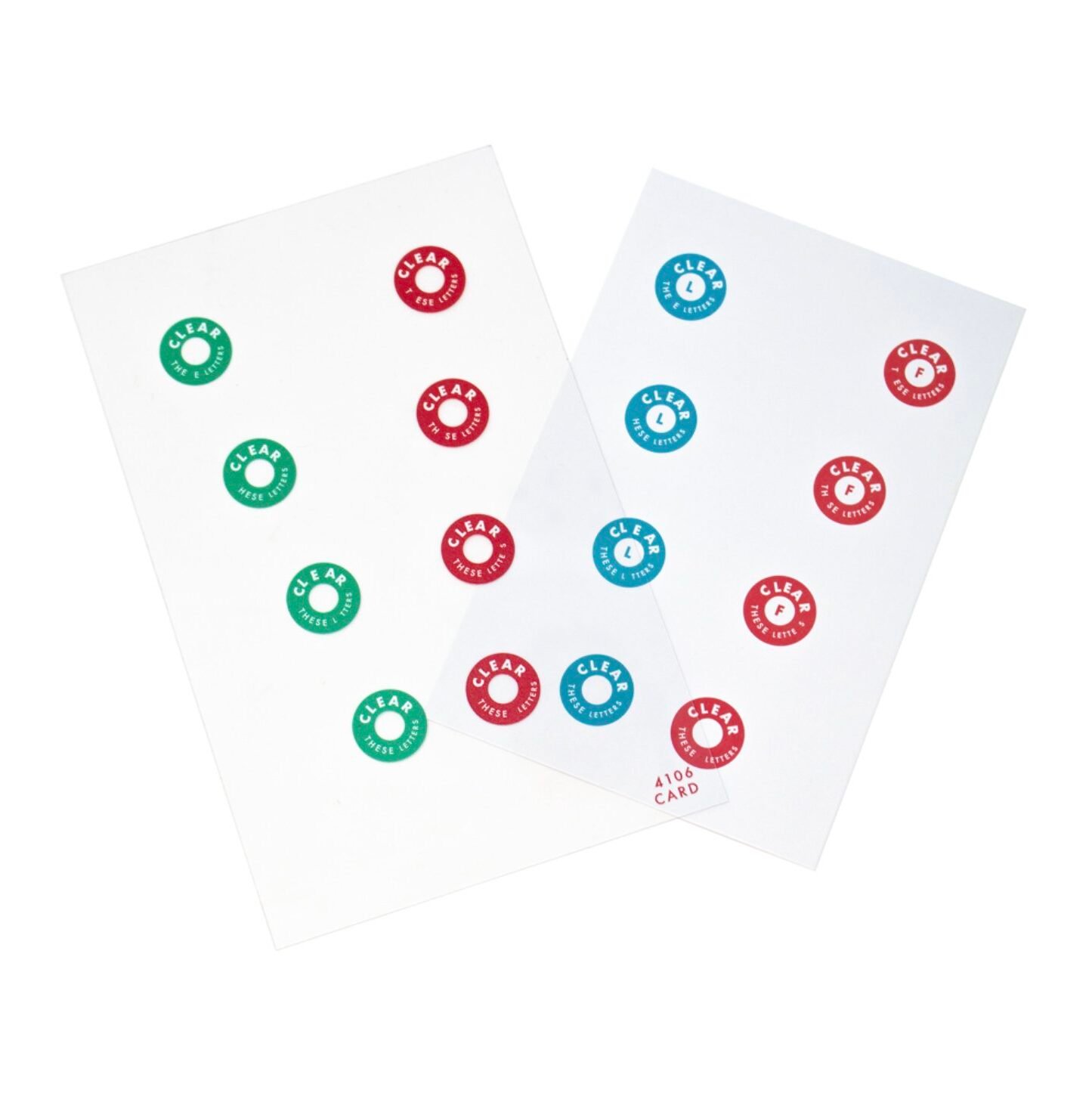
Lifesaver circle cards are an advanced procedure to improve binocularity and depth perception. If you have a visual problem that prevents good spatial vision, these cards are often used towards the end of therapy. Initially you will use red/green glasses and will attempt to adjust your eyes in such a way that the two closest circles on the bottom of the card will “fuse” together. As you get better at this activity, you will be able to fuse the top pair of circles. Skill in this area translates to better visual attention and depth perception and critical components in successful visual learning.
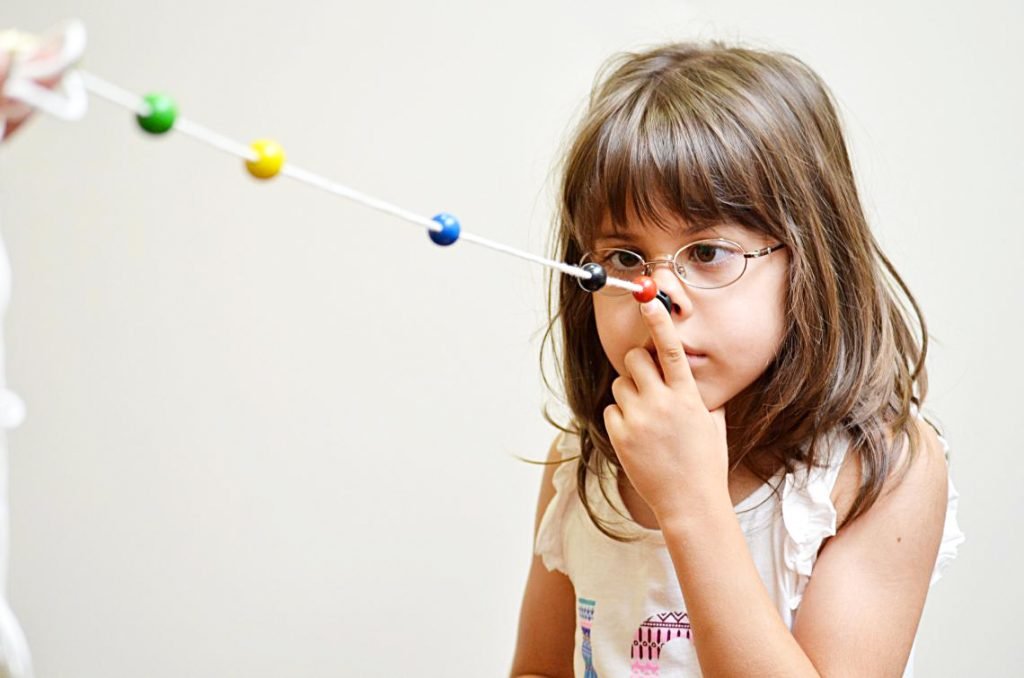
Brock String Test
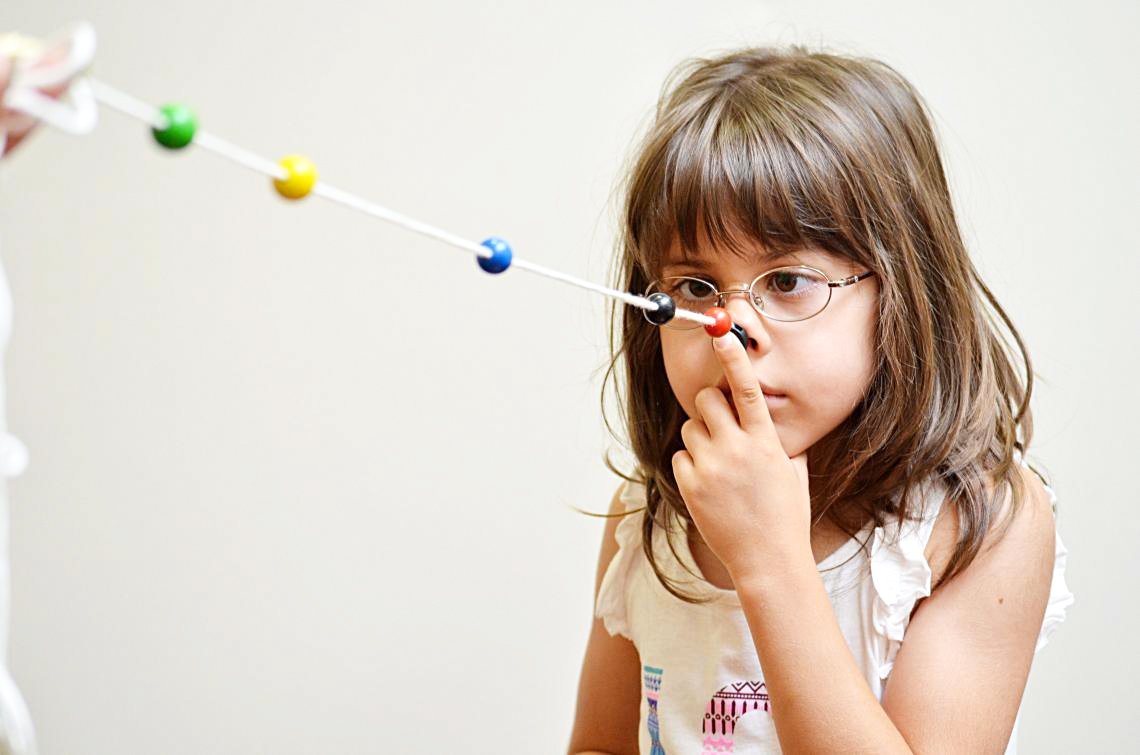
The Brock String Test looks at two different things: convergence and suppression and is designed to test and treat visual perception problems. This is important because these problems can contribute to headaches, blurry vision, balance problems, and more. Symptoms that can be caused by a concussion.
Convergence is when both eyes are looking forward but start to cross as an object is moves closer. Another variation is if the eyes are not converging, one eye remains looking forward instead of meeting the other. This results in seeing double.
Start With What You’re Actually Seeing
You don’t need to decide whether your child needs vision therapy before booking an eye exam.
Tell us what’s happening instead. Maybe they get headaches every time they read. Maybe they say words become blurry. Maybe their teacher noticed something unusual. Maybe homework has suddenly become much harder and you don’t know why.
Those details are useful.
An eye examination can look at your child’s prescription, eye health and aspects of visual function that may be contributing to their symptoms. If the findings suggest another type of assessment or care is appropriate, we can help you understand where to go from there.
Vision Therapy for Kids: FAQs
Why can my child play video games but complain that reading hurts their eyes?
Different activities place different demands on vision, attention and cognition. Viewing distance, text size, sustained reading and repeatedly shifting focus can all change the experience. If your child consistently develops symptoms during one type of close work, tell their optometrist exactly when it happens.
My child’s teacher says their eyes aren’t tracking properly. What should I do?
Start with an eye assessment rather than assuming the suggested diagnosis is correct. “Tracking” is sometimes used informally to describe several different behaviours. What the teacher has noticed is useful information, but an assessment can help determine whether there is actually an identifiable visual problem.
My child says the words move on the page. What does that mean?
Ask them to describe what “moving” means and when they notice it. Children can have a difficult time describing blur, double vision and other unusual visual experiences. Take the complaint seriously, but don’t try to diagnose the cause from that description alone.
Can my child have 20/20 vision and still have problems using their eyes together?
Yes. Visual acuity and binocular visual function aren’t the same thing. Clear distance vision doesn’t rule out every problem involving focusing or eye coordination.
If my child has dyslexia, should they still have an eye exam?
Yes. Dyslexia doesn’t prevent a child from also having an unrelated vision problem. An eye exam isn’t intended to diagnose or treat dyslexia. It helps make sure a refractive, eye health or other visual issue isn’t being overlooked.