Summer should be a time to enjoy the outdoors, but for many people, it also brings itchy, watery, irritated eyes.
Between summer allergies, wildfire smoke, smog, air conditioning, and long hours on screens, your eyes can take a beating during the warmer months. You may notice burning, redness, blurry vision, excessive watering, or that gritty feeling like something is stuck in your eye.
What makes things even more confusing is that dry eyes and allergies often look very similar. In fact, many people who think they have seasonal allergies are actually dealing with a combination of both.
Wildfire smoke and smog can make matters worse by irritating the surface of the eye and disrupting your natural tear film. At the same time, pollen from trees, grasses, and weeds can trigger allergy symptoms that leave your eyes feeling uncomfortable all day long.
In this guide, we’ll explain the connection between summer allergies, smog, and dry eyes, how to tell the difference between them, and what you can do to keep your eyes comfortable throughout the season.
At a Glance: Summer Allergies, Smog, and Dry Eyes

- If symptoms persist, our optometrists can assess the underlying cause and discuss treatment options, including our Dry Eye Recovery Program for chronic dry eye symptoms.
- Summer allergies, wildfire smoke, and dry air can all contribute to eye irritation.
- Dry eye and allergies often occur together and can cause similar symptoms.
- Burning and fluctuating vision are more common with dry eye, while itching is more common with allergies.
- Smoke and poor air quality can worsen symptoms even in people who do not normally have eye problems.
Why Are My Eyes So Dry in Summer?
Many people expect dry eyes to be a winter problem, but summer can be just as challenging for your eyes.
During the warmer months, a combination of wildfire smoke, smog, seasonal allergies, air conditioning, wind, and increased screen time can all affect the quality of your tears. When your tear film becomes unstable, your eyes may start to feel dry, irritated, watery, or sensitive to light.
Wildfire smoke and poor air quality are a particular concern in British Columbia. Smoke particles can irritate the surface of the eye and trigger inflammation, leading to symptoms such as burning, grittiness, redness, and excessive tearing. Ironically, watery eyes can sometimes be a sign of dry eye disease because the eyes produce reflex tears in response to irritation.
Summer allergies can make symptoms even more confusing. Pollen from trees, grasses, and weeds may cause itchy, watery eyes that look very similar to dry eye symptoms. In many cases, patients are dealing with both conditions at the same time.
If your eyes regularly feel dry, tired, watery, or irritated during the summer, it may be a sign that your tear film is not functioning as well as it should. The good news is that treatment options are available, ranging from artificial tears and lifestyle changes to advanced dry eye therapies for chronic symptoms.
Dry Eyes vs Summer Allergies: How Can You Tell the Difference?
Dry eyes and allergies can look surprisingly similar. Both can cause redness, watering, irritation, and discomfort. That’s why many people aren’t sure which condition they’re dealing with.
One of the biggest clues is itching. If your eyes are intensely itchy, especially during pollen season, allergies are often the culprit. Allergies occur when your immune system reacts to substances such as pollen, grass, weeds, pet dander, or dust. The result can be itchy, watery, red eyes that may flare up at certain times of the year.
Dry eye disease is different. Instead of an allergic reaction, it occurs when your eyes do not produce enough tears or when the tear film evaporates too quickly. Common symptoms include burning, stinging, grittiness, fluctuating blurry vision, and the sensation that something is stuck in your eye.
Unfortunately, many patients experience both conditions at the same time. Summer pollen, smog, wildfire smoke, and dry air can irritate the eyes while also disrupting the tear film, making symptoms harder to identify.
Quick Rule of Thumb
| Symptom | More Common With |
|---|---|
| Intense itching | Allergies |
| Burning or stinging | Dry Eye |
| Gritty or sandy feeling | Dry Eye |
| Seasonal flare-ups | Allergies |
| Fluctuating blurry vision | Dry Eye |
| Watery eyes | Both |
If you’re not sure which condition is causing your symptoms, see an optometrist to help identify the underlying cause and guide the most effective treatment plan.

Can Wildfire Smoke and Smog Cause Summer Dry Eyes?
Yes. Wildfire smoke and smog can irritate the eyes and make dry eye symptoms worse.
Smoke contains tiny particles and pollutants that can disrupt the tear film, the protective layer of tears that keeps your eyes comfortable and clear. When the tear film becomes unstable, your eyes may start to feel dry, gritty, watery, red, or sensitive to light.
Even people who do not normally experience dry eye symptoms may notice irritation during periods of poor air quality. For those who already have dry eye disease, allergies, or contact lens discomfort, wildfire smoke can make symptoms significantly worse.
“Watery eyes don’t always mean you have enough tears. In many cases, they’re actually a sign of dry eye disease.”
One of the most confusing symptoms is excessive tearing. Many people assume watery eyes mean they are producing plenty of tears. In reality, irritated eyes often produce reflex tears that do not provide the same protection and lubrication as a healthy tear film.
If smoke exposure regularly leaves your eyes burning, watering, or uncomfortable, it may be a sign that your tear film needs additional support. Artificial tears, limiting outdoor exposure during poor air quality events, and treating underlying dry eye disease can all help reduce symptoms.
For people with ongoing symptoms, a dry eye assessment can help determine whether smoke is simply irritating the eyes or uncovering an underlying dry eye condition that needs treatment.
7 Ways to Relieve Dry Eyes During Wildfire Season and Summer Allergy Season
If your eyes feel dry, itchy, watery, or irritated during the summer, a few simple changes can make a big difference. Here are some practical ways to protect your eyes during allergy season and periods of poor air quality.
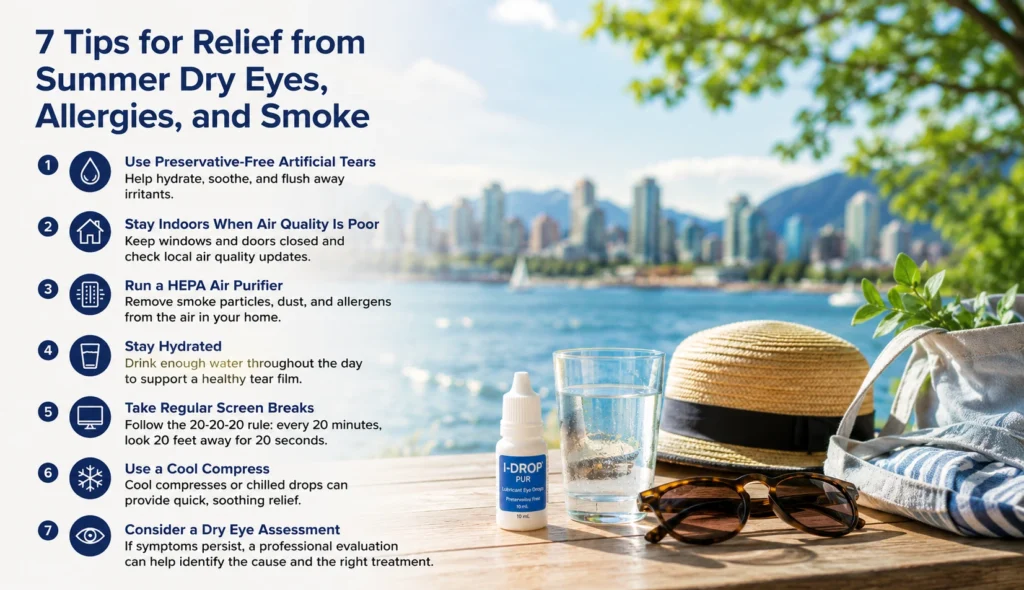
Use Preservative-Free Artificial Tears
Artificial tears can help flush away allergens, improve moisture, and soothe irritated eyes. Preservative-free drops are often the best choice for frequent use, especially during wildfire season. Find out which type is best for you.
Stay Indoors When Air Quality Is Poor
When smoke levels are high, try to limit outdoor activities and keep windows and doors closed. Checking local air quality reports can help you decide when it’s best to stay inside.
Run a HEPA Air Purifier
A quality air purifier can help remove smoke particles, dust, and other airborne irritants from your home. This can be especially helpful for people with allergies or existing dry eye symptoms.
Stay Hydrated
Your eyes rely on adequate hydration to maintain a healthy tear film. Drinking enough water throughout the day may help support overall eye comfort, particularly during hot weather.
Take Regular Screen Breaks
When we focus on screens, we blink less often. Every hour, take a 5-10 minute break from any near activities. This simple habit can help reduce dryness and eye strain.
Use a Cold Compress
If your eyes feel irritated or itchy, a cold compress can provide temporary relief. Some people also find chilled artificial tears particularly soothing during smoky or allergy-filled days.
Consider a Dry Eye Assessment for your Summer dry eyes.
If your symptoms keep returning despite home remedies, there may be an underlying dry eye condition contributing to the problem. Our Dry Eye Recovery Program is designed to identify the root cause of dry, watery, burning, or irritated eyes and may include personalized treatment options to improve long-term comfort and tear quality.
Summer allergies, wildfire smoke, and dry eye disease can all affect the surface of your eyes. The good news is that relief is available, and you don’t have to simply wait for the season to end.
Can Wildfire Smoke Cause Long-Term Eye Problems?
For many people, eye irritation improves once air quality returns to normal. However, repeated exposure to wildfire smoke, smog, dry air, and environmental pollutants may worsen existing dry eye symptoms and make the eyes more sensitive over time.
This is especially true for people who already have dry eye disease, allergies, contact lens discomfort, or meibomian gland dysfunction. During periods of poor air quality, the tear film can become unstable, making it harder for the eyes to stay comfortable and properly lubricated.
If your eyes continue to feel dry, gritty, watery, or irritated long after wildfire season has passed, it may be a sign that something more than temporary smoke exposure is contributing to your symptoms.
The good news is that dry eye disease is treatable. Early intervention can help improve comfort, reduce inflammation, and support the long-term health of your eyes.
When Should You Consider a Dry Eye Assessment?
You may benefit from a dry eye assessment if you experience:
- Burning, stinging, or gritty eyes
- Excessive watering or reflex tearing
- Redness that keeps returning
- Blurry vision that comes and goes
- Discomfort when wearing contact lenses
- Symptoms that worsen during wildfire season or allergy season
Identifying the cause of your symptoms is the first step toward finding lasting relief.
Looking for More Than Temporary Relief from Summer Dry Eyes?
Preservative- free artificial tears, hydration, air purifiers, and lifestyle changes can help many people manage occasional dry eye symptoms during wildfire season and summer allergy season.
However, if your eyes are frequently dry, watery, gritty, burning, or irritated, it may be time for a closer look.
A Dry Eye Assessment is the first step. During this appointment, we evaluate your tear film, eyelids, oil glands, symptoms, and overall eye health to determine whether dry eye disease is contributing to your discomfort.
For patients with ongoing symptoms, we may recommend our Dry Eye Recovery Program. Unlike a one-time assessment, the recovery program is a personalized treatment plan designed to improve the underlying causes of dry eye and support long-term relief. Depending on your needs, this may include home care recommendations, prescription treatments, in-office therapies, and ongoing monitoring of your progress.
Think of the assessment as the diagnosis. The recovery program is the treatment plan that follows.
Whether your symptoms are triggered by summer allergies, wildfire smoke, screen use, or chronic dry eye disease, our goal is to help you find lasting relief and get back to enjoying the season comfortably.
Not sure if dry eye is the problem? Start with a Dry Eye Assessment and we’ll help you determine the next steps.
Related Articles
Dry, itchy, watery eyes can have many different causes. Explore these related resources to learn more about seasonal allergies, dry eye disease, and treatment options.
Cherry Blossom Allergies in Vancouver
Are your eyes more irritated every spring? Learn how pollen and seasonal allergies can affect your eyes and how to find relief.
Dry Eye Recovery Program
Artificial tears aren’t always enough. Learn how our Dry Eye Recovery Program helps identify and treat the underlying causes of chronic dry, watery, burning, or irritated eyes.
Eye Allergies: Symptoms, Causes & Treatment
Not sure if you’re dealing with allergies or dry eye? Learn the common symptoms, triggers, and treatment options for eye allergies.
Summer Dry Eyes, Smog and Allergies FAQ
Continue exploring dry eye care: the dry eye hub, dry eye symptoms, eye drops, winter dry eyes, contact lenses for dry eyes and RF treatment.
Why are my eyes watering if they’re dry?
It sounds contradictory, but watery eyes can actually be a symptom of dry eye disease. When the surface of the eye becomes irritated, the body may produce reflex tears that do not provide the same lubrication as a healthy tear film.
Why is only one eye itchy, watery, or irritated?
Dry eye and allergies usually affect both eyes, but symptoms can sometimes feel worse in one eye. An eyelash, blocked gland, contact lens issue, or other eye condition may be contributing to one-sided symptoms.
Can wildfire smoke cause dry eyes even if I’ve never had dry eye before?
Yes. Smoke particles can irritate the surface of the eye and disrupt the tear film. Some people notice symptoms for the first time during periods of poor air quality.
Do antihistamines make dry eyes worse?
They can. While antihistamines may help control allergy symptoms, some people notice increased eye dryness as a side effect.
Why do my eyes feel worse indoors than outdoors?
Air conditioning, fans, screens, and low indoor humidity can all increase tear evaporation and worsen dry eye symptoms.
Can I wear contact lenses during wildfire season?
Many people can, but smoke, allergens, and dry air may make contact lenses feel less comfortable. Lubricating drops or temporary changes to lens wear may help.
Why do my eyes feel fine in the morning but worse by evening?
Dry eye symptoms often build throughout the day as your tear film becomes depleted and your eyes are exposed to screens, air conditioning, allergens, and environmental irritants.
How do I know if I need a Dry Eye Assessment or the Dry Eye Recovery Program?
A Dry Eye Assessment helps identify the cause of your symptoms. If dry eye disease is diagnosed, the Dry Eye Recovery Program provides a personalized treatment plan designed to improve long-term eye comfort and tear quality.
Why do dry eyes get worse in summer?
Summer dry eyes can be triggered by wildfire smoke, smog, pollen, air conditioning, wind, and increased outdoor activities. These factors can increase tear evaporation and irritate the surface of the eye.
Can allergies cause dry eyes?
Yes. Summer allergies can irritate the surface of the eye and affect tear quality, leading to dry, watery, red, or uncomfortable eyes. This is one reason many people experience dry eyes in summer, especially when pollen, smoke, and smog are also present.
Can smog and dry eyes feel worse with wildfire smoke?
Yes. Smog and wildfire smoke can disrupt the tear film and irritate the eyes, leading to burning, watering, redness, and dry eye symptoms.
Why do my eyes feel worse indoors during wildfire season?
Air conditioning, reduced humidity, screen time, and indoor air circulation can sometimes make summer dry eye symptoms worse, even when you’re avoiding outdoor smoke.
When should I book a Dry Eye Assessment?
If your summer dry eyes and summer allergies keep returning every summer and artificial tears only provide temporary relief, or if symptoms interfere with reading, driving, screens, or contact lens wear, it may be time for a Dry Eye Assessment.
Why do I get summer allergies? Isn’t allergy season over?
Not necessarily. While many people associate allergies with spring, different plants release pollen at different times of the year. Tree pollen is often highest in spring, but grass pollen becomes a common trigger throughout the summer, and weed pollen can continue into late summer and fall.
This means your itchy, watery, or irritated eyes may continue long after the cherry blossoms are gone. In some cases, summer allergies can also worsen dry eye symptoms, making your eyes feel both itchy and dry at the same time.

Medically Reviewed by Dr. Amit Sahota, Registered Optometrist (BSc, OD)
July 25, 2026

Meet Your Dry Eye Care Team
Dry Eye Recovery Program Lead
Dr. Amit Sahota leads our Dry Eye Recovery Program and has a special interest in diagnosing and treating chronic dry eye disease. She works with patients experiencing dry, watery, burning, gritty, or irritated eyes and develops personalized treatment plans focused on long-term relief.
Using advanced diagnostic technology and in-office treatments, including radiofrequency therapy, Dr. Sahota helps patients move beyond temporary solutions and address the underlying causes of dry eye symptoms.
Supported by Our Optometry Team
Our Dry Eye Recovery Program is supported by the experience of our entire optometry team, including Dr. Shaun Pati and Dr. Tony Wang. Together, we provide comprehensive eye care, ongoing monitoring, and personalized recommendations to help patients achieve lasting comfort.


Whether you’re dealing with summer dry eyes, seasonal allergies, or irritation from smog and dry eyes, our team can help identify the cause and discuss treatment options.
Disclaimer: This information is for educational purposes and does not replace professional medical advice