Refractive Surgery Evaluation in Burnaby | LASIK, PRK & EVO ICL Guidance
Thinking about LASIK, PRK, or EVO ICL?
Many people assume the first step is finding a surgeon. What most people don’t realize is that an optometrist plays an important role before and after eye surgery. A refractive surgery evaluation helps determine whether you’re a good candidate for vision correction surgery, which procedure may be best for your eyes, and whether surgery is even the right option for you.
At Real Eyes Optometry, we provide independent evaluations, and supportive care before and after surgery so you can make an informed decision about your vision.
At a Glance:
Did you know that laser eye surgery involves more than just a surgeon? Before and after LASIK, PRK, or other vision correction procedures, you’ll need an optometrist to evaluate your candidacy, monitor your eye health, and support your recovery. Our Burnaby optometrists help guide you through every step of the process.
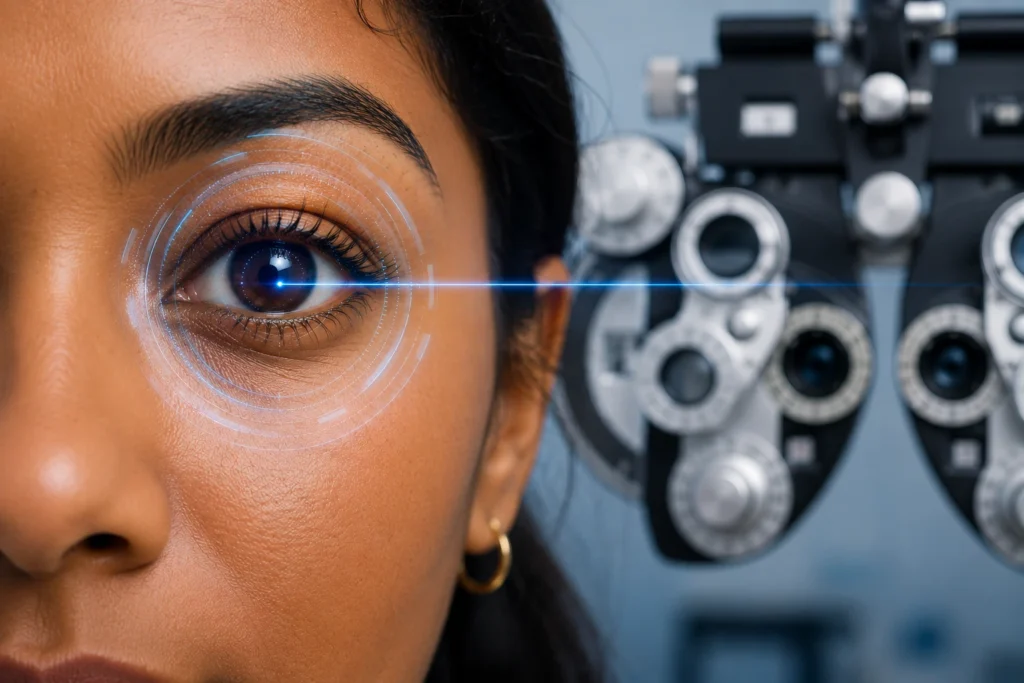
Independent Evaluation
Find out whether LASIK, PRK, EVO ICL, or another option is right for your eyes before committing to surgery.
Pre-Surgical Assessment
We evaluate prescription stability, corneal health, dry eye symptoms, lifestyle needs, and overall eye health.
Before & After Surgery Care
From your initial consultation to post-operative follow-up appointments, we help guide your vision correction journey.
Personalized Recommendations
Not everyone is a good candidate for laser vision correction. We help you understand the benefits, risks, limitations, and alternatives available.
Why Do I Need an Optometrist If I’m Having Eye Surgery?
Many people assume that once they’ve found a surgeon, their job is done. In reality, an optometrist plays an important role before and after refractive surgery.
Before surgery, we evaluate whether you’re a suitable candidate, discuss your options, identify potential risks, and help prepare your eyes for the best possible outcome.
After surgery, we monitor healing, answer questions, manage follow-up care, and help ensure your vision remains stable and healthy over the long term. Think of your surgeon as the specialist performing the procedure and your optometrist as your guide throughout the entire journey.
Am I a good candidate for LASIK, PRK, or EVO ICL?
One of the most common questions we hear is, “Am I a candidate for laser eye surgery?”
The answer depends on much more than your glasses prescription. Before recommending LASIK, PRK, EVO ICL, or another vision correction procedure, your optometrist evaluates factors such as prescription stability, corneal health, dry eye symptoms, lifestyle needs, and overall eye health.
A refractive surgery evaluation helps identify potential risks, determine which procedure may be most appropriate, and ensure you understand the benefits, limitations, and alternatives before making a decision.
What works well for one person may not be the best option for another, which is why a personalized evaluation is an important first step.
Factors We Evaluate
- During your refractive surgery evaluation, we may assess:
- Expectations for life after surgery
- Your current glasses or contact lens prescription
- Whether your prescription has remained stable
- Corneal thickness and shape
- Dry eye symptoms and tear film quality
- Overall eye health
- Your age and future vision needs
- Hobbies, sports, and occupation
You May Be a Good Candidate If:
- Your prescription has been stable
- Your eyes are healthy
- You understand the benefits and limitations of surgery
- You are looking to reduce your dependence on glasses or contact lenses
Surgery May Not Be the Best Option If:
- Your prescription is still changing
- You have significant dry eye disease
- Certain eye conditions affect healing or outcomes
- Another vision correction option may better suit your needs
Sometimes the Best News Is Not Having Surgery
Many people arrive expecting LASIK to be the obvious answer.
In reality, some patients discover that PRK, EVO ICL, specialty contact lenses, dry eye treatment, or simply updating their prescription may provide a better long-term result.
Our goal is not to steer you toward surgery. Our goal is to help you understand your options and determine what is best for your eyes.
– Dr. Shaun Pati
What Happens During a Refractive Surgery Evaluation?
A refractive surgery evaluation is more than a glasses prescription check. The goal is to determine whether LASIK, PRK, EVO ICL, or another vision correction option is safe and appropriate for your eyes.
During your appointment, your optometrist may evaluate:
Your Prescription and Vision
We assess your current prescription, visual acuity, and whether your prescription has remained stable over time. Significant changes may affect your candidacy for surgery.
Corneal Health and Measurements
Your cornea plays a critical role in refractive surgery. We may perform corneal topography and other measurements to evaluate the shape, thickness, and overall health of your cornea.
Dry Eye Assessment
Many people considering laser vision correction already have mild dry eye symptoms without realizing it. Identifying and treating dry eye before surgery can help improve comfort and outcomes.
Comprehensive Eye Health Examination
Your optometrist will examine the front and back of your eyes to look for conditions that may affect surgery or healing, including cataracts, glaucoma, retinal conditions, or other eye health concerns.
Lifestyle and Vision Goals
The best procedure depends on more than your prescription. We discuss your occupation, hobbies, sports, screen use, reading needs, and long-term vision goals to help determine which option may be the best fit for your lifestyle.
Personalized Recommendations
After your evaluation, we’ll explain your findings, discuss whether you’re a candidate for surgery, review the benefits and limitations of different procedures, and answer any questions you may have before moving forward.
LASIK vs PRK vs EVO ICL: What Are My Options?
Laser vision correction has come a long way. While LASIK remains the most well-known procedure, it is no longer the only option available.
Today, patients may be candidates for LASIK, PRK, EVO ICL, or other vision correction procedures depending on their prescription, corneal health, lifestyle, and visual goals.
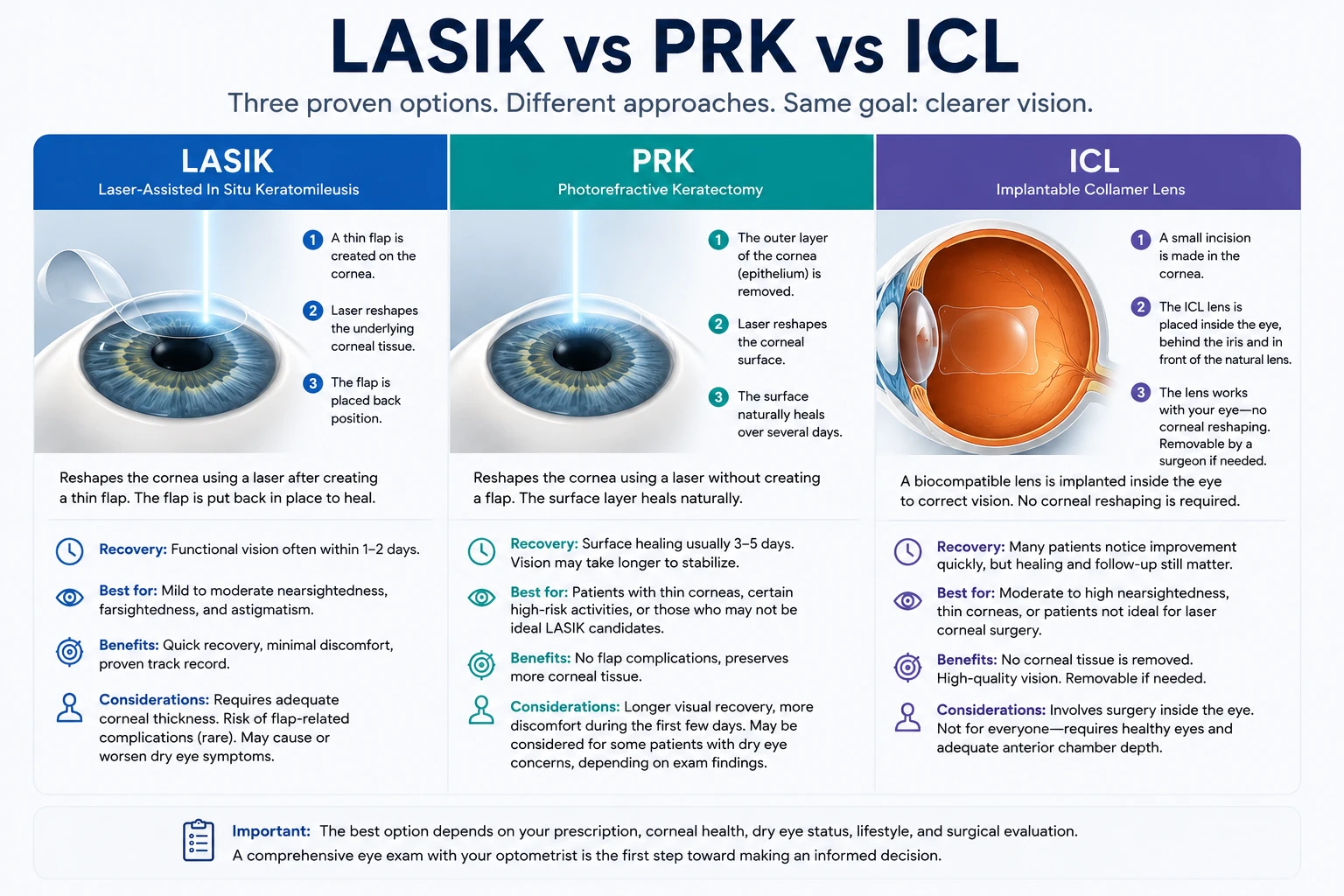
LASIK
LASIK is the most recognized form of laser vision correction. During the procedure, a thin flap is created on the surface of the cornea before the underlying tissue is reshaped with a laser.
LASIK may be a good option if you:
- Have a stable prescription
- Have adequate corneal thickness
- Want a relatively quick recovery
- Are looking to reduce dependence on glasses or contact lenses
PRK
PRK uses the same laser technology as LASIK but does not involve creating a corneal flap. Instead, the outer layer of the cornea is removed before treatment and naturally heals afterward.
PRK may be a good option if you:
- Have thinner corneas
- Participate in contact sports
- Work in occupations where eye injuries are possible
- Are not an ideal LASIK candidate
Recovery is typically longer than LASIK, but visual outcomes are often similar.
EVO ICL
EVO ICL is one of the newer vision correction options available. Rather than reshaping the cornea, a specialized implantable lens is placed inside the eye to correct vision.
EVO ICL may be a good option if you:
- Have moderate to high nearsightedness
- Are not a suitable LASIK or PRK candidate
- Have thin corneas
- Want a vision correction option that does not permanently reshape the cornea
Other Vision Correction Options
LASIK, PRK, and EVO ICL are some of the most common refractive surgery procedures, but they are not the only options available.
Intraocular Lens Implants (Refractive Lens Exchange)
For some patients, particularly those over 50, or those beginning to experience cataracts or age-related changes in their vision, refractive lens exchange (RLE) may be considered. This procedure involves replacing the eye’s natural lens with an artificial intraocular lens to reduce dependence on glasses.
Orthokeratology (Ortho-K)
Not everyone looking for freedom from glasses wants surgery. Orthokeratology uses specially designed contact lenses worn overnight to temporarily reshape the cornea while you sleep. Many patients enjoy clear vision during the day without the need for glasses, contact lenses, or surgery.
During your refractive surgery evaluation, we’ll discuss all appropriate options and help determine which solution best fits your eyes, lifestyle, and long-term vision goals.
What’s New in Vision Correction Technology?
Many people are surprised to learn that laser eye surgery has continued to evolve over the past decade. While LASIK remains one of the most well-known procedures, several newer technologies and treatment options are now available.
EVO ICL
One of the biggest advancements in recent years is EVO ICL (Implantable Collamer Lens). Rather than reshaping the cornea with a laser, a specialized lens is implanted inside the eye to correct vision.
This option may be suitable for some patients with higher prescriptions, thin corneas, or those who are not ideal candidates for LASIK or PRK.
SMILE Laser Vision Correction
SMILE (Small Incision Lenticule Extraction) is a newer laser procedure available in some centers. It uses a smaller incision than traditional LASIK and may be an option for certain patients with nearsightedness.
Customized Laser Treatments
Modern laser systems can use detailed corneal mapping and wavefront-guided technology to create highly personalized treatment plans based on the unique characteristics of your eyes.
What You Need to Know
Newer technology does not automatically mean better results for every patient.
The best procedure depends on your prescription, eye health, corneal measurements, dry eye status, age, lifestyle, and long-term vision goals. Some patients are excellent candidates for LASIK, while others may achieve better outcomes with PRK, EVO ICL, SMILE, or even non-surgical options.
That’s why a comprehensive refractive surgery evaluation remains one of the most important steps before deciding on any vision correction procedure.
What Happens During a Refractive Surgery Evaluation?
A refractive surgery evaluation is designed to determine whether laser vision correction is safe, appropriate, and likely to meet your expectations. While every patient is different, most evaluations include several important steps.
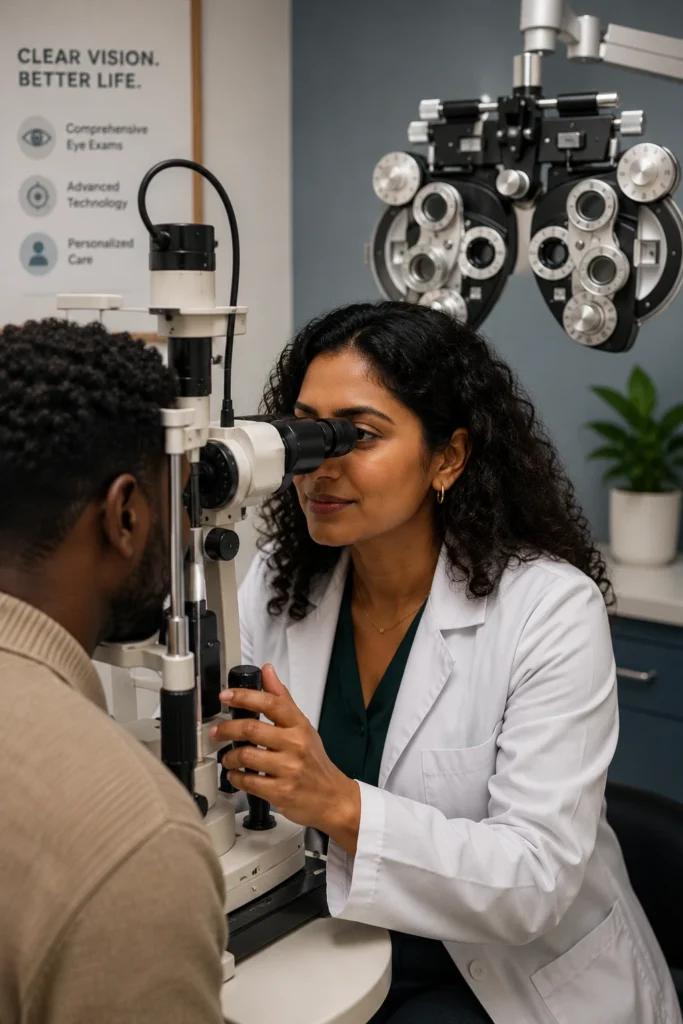
Review of Your Vision and Eye Health
Your optometrist will review your prescription history, eye health, medications, lifestyle, and visual goals. This helps us understand not only how you see today, but how your vision may change in the future.
Comprehensive Eye Examination
We’ll perform a thorough assessment of your eyes to look for conditions that may affect surgery or healing, such as dry eye disease, cataracts, glaucoma, retinal conditions, or corneal abnormalities.
Corneal Measurements and Imaging
Specialized testing allows us to measure the shape, thickness, and overall health of your corneas. These measurements help determine whether LASIK, PRK, EVO ICL, or another procedure may be appropriate for your eyes.
Discussion of Your Options
Not every patient is suited for the same procedure. Based on your results, we’ll explain the benefits, limitations, risks, recovery expectations, and alternatives available to you.
Surgical Planning
If you’re a suitable candidate and decide to move forward, we’ll recommend trusted refractive surgeons and help coordinate the next steps in the process.
Questions and Expectations
Perhaps the most important part of the appointment is the conversation. We encourage patients to ask questions, discuss concerns, and share their goals so they can make an informed decision about their vision.
Before and After Refractive Surgery: What to Expect
Refractive surgery is more than a procedure on a single day. Successful outcomes often depend on careful planning before surgery and proper follow-up care afterward.
Before Surgery
Before recommending LASIK, PRK, EVO ICL, or another vision correction procedure, we’ll perform a comprehensive evaluation to determine whether you’re a suitable candidate.
This may include:
- Reviewing your prescription history
- Assessing corneal thickness and shape
- Evaluating dry eye symptoms
- Screening for eye diseases that may affect surgery
- Discussing your lifestyle, hobbies, and vision goals
- Explaining the benefits, risks, limitations, and alternatives available
In some cases, treatment for dry eyes or other conditions may be recommended before surgery to help optimize results.
After Refractive Eye Surgery
Your care doesn’t end when the procedure is complete.
Following surgery, your optometrist monitors healing, visual recovery, eye comfort, and overall eye health. Follow-up visits help ensure your eyes are recovering as expected and provide an opportunity to address any questions or concerns that arise during the healing process.
Depending on the procedure, vision may improve within days or continue to stabilize over several weeks or months. We’ll guide you through each stage of recovery and help determine when it is safe to resume activities such as driving, sports, work, and travel.
Our goal is to support you before, during, and after surgery so you can feel confident throughout your vision correction journey.
Real Eyes Optometry
Real Eyes Optometry is centrally located in Metrotown Mall. Our convenient location includes free, accessible parking and the ability for parents to complete errands without driving all over the city.
Consider being able to run to a grocery store, make a clothing return, and grab a quick bite, all while your child is having an eye exam. Of course, accompanying your kid during their eye exam is always a good idea. For details on how to find us, click here.

Dr. Sahota has a special interest in dry eye care and advanced in-clinic treatments, including radio frequency technology, and is known for providing thorough, personalized dry eye consultations in multiple languages.

Dr. Pati enjoys caring for patients of all ages, with a particular passion for family eye care and pediatric eye health, helping kids build strong visual habits early in life.

Dr. Wang is highly experienced in contact lens fitting, with a special focus on specialty lenses, and has helped many patients who thought they could never wear contacts comfortably.
Disclaimer: This information is for educational purposes and does not replace professional medical advice
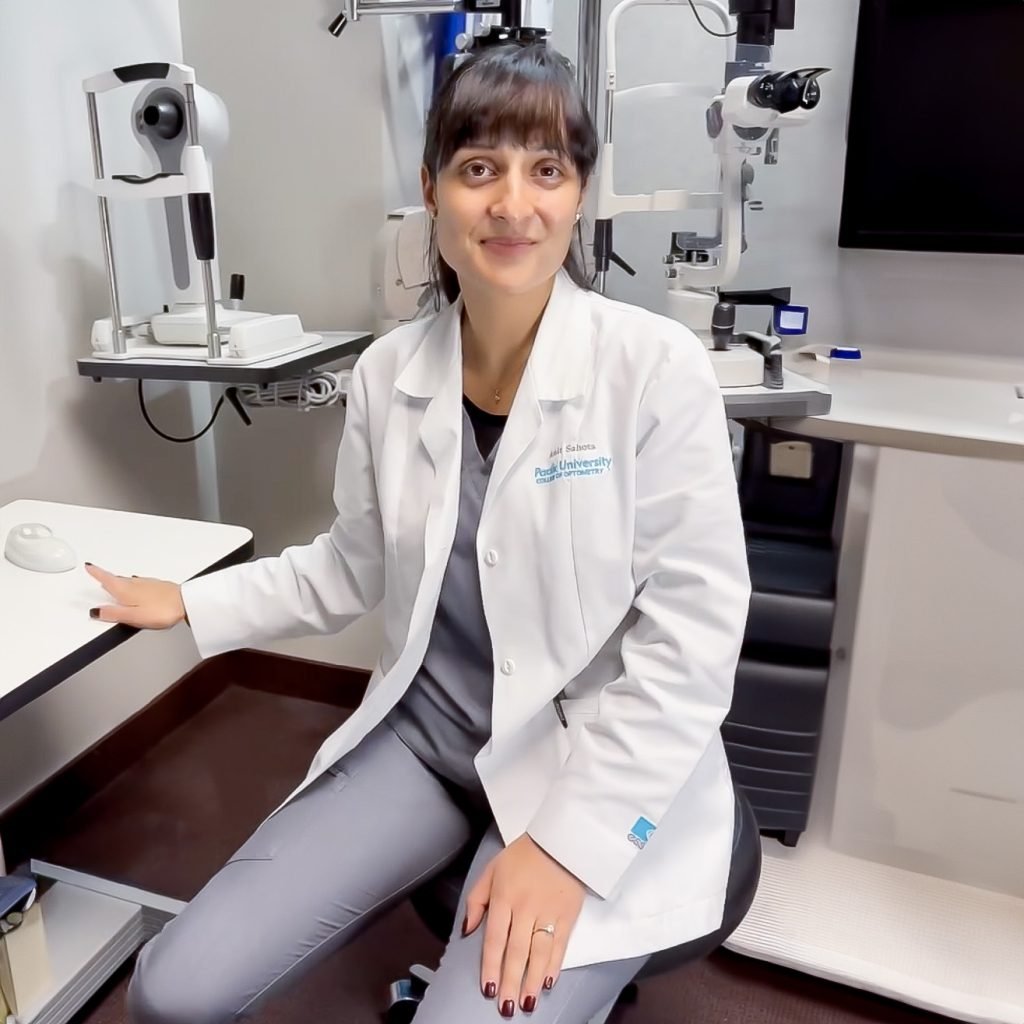
Medically Reviewed by Dr. Amit Sahota, Registered Optometrist (BScOD)
August 13, 2026
FAQ for Eye Surgery
Will I Still Need Reading Glasses After LASIK?
Possibly. LASIK corrects distance vision but does not stop the natural aging process of the eye. Many people eventually need reading glasses as they develop presbyopia, typically in their 40s and 50s. During your consultation, we’ll discuss what your vision may look like not just next year, but 10 to 20 years from now.
What Happens If My Vision Changes Again After Surgery?
Laser vision correction can permanently correct your prescription at the time of treatment, but your eyes can still change due to aging, cataracts, health conditions, or natural changes in the lens inside the eye. Some patients may eventually require glasses, reading glasses, or additional treatment.
I Work on a Computer All Day. Will Surgery Help or Make Things Worse?
Many patients seek surgery because they are frustrated with glasses or contact lenses at work. However, heavy screen use can contribute to dry eye symptoms, which may affect comfort before and after surgery. A thorough dry eye assessment is an important part of determining candidacy.
Can I Have Laser Eye Surgery If I Play Sports?
Often, yes. In fact, athletes are among the most common patients seeking refractive surgery. Your sport, injury risk, and lifestyle may influence whether LASIK, PRK, or another procedure is most appropriate.
Is It Better to Have Surgery Now or Wait?
Sometimes waiting is the smartest decision. If your prescription is still changing, you’re pregnant, experiencing significant dry eyes, or approaching an age where reading vision becomes a concern, delaying surgery may provide better long-term results.
What If My Eyes Are Too Dry For LASIK?
Dry eye disease is one of the most common reasons patients are surprised during a refractive surgery evaluation. In many cases, treating dry eye first may improve candidacy and surgical outcomes.
Is Laser Eye Surgery Worth It If I Only Wear Glasses Part-Time?
That depends on your lifestyle. Some patients want freedom from glasses for sports, travel, outdoor activities, or work. Others discover that the cost, recovery, and long-term expectations don’t align with their goals. A consultation helps determine whether surgery offers meaningful benefits for your situation.
What’s the Biggest Misconception About Laser Eye Surgery?
Many people think the hardest part is choosing a surgeon. In reality, one of the most important decisions is determining whether surgery is the right choice in the first place. The goal isn’t to find a procedure. The goal is to find the vision solution that best fits your eyes, lifestyle, and future needs.
Why Choose Real Eyes Optometry Before and After Eye Surgery?
Choosing refractive surgery is a big decision. While the procedure itself may take only minutes, the process begins long before surgery and continues throughout your recovery.
At Real Eyes Optometry, we help guide patients through every stage of that journey.
Independent Advice Focused on Your Best Interests
Our role is not to sell you a procedure. We help you understand your options, answer your questions, and determine whether LASIK, PRK, EVO ICL, or another vision correction solution is right for your eyes and lifestyle.
Comprehensive Pre-Surgical Evaluations
Before surgery, we evaluate your eye health, prescription stability, corneal measurements, dry eye symptoms, and visual goals to help determine candidacy and identify potential concerns.
Ongoing Care After Surgery
Your relationship with your eyes doesn’t end after surgery. We continue to monitor healing, visual recovery, eye comfort, and long-term eye health through follow-up care and regular eye examinations.
Convenient Burnaby Location
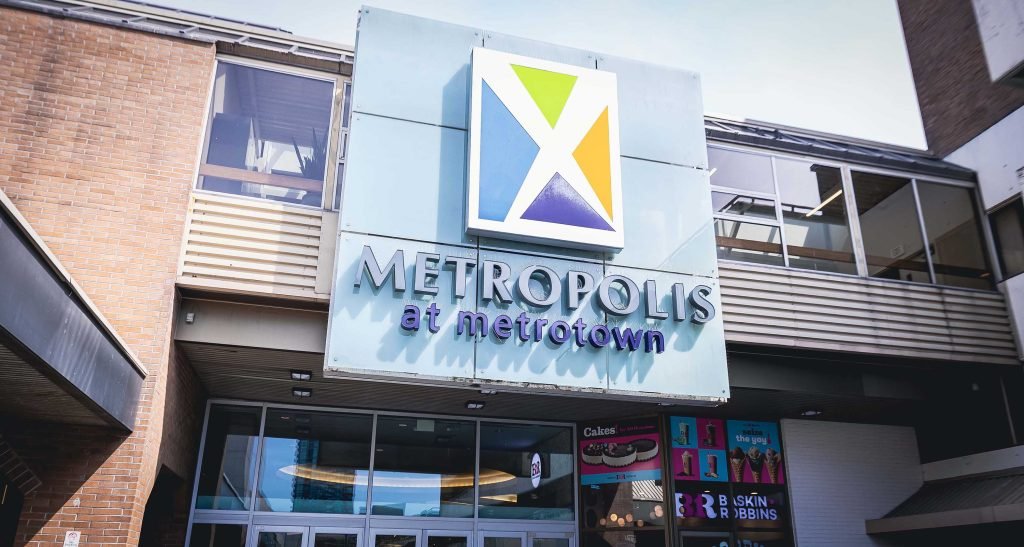
Located inside Metropolis at Metrotown, our clinic offers convenient access, free parking, elevator accessibility, and flexible appointment options for patients throughout Burnaby and the surrounding communities.
A Long-Term Partner in Your Eye Health
Whether you decide to proceed with surgery or not, our goal is to help you make informed decisions about your vision. We are committed to supporting your eye health before surgery, during recovery, and for years afterward.
Still wondering if laser vision correction is right for you? Book a refractive surgery evaluation with our Burnaby optometrists and let’s explore your options together.