Types of Eyeglass Lenses
Choosing the right eye glass lenses is about more than just clear vision. It’s about finding the perfect fit for your lifestyle, ensuring all day comfort, and even expressing your personal style. With so many options available, it can feel overwhelming to know where to start.
At Real Eyes Optometry, we believe that understanding your options is the first step to making the best choice for your eyes. The great news is that modern lenses are designed to do incredible things, from helping you see clearly at multiple distances to protecting your eyes from screen glare and sunlight.
Whether you need help seeing up close, far away, or both, there is a lens designed for you. Let’s break down everything you need to know to feel confident in selecting your next pair of glasses.
Types of Eyeglass Lenses: Single Vision Lenses
Amongst the different types of eyeglasses lenses, single-vision lenses are designed to help people see at one viewing distance. This is the most common type of lens used. A single-vision lens can be used to help with either nearsightedness or farsightedness, but it cannot do both simultaneously.
Types of Eyeglass Lenses: Single Vision Lenses
Amongst the different types of eyeglasses lenses, single-vision lenses are designed to help people see at one viewing distance. This is the most common type of lens used. A single-vision lens can be used to help with either nearsightedness or farsightedness, but it cannot do both simultaneously.
Types of Eyeglass Lenses: Bifocal Lenses
Bifocal eyeglass lenses are designed to help people see at two viewing distances. They are designed with a smaller reading area (good for reading books, magazines, prescription bottles, and newspapers), usually in the shape of a sideways ‘D’ near the bottom of the lens.
Types of Eyeglass Lenses: Trifocal Lenses
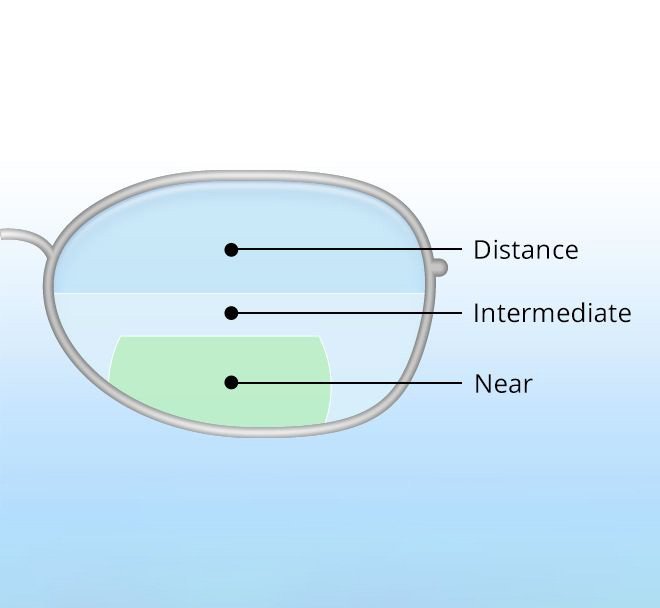
In addition to offering a viewing area for both near and far objects, the trifocal eyeglass lenses offer clarity for intermediate distances as well (50-60 cm). This intermediate area can include computer screens, the dashboard of your car, or viewing items on a grocery shelf. Each of these different viewing zones is demarcated with a visible line on the lens.
Types of Eyeglass Lenses: Progressive Lenses
These are another type of eyeglass lenses that offer clarity for your full visual range, all distances including intermediate, near, and far. However, unlike trifocal lenses, there is no line demarcating the different viewing areas. Instead, they offer a smooth transition for focusing on objects in the distance to nearby objects. A gradual change in lens power occurs, allowing clear distance vision through the top portion of the lens, clear intermediate vision through the middle portion of the lens, and clear near vision through the lower part of the lens. For more information, watch this video.
Types of Eyeglasses: Computer Vision Lenses (blue blocker)
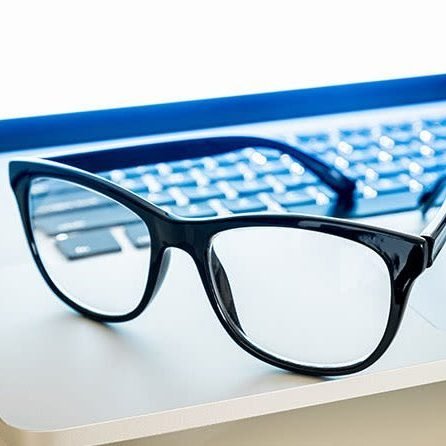
These types of eyeglass lenses are specialized to relieve eye strain, vision blur, redness, and other symptoms of discomfort associated with computer use. With the increased amount of time spent working and relaxing in front of a screen, they are designed to correct your vision for an intermediate distance (50-70cm away) and can be combined with a blue blocking lens coating (ideal for regular computer use).
Blue light radiation can be emitted from overhead lights and digital screens (computer, tablet, phone, etc), and an increasing amount of research has come out on the harmful effects of blue light. These effects include damage to the crystalline lens (which can result in cataracts), retina (which can result in macular degeneration), and inflammation of the cornea and conjunctiva.
It can also lead to visual discomfort by causing glare and eye strain. ‘Blue-blocking’ lenses block this wavelength of light to reduce visual discomfort and the harmful effects of blue light.
Another option is computer progressives, also known as office lenses, where the top of the lens is for computer use and the bottom of the lens is for near use (reading or looking at the keyboard).
Types of Eyeglasses: Aspheric Lenses
Aspheric lenses are designed to have a flatter curvature compared to conventional lenses. This makes the lenses have a slimmer profile while reducing distortion created by not looking through the center of the lens.
This results in better peripheral vision by widening your field of view. These lenses are a great option for patients with stronger prescriptions for farsightedness and nearsightedness because they reduce the magnification and minification effects created by such prescriptions. The magnification effects created by a strong farsighted prescription lens can create a “bug-eyed” look on the wearer.

Eye Glass Lenses for Outdoors: Coatings and Tints
Photochromic Lenses/Transitions: These are eye glass lenses that are capable of darkening when exposed to UV light. There are photochromic molecules that are either arranged throughout the entire lens or on a coating on the front of the lens. When these molecules are exposed to UV light, it causes the lens to tint and become darker. When not exposed to UV light, the lens returns to being clear.
There are various types of photochromic options available. Some lenses will only darken when exposed to direct sunlight, while others can darken in low light or no light conditions. There are also a variety of lens tint colors available. Transition lenses are great lenses for those wanting to avoid the hassle of needing both prescription glasses and prescription sunglasses or for patients who are sensitive to light.
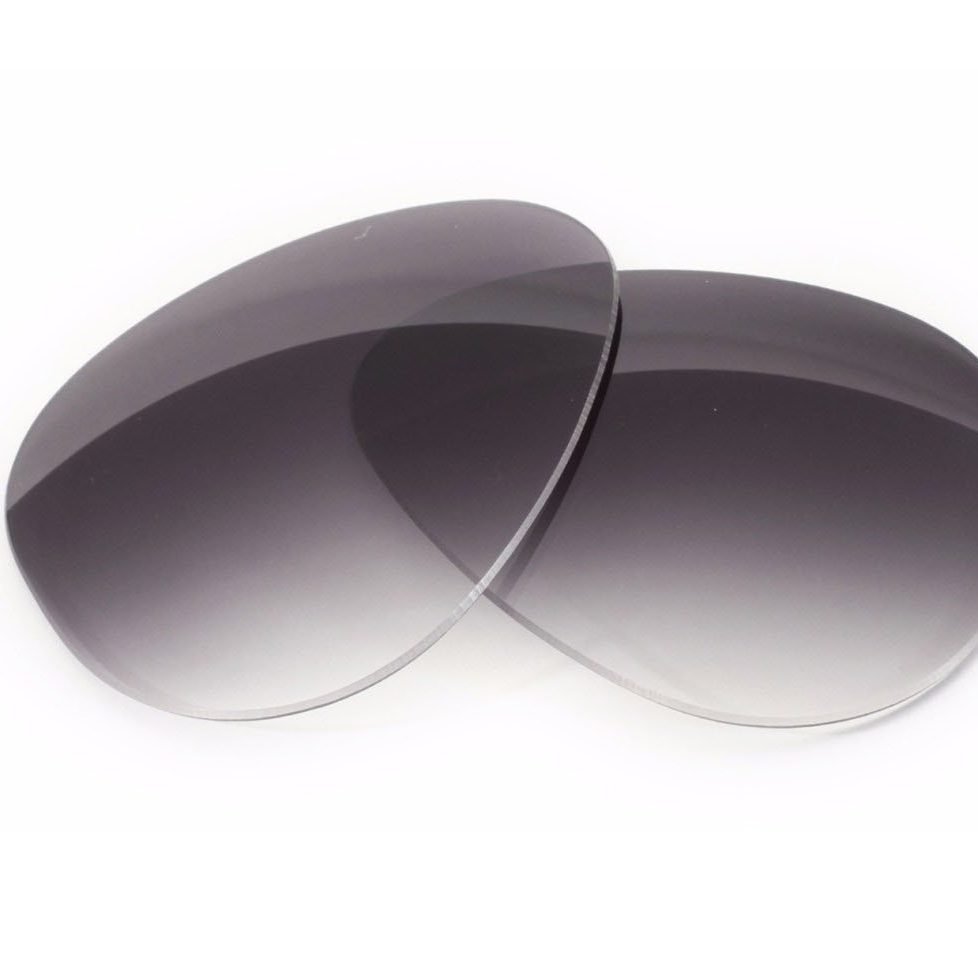
Polarized Lenses: These lenses significantly reduce glare from flat, reflective surfaces like water or the road. They are a great option for driving, water activities like fishing, and many other outdoor sports like golfing, jogging, biking, skiing and snowboarding.
Here is how polarized lenses work: most glare occurs from horizontal surfaces which makes the light “horizontally polarized”. Polarized lenses are vertically-oriented “polarizers”, which blocks horizontally polarized light. This creates a view of the world almost free of glare with increased visibility and reduced eye strain all at the same time.
Understanding Prism Lenses: Correcting Eye Alignment and Double Vision
While most lenses are designed to correct blurry vision, prism lenses serve a unique and different purpose: they correct eye alignment issues. Think of them as a specialized tool in the optometrist’s toolkit for solving specific problems that standard lenses can’t address.
What Are Prism Lenses?
A prism is a wedge-shaped piece of glass or plastic that bends light. Prism lenses incorporate this same optical principle into your prescription eyeglasses. Instead of just focusing light onto the retina to clarify an image (like nearsighted or farsighted corrections do), they redirect the light before it enters your eye.
This subtle shift in the light’s path makes the brain perceive an object in a slightly different location. By manipulating the image, the prism effectively tricks the brain into thinking the eyes are perfectly aligned, which eliminates double vision or reduces eye strain.
How Are They Different from Regular Lenses?
The key difference is in their function:
- Regular Lenses (Sphere & Cylinder): Correct focus issues like blurriness (myopia, hyperopia, astigmatism).
- Prism Lenses: Correct alignment issues (eye teaming). They do not add any focusing power themselves, though they are almost always combined with a traditional prescription to address both focus and alignment at once.
You often can’t see the prism with the naked eye, as it’s ground directly into the lens. In some cases, particularly with stronger prism powers, you might notice a slight thickness at one edge of the lens.
What Are Prism Lenses For & Who Needs Them?
An optometrist or ophthalmologist will prescribe prism lenses to treat specific binocular vision problems. The two most common reasons are:
1. To Correct Double Vision (Diplopia):
This is the primary reason for a prism prescription. If your eyes are misaligned, each eye sends a separate image to the brain, which sees two of everything. The prism moves these two images into alignment, merging them into one single, clear image.
2. To Relieve Eye Strain (From Phoria):
Sometimes, the eyes are only misaligned when they are tired or not actively focusing on an object. This hidden misalignment is called a phoria. The eye muscles must work extra hard to force the eyes to stay aligned, leading to severe symptoms like eye strain, headaches after reading or computer use, eye fatigue, squinting, pulling sensation around the eyes, motion sickness or dizziness.
A prism lens relieves this constant muscular effort, making vision comfortable and effortless. Common conditions that may require prism correction include:
- Strabismus (a turned eye, like “crossed eyes” or a “wandering eye”)
- Convergence Insufficiency (eyes have difficulty turning inward to read)
- Neurological conditions (e.g., stroke, migraine, head injury, diabetes) that affect eye muscles
- Graves’ disease ( Thyroid eye disease)
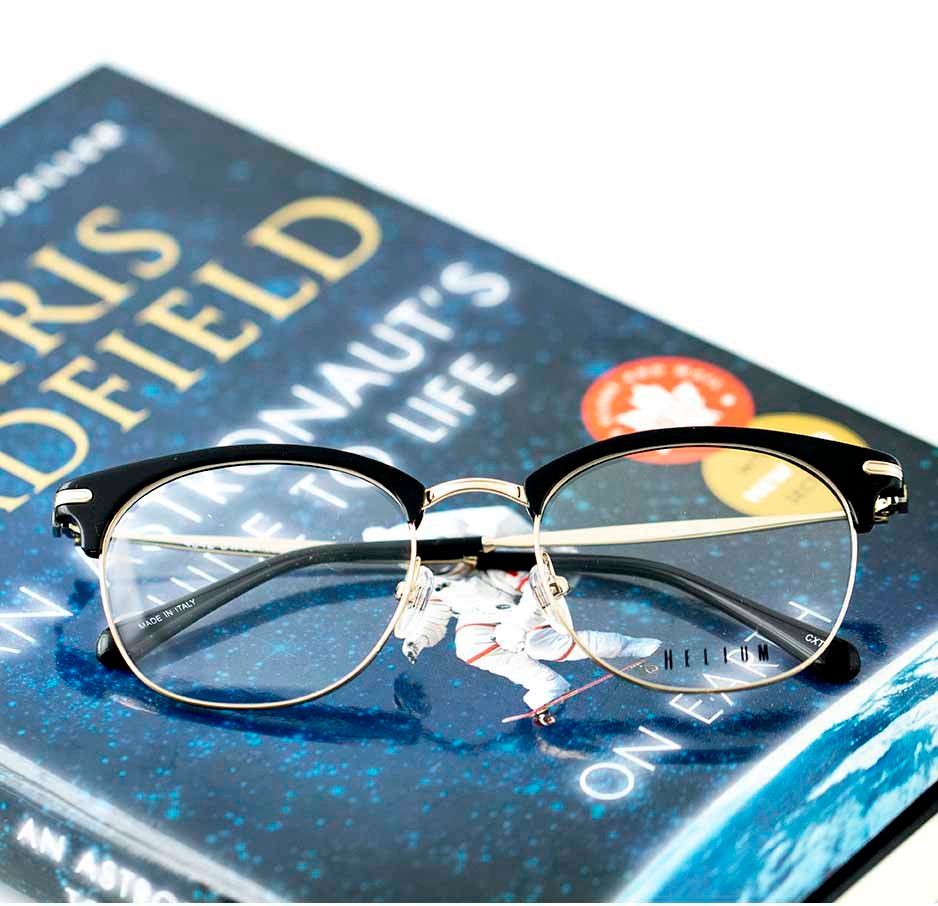
Anti-Reflective Coating (AR Coating): These eye glass lenses help to eliminate glare, reflections, and ghost images. The AR coating blocks light reflections from the front and back surface of the lens, allowing 99.5% of light to be transmitted through the lens. Not only does this mean that your vision will have greater clarity, it will also enhance the cosmetic appeal of your lenses by making them nearly invisible. This coating is especially useful for driving at night and comes standard in most lens packages.
Scratch Resistant Coating: No lens can be completely scratch proof, however, adding a scratch resistant coating to your lens creates a harder lens surface that will be more resistant to scratching. Scratches can interfere with the clarity and quality of your vision, and most lenses do come with a scratch resistant coating.
Cosmetic Tinted Lenses: Eye glass lenses can come in a variety of different tints. Feel free to ask one of our opticians or optometrists about which color options may be best for you to increase the quality of your vision or achieve an aesthetic look.