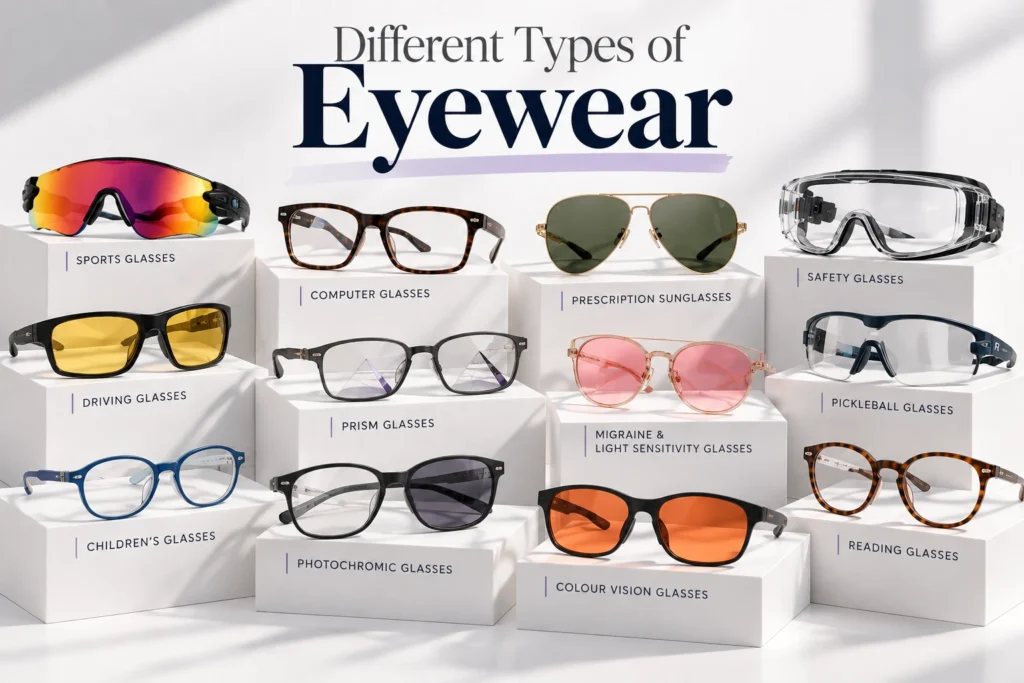
Most of us ask a lot from one pair of glasses. We wear them to drive to work, stare at a screen for eight hours, read the tiny print on a menu, walk outside into bright sun and, sometimes, head straight onto a pickleball court.
But one pair of glasses isn’t necessarily designed to do all of those jobs.
There are different types of eyewear for a reason. Your everyday prescription glasses are designed to correct your vision, while reading or computer glasses can be made for specific viewing distances. Sunglasses protect your eyes from UV radiation, and sports or safety glasses add protection that regular frames may not provide. Even something as simple as getting older can change what you need from your glasses, as the eye’s natural lens gradually becomes less flexible and makes focusing up close more difficult.
So, how many pairs do you actually need? There isn’t a magic number. Instead, it makes more sense to look at your day and ask where your current glasses are doing their job, and where they aren’t.
This guide breaks down the different types of glasses, what each is actually designed to do, and when a specialized pair might be worth considering.
At a Glance: Types of Eyewear
Different glasses are built for different parts of your day. Some correct your everyday vision, while others are designed around a specific distance, activity or type of eye protection.
| Type of eyewear | Designed for | Examples |
|---|---|---|
| Sports glasses | Vision and eye protection during sports | Pickleball, racquet sports, basketball |
| Water sports eyewear | Clear vision and protection around water | Prescription swim goggles |
| Cycling glasses | Wind, debris and outdoor light | Road, trail and commuter cycling |
| Ski & snow goggles | UV, wind, snow and changing light | Skiing and snowboarding |
| Computer & occupational glasses | Specific working distances | Screens, multiple monitors, detailed work |
| Safety glasses | Workplace and task-specific eye protection | Workshops, construction, home projects |
| Prism glasses | Certain eye alignment and binocular vision needs | Clinically prescribed prism |
| Low-vision eyewear | Additional optical assistance when regular glasses aren’t enough | Magnification and task-specific aids |
| Sunglasses | UV protection and outdoor comfort | Polarized and prescription sunglasses |
Jump to a Type of Specialized Eyewear
Types of Specialty Eyewear: Computer Glasses
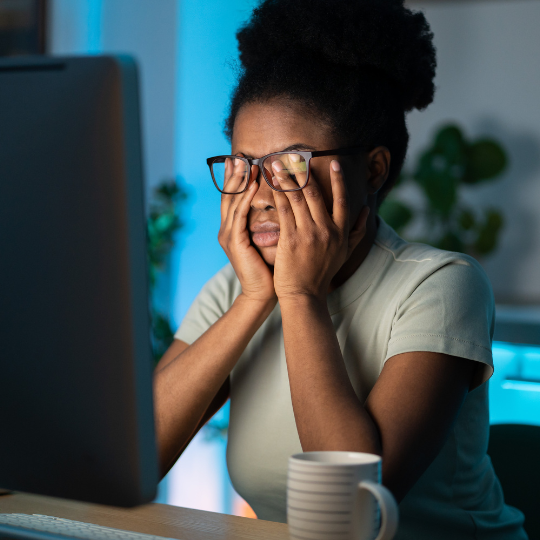
If your regular glasses help you see across the room but your computer still feels tiring or slightly out of focus, the problem may be distance. A computer screen sits in an awkward middle zone. It’s usually farther away than a book but much closer than the distance your everyday glasses may be optimized for.
Computer glasses are prescription glasses designed around your working distance. Instead of trying to give you clear vision everywhere, they can be customized to make the area around your computer, desk, and nearby workspace easier to see.
How Do Computer Glasses Work?
Computer glasses change where your prescription is optimized.
For example, if your monitor sits about an arm’s length away, your optometrist can measure that working distance and prescribe lenses that make focusing there more comfortable. If you use two large monitors, the lens design can also provide a wider area of intermediate vision so you aren’t constantly turning or tilting your head to find the clear part of the lens.
There are different types of glasses for computer use. Some are single-vision lenses set specifically for your screen distance. Others are occupational or office lenses that provide a range of vision, allowing you to see your keyboard and paperwork up close, your monitors a little farther away, and, depending on the design, someone sitting across the room.
How Can Computer Glasses Help?
The biggest advantage is simple: your glasses are being fitted to your workspace instead of making your eyes and body adapt to your glasses.
That can be particularly helpful if you find yourself leaning toward the screen, lifting your chin to look through your progressives, moving your head from side to side across multiple monitors or taking your glasses on and off throughout the workday.
Computer glasses may also be considered when screen use is associated with blurred vision, headaches or tired eyes. However, glasses aren’t the only possible factor. Dry eye, lighting, screen position, focusing demands and long periods without visual breaks can all contribute to digital eye strain.
Are Computer Glasses the Same as Blue-Light Glasses?
No. This is probably the biggest misconception about this type of eyewear.
Computer glasses are designed around how you focus and the distance of your screen. Blue-light glasses simply contain a lens filter or coating.
A blue-light filter doesn’t correct an outdated prescription or turn ordinary glasses into occupational lenses. Current evidence also hasn’t shown that blue-light filtering lenses reliably reduce digital eye strain for the general population.
How Do I Get Prescription Computer Glasses?
You don’t need to figure out which computer glasses to buy before your appointment. Start by telling your optometrist how you actually use your screens.
Think about your setup before your eye exam. Do you use a laptop or desktop? One monitor or three? Do you frequently look from your screen to paperwork? How far away is your main monitor?
You can even measure the distance from your usual sitting position to your screen and bring that measurement with you.
After checking your prescription and discussing your workspace, your optometrist can recommend the type of eyewear and lens design that makes sense for those distances. Depending on your needs, that could mean dedicated computer glasses, occupational lenses or another type of prescription eyewear.
For people who spend most of their working day looking at a screen, a second pair of glasses designed specifically for those eight hours can sometimes make more sense than asking one pair to do absolutely everything.
Sports Glasses & Types of Protective Eyewear
Vancouver takes its recreational sports pretty seriously. Maybe you’ve joined the pickleball crowd, you’re starting another dodgeball season, cycling the seawall or heading back to the court after work. Whatever you’re playing, a fast-moving ball doesn’t care that your everyday glasses are expensive.
Sports glasses are designed to stay put, protect your eyes and give you clear vision while you’re moving. Depending on the sport, that can mean impact-resistant lenses, more coverage around the eyes, a secure frame or strap, prescription lenses, or lenses selected for indoor and outdoor conditions.
The right sports eyewear also depends on what you’re doing. Glasses that make sense for cycling aren’t necessarily appropriate for basketball, swimming or a racquet sport. Even within one sport, your needs can change. Outdoor pickleball players may want UV protection and contrast-enhancing lenses, while an indoor player may prioritize clear lenses and impact protection.
This is one area where choosing eyewear by activity matters more than choosing it by appearance. An optometrist can help you compare different types of sports glasses based on your prescription, the sport you play, where you play it and the kind of eye protection you actually need.
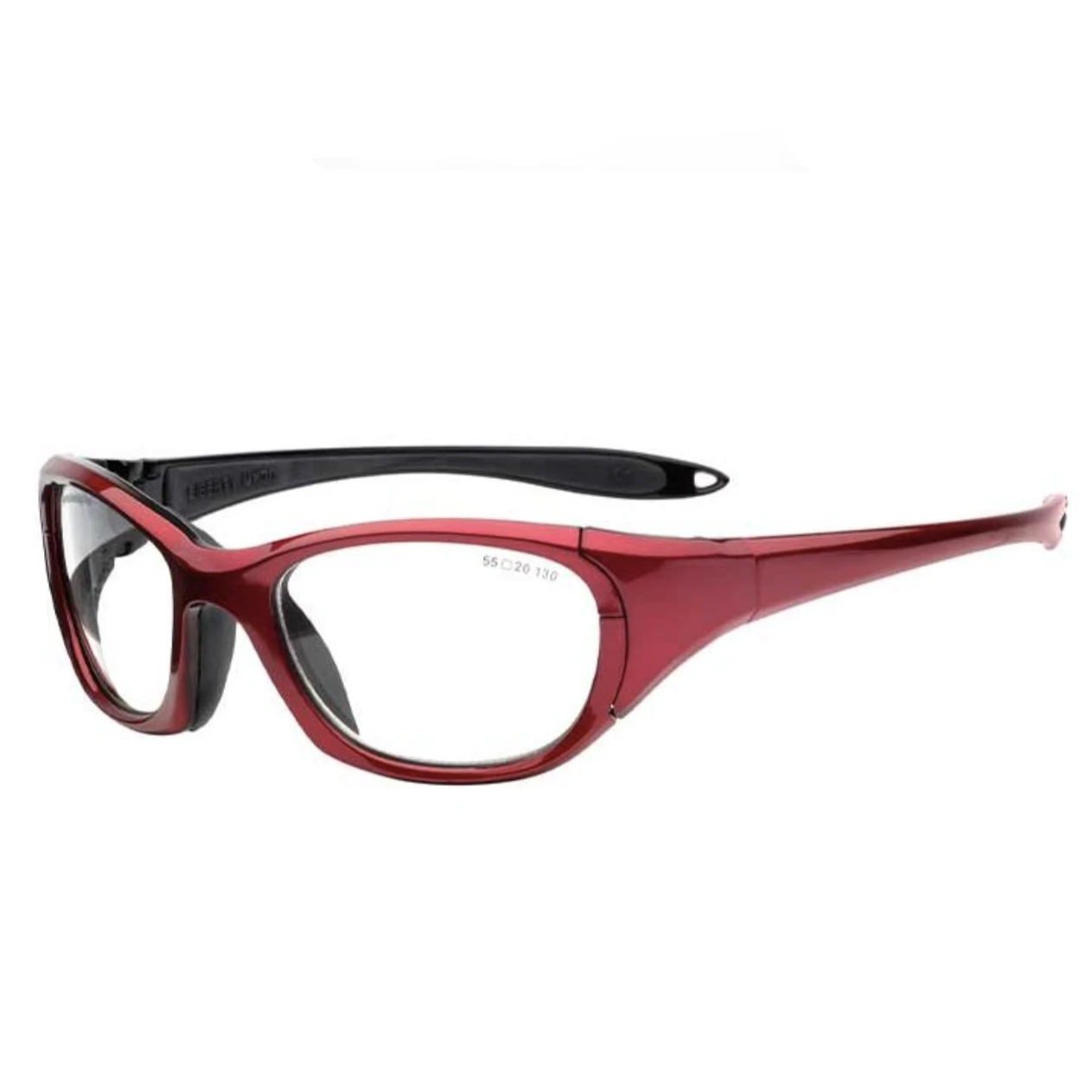
Dodgeball Sports Glasses: Rec Specs Maxx 30
Dodgeball is exactly the kind of sport where your everyday prescription glasses don’t belong on the court. The Rec Specs Maxx 30 is a prescription-ready sports frame designed for ball sports, with a secure fit and impact protection that meets ASTM F803 standards. It’s a good example of what to ask your optometrist about if you need clear vision and protection during rec-league sports.
Our pick: Rec Specs Maxx 30
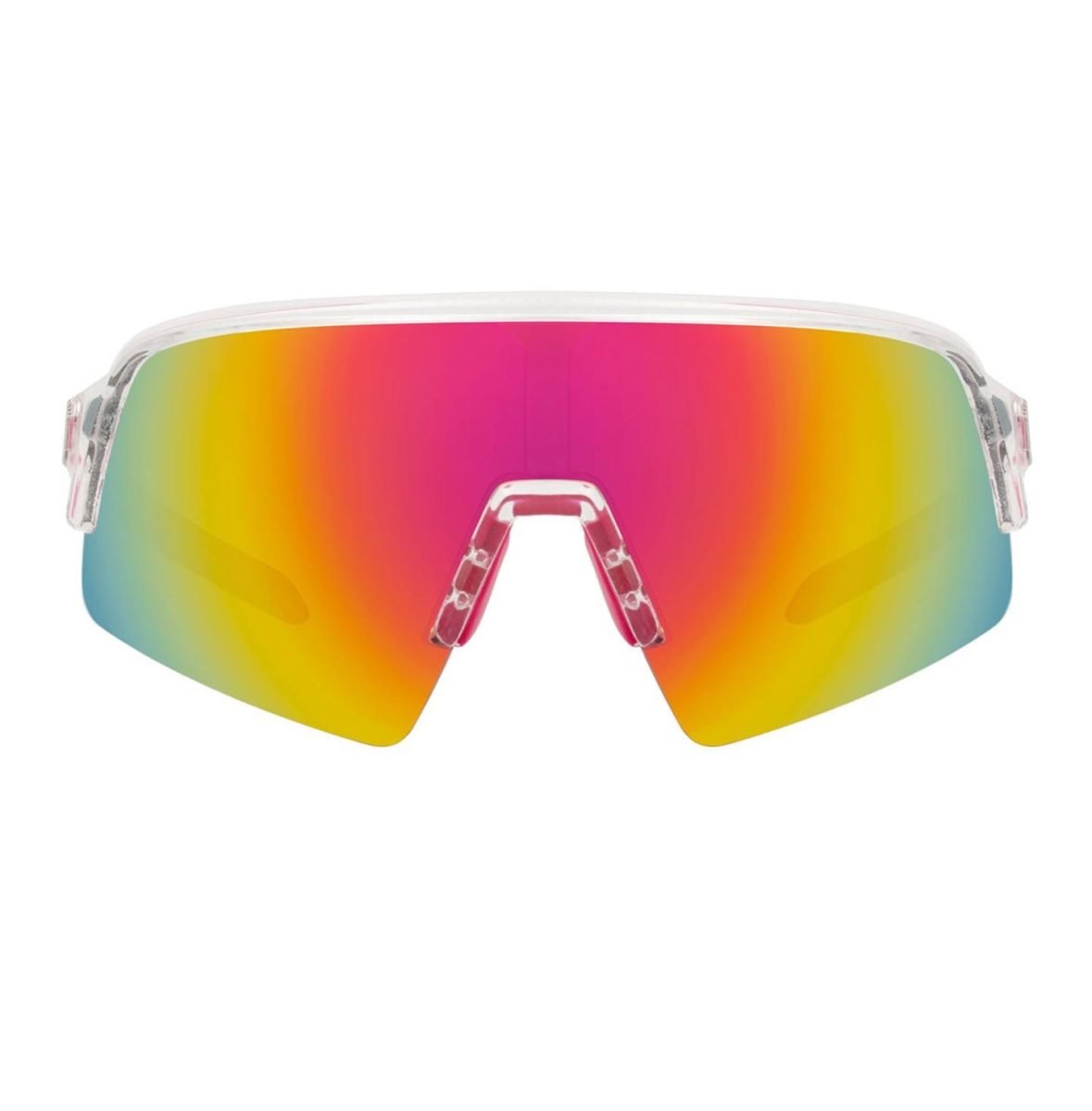
Volleyball: Rec Specs Protective Sports Glasses
A volleyball is big, fast, and occasionally headed directly at your face. For indoor play, look for sports glasses made for impact protection rather than ordinary prescription frames. Rec Specs specializes in prescription-ready protective sports eyewear with polycarbonate lenses and frames tested to ASTM F803 impact standards, making this the type of eyewear we’d look at for someone who needs vision correction on the court.
For beach volleyball, we’d also want to talk about UV protection and an appropriate outdoor lens tint.
Our pick: Rec Specs Protective Sports Eyewear
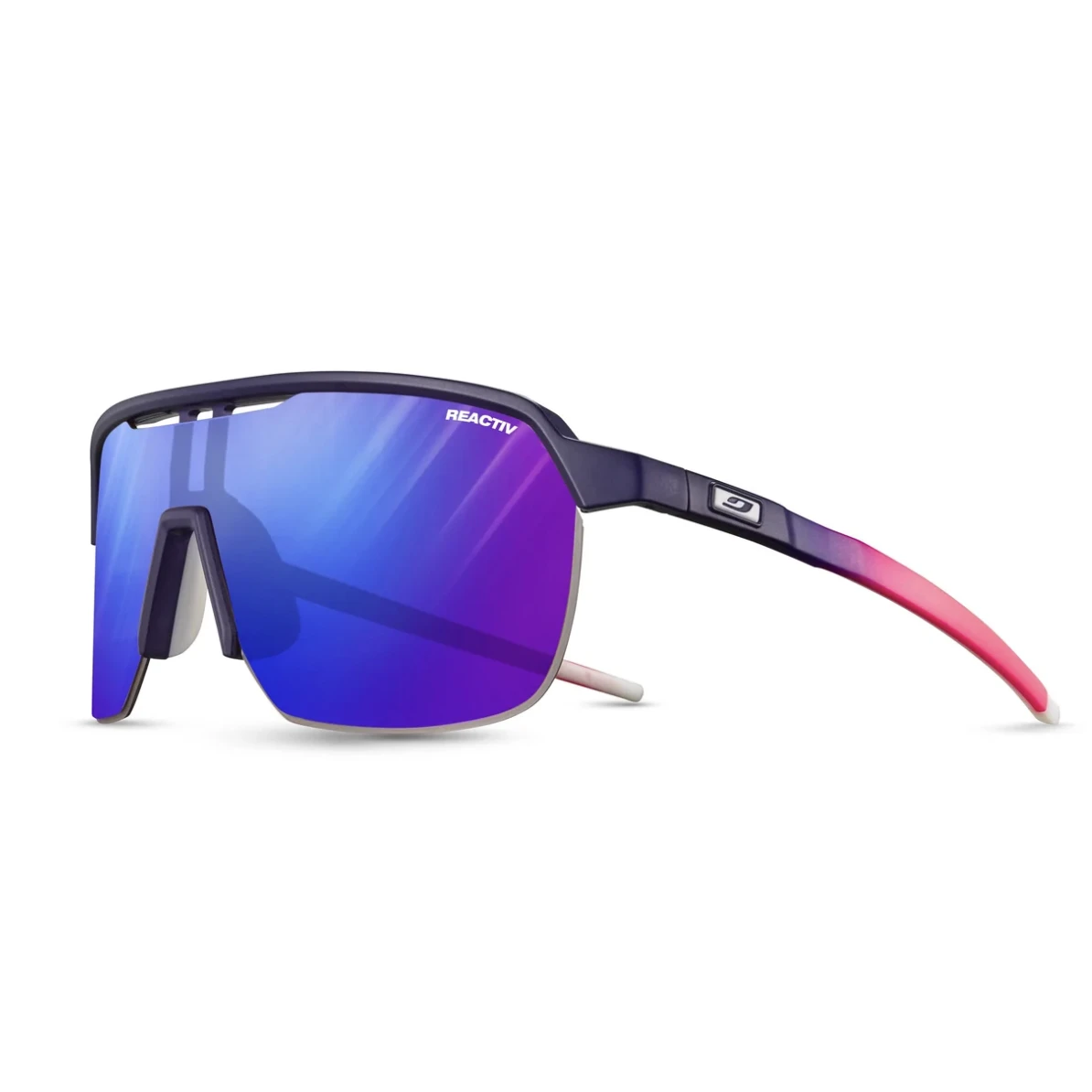
Mountain Biking: Julbo Fury REACTIV
Whistler and the North Shore give Vancouver riders some of the world’s best mountain biking practically in our backyard. The Julbo Fury REACTIV has a wide wraparound lens, ventilation and a grippy fit, but the feature we particularly like for mountain biking is its photochromic lens. It automatically gets lighter or darker as you move between shady forest trails and exposed sections of bright sun.
Our pick: Julbo Fury REACTIV
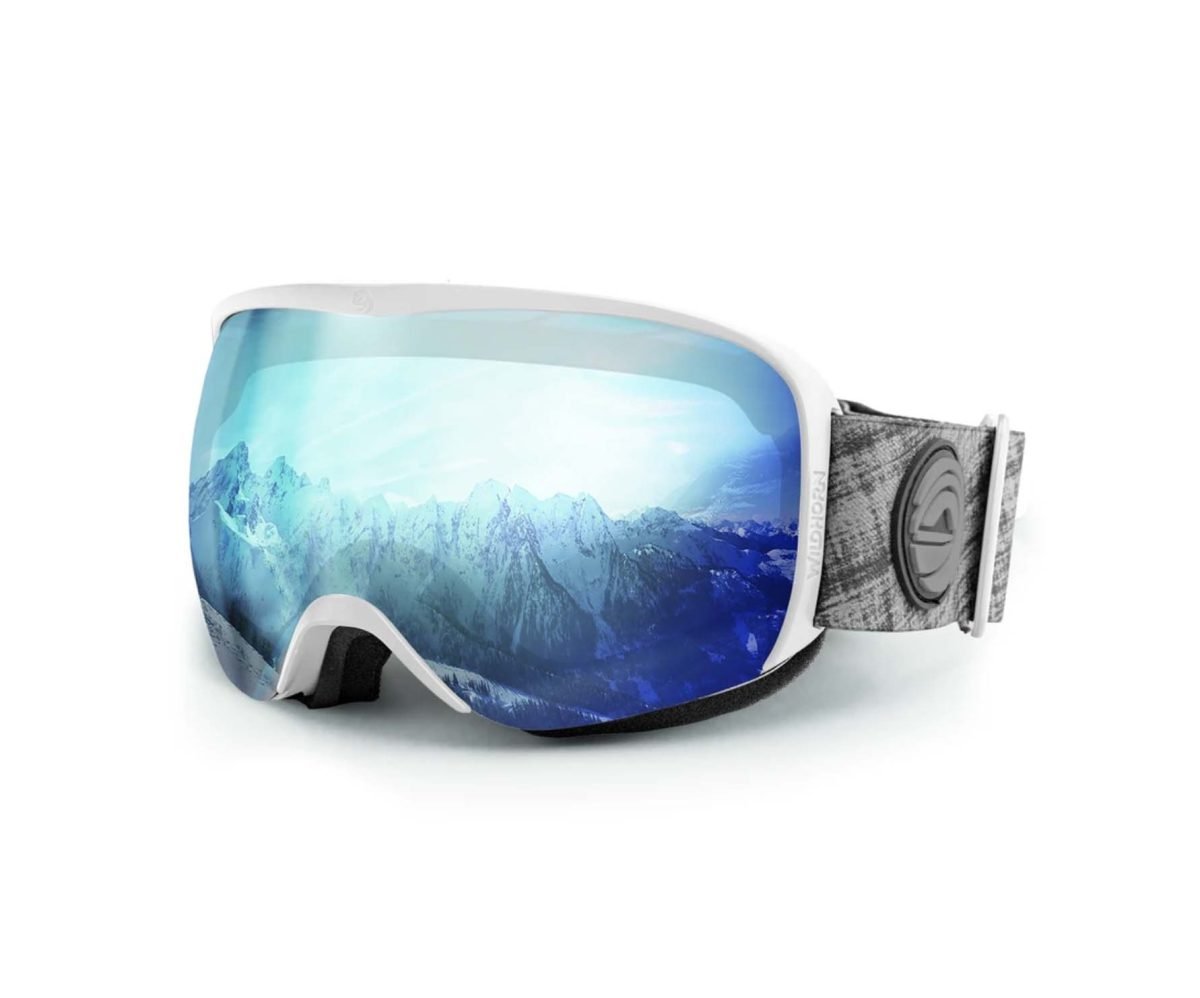
Snowboarding: SportRx Prescription Snow Goggle
If you need prescription glasses to see the chairlift sign, you probably need them to see clearly coming down the mountain too. A prescription snow goggle insert fits inside compatible ski or snowboard goggles, giving you prescription vision without trying to squeeze your regular glasses underneath. SportRx makes its inserts to fit different goggle models and offers prescription lens and anti-fog options.
Our pick: SportRx Prescription Snow Goggle
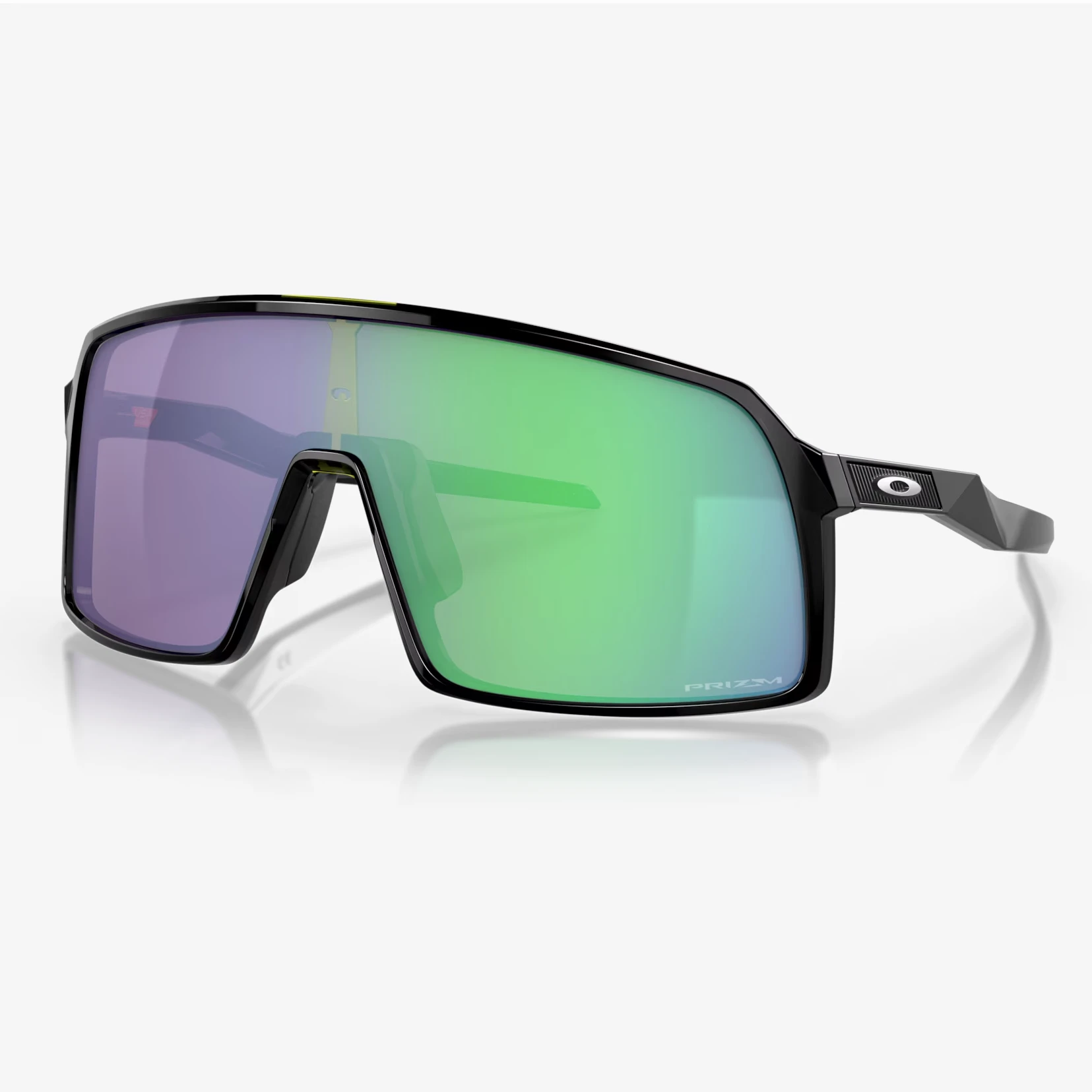
Cycling: Oakley Sutro
Vancouver cycling can mean bright sun, wet pavement, wind, bugs and glare all in the same ride. The Oakley Sutro was designed with cyclists in mind, with a high-wrap shield for coverage, grippy nose pads and Prizm lens options. Oakley also offers polarized sun lenses that reduce reflected glare from surfaces such as roads and water, as well as prescription options on some Sutro configurations.
Our pick: Oakley Sutro
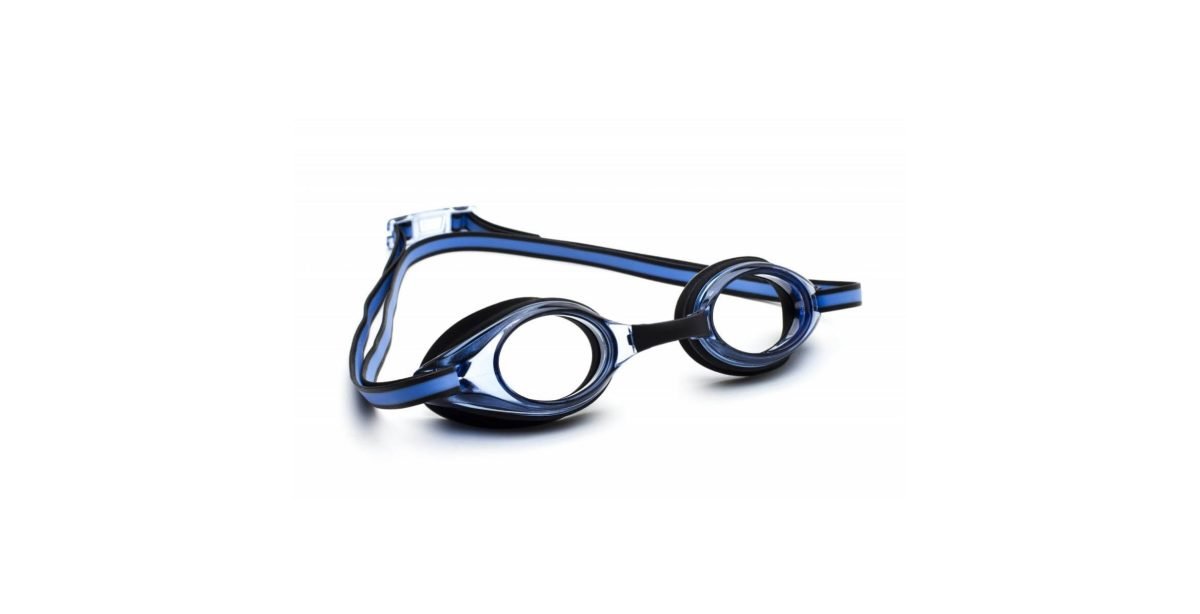
Swimming: Speedo Vanquisher 3.0 Optical Goggles
You don’t have to choose between blurry lane markers and wearing contacts in the pool. Speedo Vanquisher 3.0 Optical Goggles are available in prescription powers from 0 to -8.0 and are designed for training and racing. For swimmers who normally wear glasses, optical swim goggles are one of the most practical types of specialized eyewear you can own.
Our pick: Speedo Vanquisher 3.0 Optical Goggles
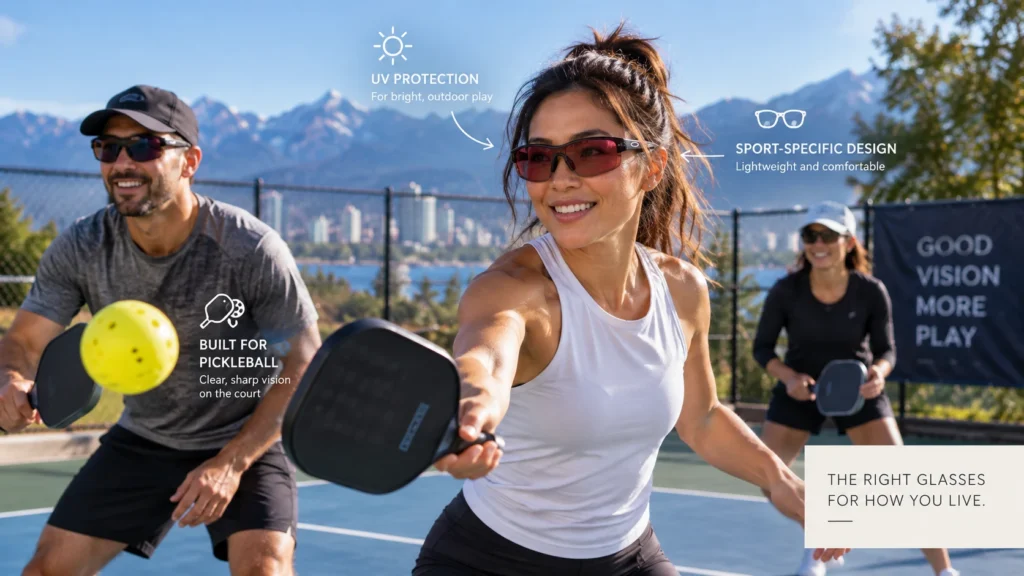
Pickleball is a good example of why specialized eyewear matters. Regular glasses may help you see the ball, but they aren’t necessarily designed to protect your eyes from impact.
Look for pickleball eyewear designed for impact protection, with ASTM F3164-24 as the minimum eye-protector standard. Options include prescription sports glasses, impact-resistant lenses with UV protection, and lensless designs that offer more airflow and an unobstructed view.
RIA Reflex with Clear HD+
This would be my premium performance option. RIA’s Court HD+ lenses are specifically designed for tennis and pickleball, with a brown-amber tint intended to increase contrast between the ball and the court/background. They are non-polarized, shatterproof and provide 100% UV400 protection.
CRBN Pivot Pickleball Glasses
This is the versatile indoor/outdoor option. The Pivot includes photochromic, orange mirrored, and amber interchangeable lenses, and CRBN says the lenses provide UV400 protection and meet ANSI Z87.1 and Z80.3 standards. The frame can also be converted from a traditional full frame to an edgeless configuration.
Kitchen Blockers Lensless Pickleball Eyewear
This is the unusual one I think belongs in the article because you specifically wanted to acknowledge the lensless style you see on pickleball courts. Instead of putting a lens in front of the eye, the open-frame design provides a physical barrier around the eye area while leaving the player’s vision unobstructed.
Sports are only one place where specialized eyewear can make a difference. Some of the most interesting types of glasses are designed for much quieter parts of life, from seeing a computer screen comfortably to managing light sensitivity, double vision or low vision.
Here are some of the specialty glasses you may not realize an optometrist can prescribe or recommend.
Specialized Types of Eyewear for Work, Screens, and Everyday Tasks
Not every pair of glasses needs to do everything.
Sometimes the best eyewear is designed around one very specific task. Someone who spends eight hours working across two monitors has different visual demands than a mechanic looking above their head, a musician reading a score or a dentist moving between a patient and instruments.
That’s where specialized glasses come in. The prescription, lens design, focal distance and even the shape of the frame can be adjusted around how and where you actually need to see.
Computer Glasses
Computer glasses are designed for the intermediate viewing distance where most computer screens sit. This is typically farther away than a book but closer than objects across the room.
For people who wear progressive lenses, this can make a surprisingly big difference. A standard progressive may only provide a relatively small area for intermediate vision, which can lead to constantly adjusting your head to find the clearest part of the lens.
Computer glasses can provide a wider field of clear vision across your monitor or multiple screens, making them useful for office work, gaming, editing, design and other screen-heavy jobs.
They can also be customized to your actual workspace. If you regularly use two or three monitors, your optometrist can consider your working distances when recommending the lens design.
Occupational and Office Lenses
Occupational glasses take this idea a little further.
Instead of trying to provide clear vision from reading distance all the way to the horizon, these lenses concentrate more of the usable lens area on near and intermediate distances.
For example, an office lens might allow you to clearly see your phone, paperwork, computer monitor and someone sitting across your desk.
Other occupations can require even more specialized designs. Electricians, mechanics and tradespeople who frequently look upward may benefit from lenses with an additional near-vision area positioned higher in the lens. Musicians may need a prescription optimized specifically for the distance between their eyes and a music stand.
The goal isn’t simply sharper vision. It’s eyewear designed around what your eyes actually do all day.
Specialized Glasses for Driving and Low-Light Conditions
Driving asks a lot from your eyes. You’re constantly shifting focus between the dashboard, mirrors, road signs, pedestrians and objects farther down the road. At night, there’s the added challenge of glare from headlights and bright streetlights against a much darker background.
Driving Glasses
Prescription driving glasses can be optimized for clear distance vision while still allowing you to comfortably see the dashboard and navigation system. For people who wear progressives, certain lens designs can provide a wider distance zone so there’s less need to move your head to find the clearest part of the lens.
An anti-reflective coating can also be useful for driving, particularly after dark. It reduces reflections from the surfaces of the lenses, which can otherwise make headlights and streetlights more distracting.
What About Yellow Night Driving Glasses?
Yellow-tinted “night driving glasses” are heavily marketed for reducing glare, but darker or tinted lenses also reduce the amount of light reaching your eyes.
That trade-off matters at night, when your visual system is already working with less available light. Rather than automatically reaching for yellow lenses, it’s worth checking whether an outdated prescription, dirty or scratched lenses, cataracts, dry eye or another vision issue is contributing to difficulty with night driving.
If headlights suddenly seem much brighter than they used to, an eye exam may be more useful than another pair of glasses.
Specialized Glasses for Light Sensitivity and Eye Conditions
Not all types of eyewear are designed simply to make your vision sharper. Some specialized glasses are made to change how your eyes experience light, reduce visual discomfort or help you make better use of the vision you have.
Types of Glasses for Light Sensitivity
Light sensitivity, also called photophobia, can make sunlight, headlights, fluorescent lighting, and even bright screens uncomfortable. Depending on what is causing the sensitivity, an optometrist may recommend specialty eyewear with a particular tint or filter rather than simply choosing the darkest sunglasses available.
One example is FL-41 lenses, which have a rose or reddish tint and have been studied for migraine-related light sensitivity. These lenses filter certain wavelengths of visible light rather than uniformly darkening everything you see.
There isn’t one tint that works best for everyone. The color, darkness, and type of filter can be selected according to your symptoms, environment, and the activities that tend to bother your eyes.
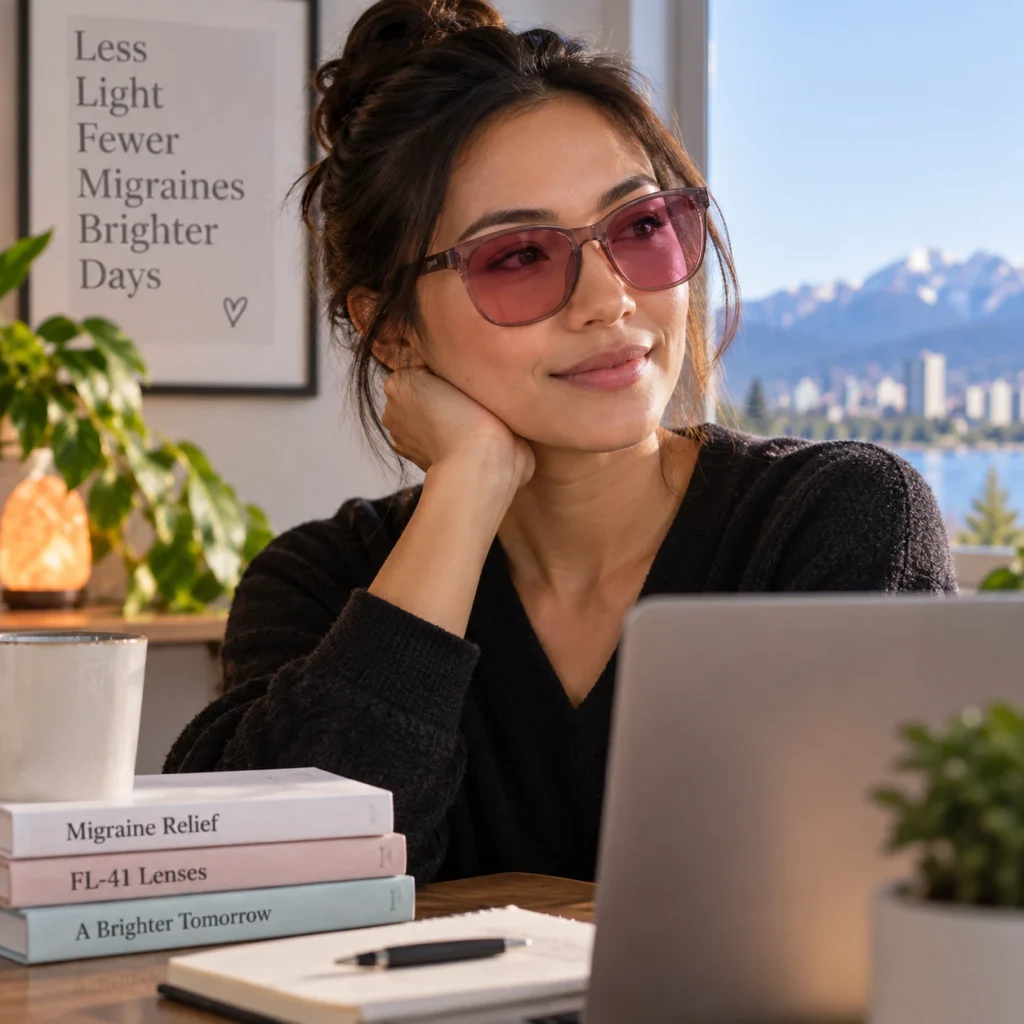
Migraine Glasses and FL-41 Lenses
If you’ve ever turned down the brightness on every screen in the room during a migraine, you already understand why specialized eyewear for light sensitivity exists.
Migraine glasses typically use tinted or filtered lenses designed to reduce wavelengths of light that may be uncomfortable for people with photophobia or migraine.
One of the better-known options is FL-41 lenses. The distinctive rose-coloured tint filters portions of the blue-green spectrum and has been studied for its potential to reduce light sensitivity and migraine symptoms in some people.
These aren’t simply darker sunglasses. In fact, wearing very dark lenses indoors isn’t always the best solution for chronic light sensitivity. Specialized filters can reduce bothersome wavelengths without unnecessarily blocking as much visible light.
Migraine glasses also aren’t a treatment for the underlying cause of migraines. Think of them as another tool for managing a particular trigger or symptom.
If you’ve recently developed significant light sensitivity, or it suddenly feels much worse than usual, it’s worth having your eyes examined rather than assuming you just need darker glasses.
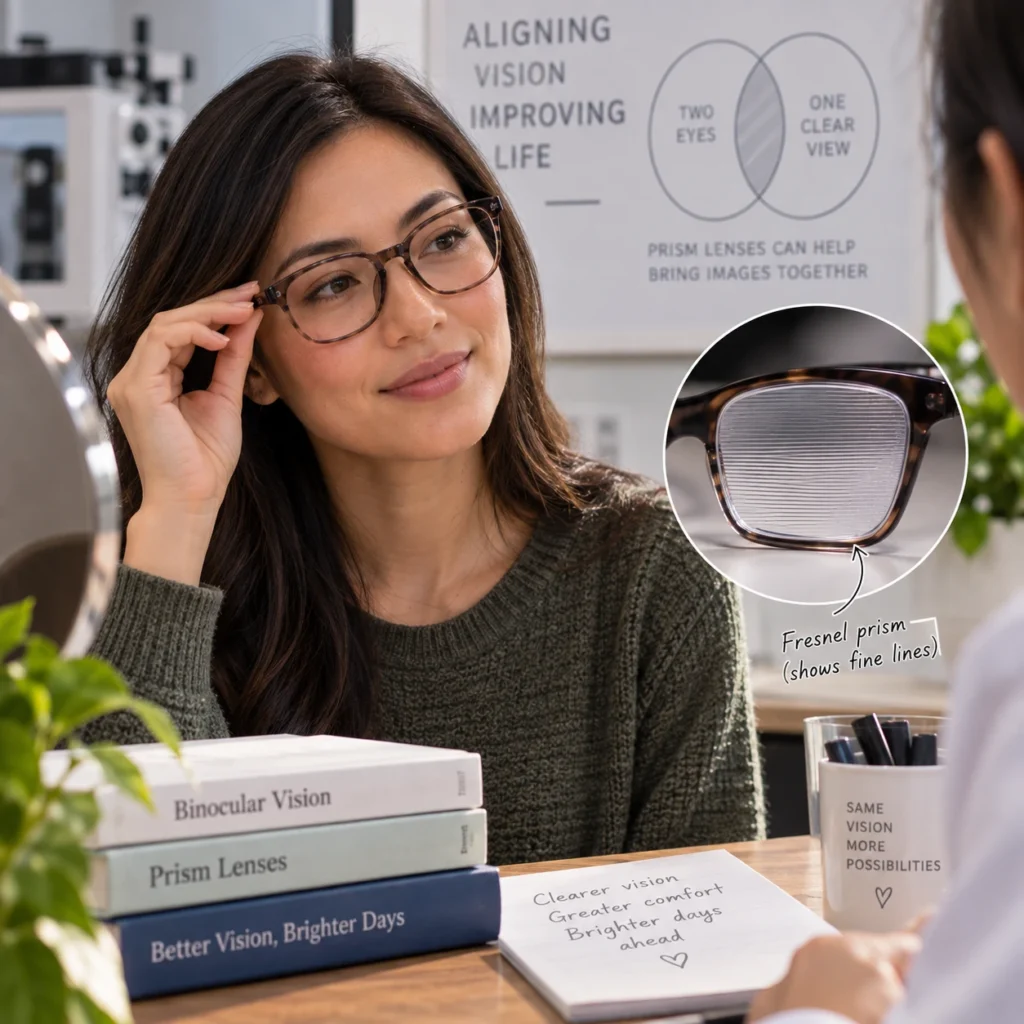
Prism Glasses for Double Vision
Prism glasses look surprisingly ordinary, but the lenses work differently from a standard prescription. Prism lenses redirect light to shift where an image appears, which can make it easier for the brain to combine the images from both eyes into one.
They may be prescribed for certain types of double vision or eye alignment problems. Prism can be built directly into prescription lenses, while a temporary Fresnel prism may be placed over a lens to see how your eyes respond.
Because double vision can have many causes, prism glasses aren’t something you choose off the shelf. An eye exam can determine what’s causing the double vision and whether prism correction is an appropriate option.
Low-Vision Glasses and Visual Aids
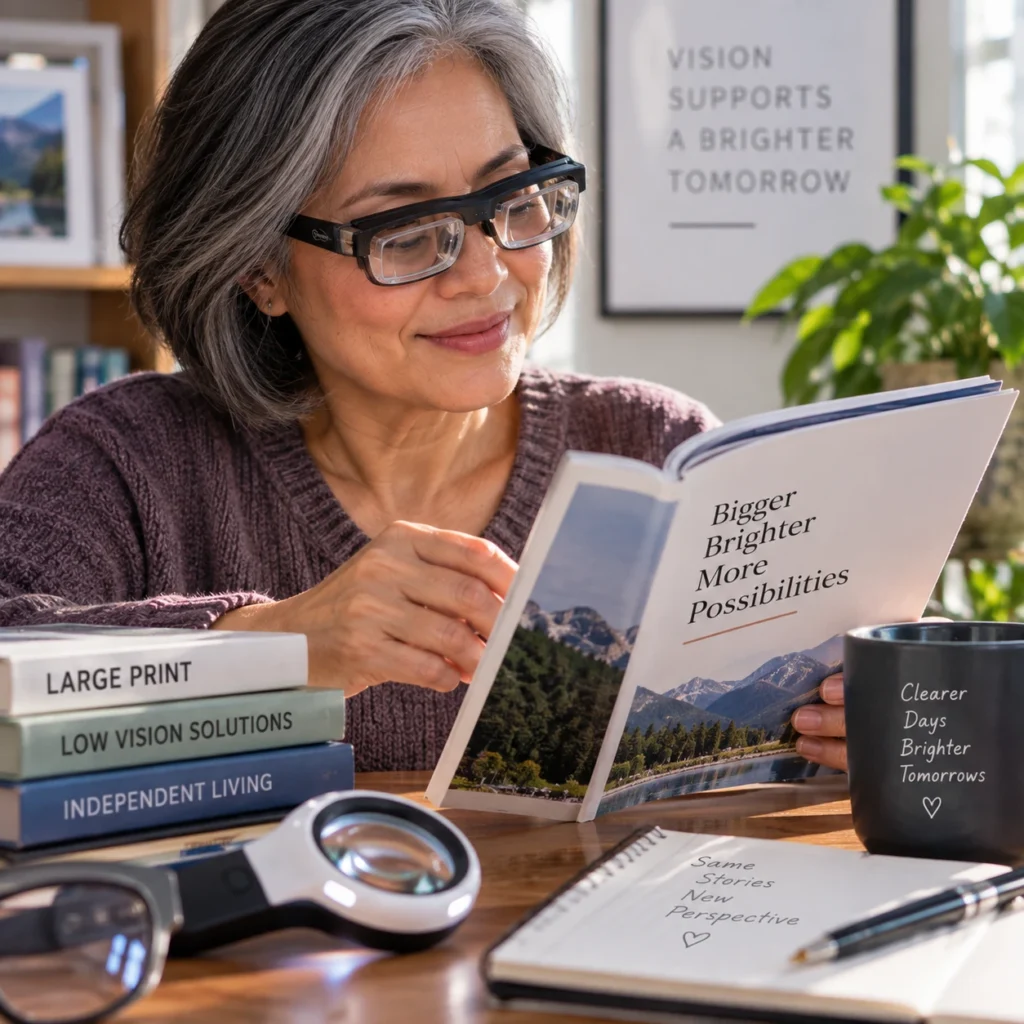
Some types of glasses are designed for people whose vision cannot be fully corrected with a standard prescription.
Depending on the type and degree of vision loss, specialized eyewear may include high-powered reading glasses, magnifying lenses, telescopic glasses, filters, or other optical aids. Each serves a different purpose, from making print easier to read to helping someone recognize objects at a greater distance.
These devices don’t necessarily restore normal vision. Instead, they’re selected to help someone use their remaining vision more effectively for the things they actually want to do.
That’s one of the biggest differences between everyday prescription glasses and specialty glasses. Sometimes the most useful pair isn’t designed to be worn all day. It’s designed around one particular visual problem, environment, or activity.
Photochromic Glasses for Changing Light
If you regularly move between indoors and outdoors, carrying two pairs of glasses can get old pretty quickly.
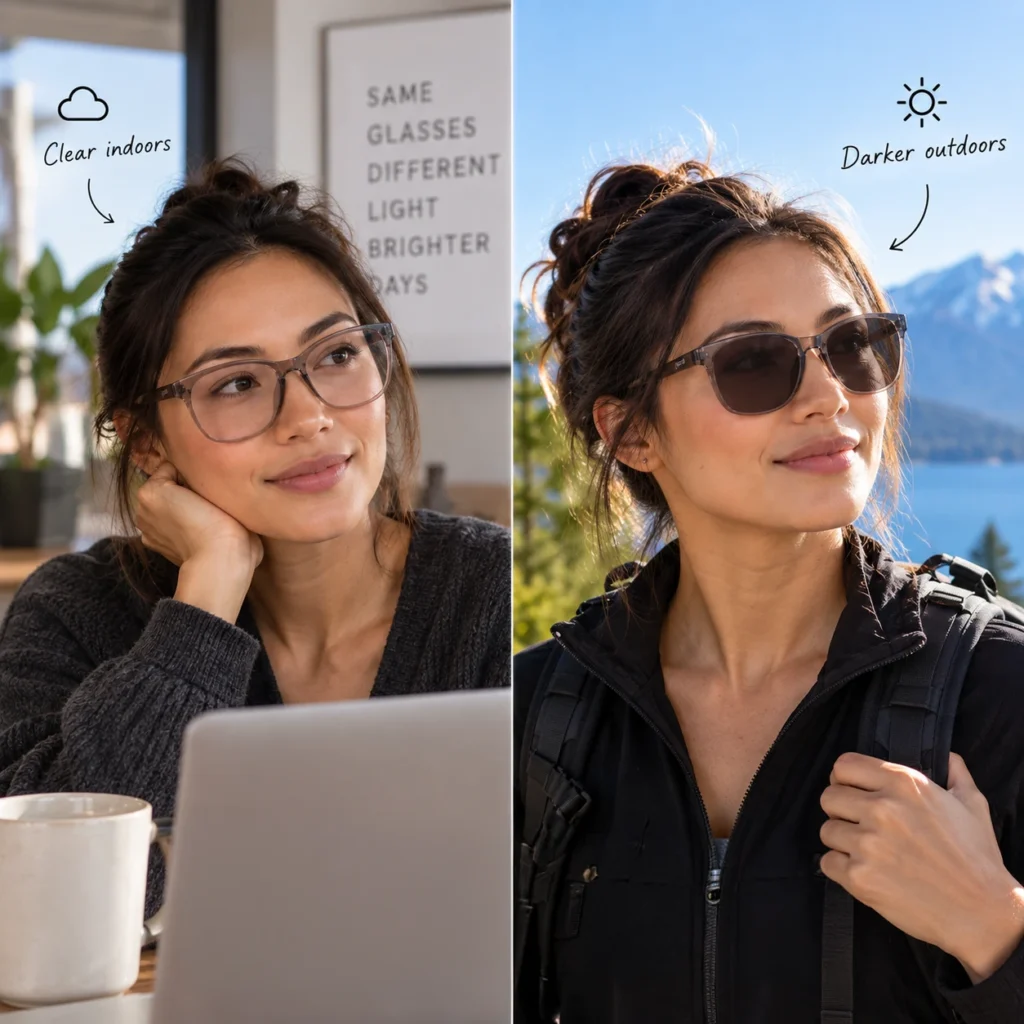
Photochromic lenses, sometimes called transition lenses, automatically darken when exposed to certain wavelengths of ultraviolet light and return toward clear when that exposure decreases. They can turn an everyday prescription into a more adaptable type of specialized eyewear.
They’re particularly convenient for people who spend their day moving between indoor and outdoor environments, but there is one limitation worth knowing about: photochromic lenses don’t always become as dark inside a vehicle because the windshield blocks much of the UV light that traditionally activates them.
Newer photochromic lens technologies can respond to a broader range of light conditions, so there are now different options depending on how and where you plan to wear them.
For someone who constantly forgets their sunglasses, that’s a pretty useful upgrade.
Glasses for Colour Vision Deficiency
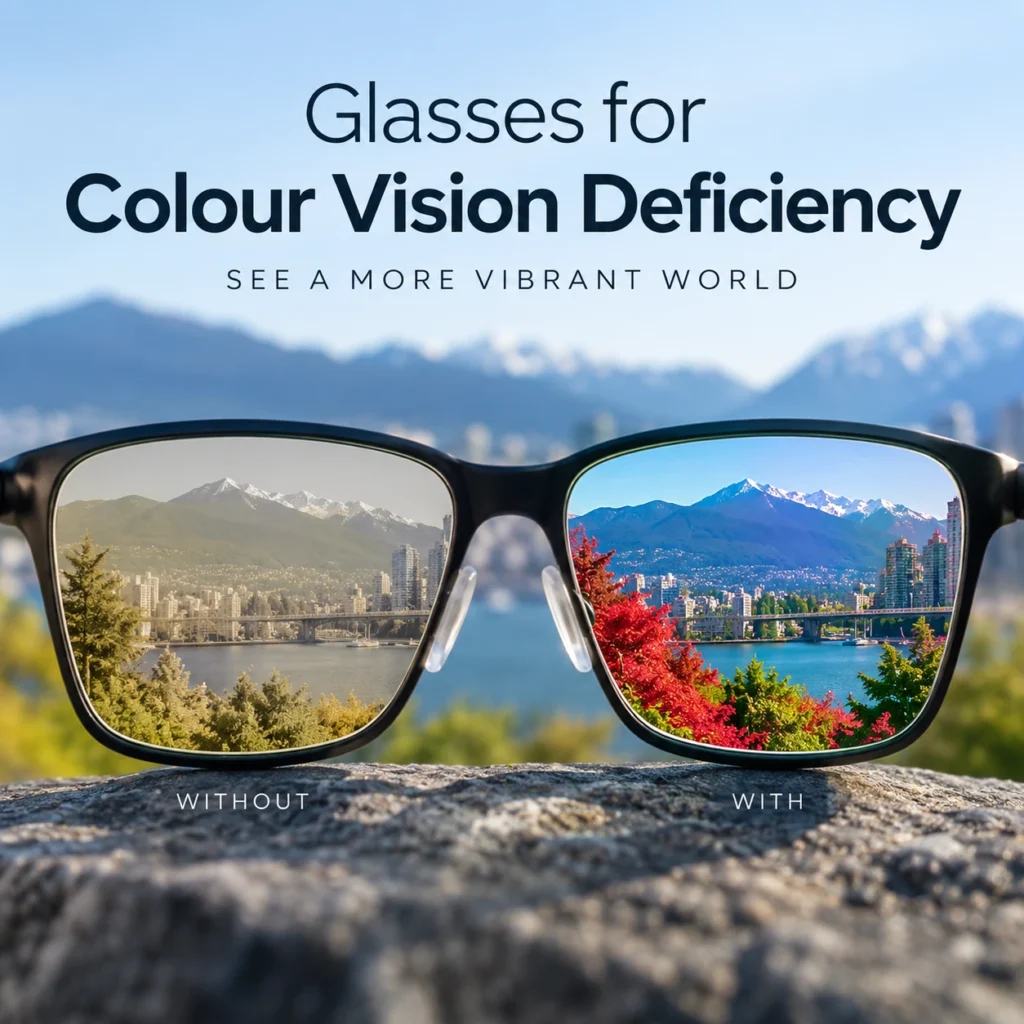
Colour vision deficiency, often called colour blindness, doesn’t usually mean seeing the world without colour. More often, certain colours are simply harder to distinguish from one another, with red-green colour vision deficiency being the most common type.
You may have seen colour blind glasses that claim to make colours easier to tell apart. These specialized glasses use filters that alter certain wavelengths of light, which can increase the contrast between some colours for some people.
The experience varies quite a bit. Colour-filtering glasses don’t correct colour vision deficiency or give someone typical colour vision, and they won’t work the same way for every type of colour vision deficiency. Some people notice a meaningful difference in particular colours, while others notice very little.
If you frequently have trouble distinguishing colours, a colour vision test can help determine what type of colour vision deficiency you have before you invest in specialized eyewear.
Specialized Glasses for Children
Kids’ glasses have a harder job than most adult glasses.
They get dropped, twisted, stuffed into backpacks and occasionally used in ways no eyewear designer could have predicted. But durability is only one consideration. Children’s eyewear may also need to support a developing visual system or be designed around a particular eye condition.
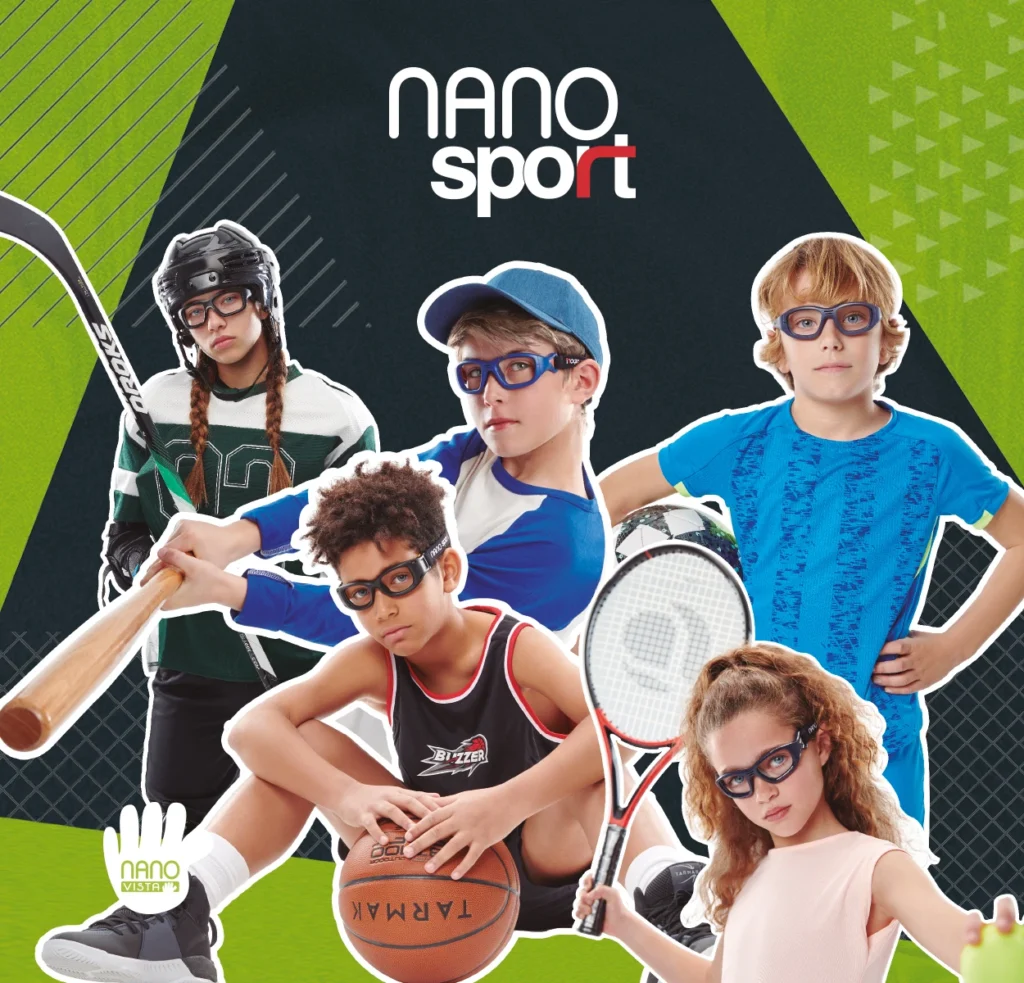
Specialized glasses for children can include sports goggles, impact-resistant eyewear, myopia-control spectacle lenses and glasses designed for conditions such as amblyopia or significant differences in prescription between the two eyes.
Fit matters too. A child’s eyes need to sit in the right position behind the lenses for the prescription and lens design to work as intended. Frames that constantly slide down the nose aren’t just annoying. They can change where the child is looking through the lenses.
For kids who play sports, specialized sports eyewear can also provide protection that everyday frames weren’t designed to offer.
Children grow quickly, their prescriptions can change and their visual needs change along with the activities they do. Their glasses should be able to keep up.
Frequently Asked Questions About Types of Eyewear
What types of glasses are useful if I work on multiple computer monitors?
Computer or occupational glasses can be especially useful for people working across two or three monitors.
Standard progressive lenses need to accommodate near, intermediate and distance vision within one lens. That can leave a relatively narrow area for the intermediate distance where your monitors sit.
Some types of prescription glasses can instead prioritize near and intermediate vision, creating a wider usable area across your screens. Your optometrist can also consider your actual working distances when recommending the lens design.
If you’re constantly turning your head to make different parts of your monitor clear, your workspace may be telling you something about your glasses.
Which types of glasses are best if I keep taking my glasses off to read?
That depends on why taking them off makes reading easier.
Someone who is nearsighted may discover that close objects are clearer without their distance prescription. Someone experiencing presbyopia may need a different solution altogether.
Depending on your prescription and how you use your vision, different types of prescription glasses could include reading glasses, progressives, bifocals or a separate pair designed for a particular near distance.
Instead of automatically taking your glasses on and off all day, tell your optometrist when you see better without them. That’s useful information.
Are there types of glasses specifically for people who hate progressive lenses?
Yes. Progressives are convenient, but they aren’t the only way to manage different viewing distances.
Separate distance and reading glasses are one option. Computer or occupational lenses can be another, particularly if most of your day happens within a desk-sized bubble.
There are many different types of glasses, and the most convenient option on paper isn’t automatically the one you’ll enjoy wearing. Your occupation, hobbies and tolerance for switching between pairs can all influence the choice.
What types of eyewear can help with bright office lights?
his depends on what’s making the light uncomfortable.
Anti-reflective coatings, specialized tints and filtered lenses are among the types of eyewear that may be considered for certain visual complaints. FL-41 tinted lenses, for example, have been studied in relation to light sensitivity and migraine.
But don’t assume you need tinted glasses just because the fluorescent lights at work suddenly feel unbearable. New or worsening light sensitivity is worth mentioning during an eye exam.
Can I turn my regular prescription into sports glasses?
Often, yes.
Many sports glasses can be made with prescription lenses, although what’s possible depends on your prescription, the frame and the sport.
Prescription sports eyewear can be particularly useful if taking off your everyday glasses means you can’t clearly follow a ball, judge distance or see what’s happening around you. It can also eliminate the awkward solution of trying to squeeze protective eyewear over your normal frames.
The right types of prescription glasses aren’t always the ones you wear walking down the street. Sometimes they’re the ones that let you see properly while doing the things you actually enjoy.
I only need glasses for one weirdly specific task. Is that a real thing?
Absolutely.
We tend to talk about types of glasses as though everyone fits neatly into categories like reading, distance or progressive. Real life is messier.
Maybe you’re a musician who needs to see sheet music at one exact distance. Maybe you’re a mechanic who spends half the day looking upward. Maybe you’re a photographer constantly switching between a screen and subjects across the room. Maybe you need to see a computer monitor clearly without sacrificing your view of someone sitting across your desk.
Those details can matter when choosing specialized eyewear.
Bring the weirdly specific problem to your eye exam. It may actually be the most useful information you give your optometrist.
Are there glasses specifically for people who drive a lot?
Yes. Driving is actually a pretty unusual visual task. You need clear distance vision, a wide field of view and enough intermediate or near vision to quickly check your dashboard, mirrors and navigation.
Some types of glasses can be optimized around those needs. Anti-reflective coatings can also reduce reflections on the lens surfaces, which can be particularly noticeable around headlights and streetlights at night.
If you spend hours behind the wheel, tell your optometrist. “I drive a lot” is useful information when choosing different types of glasses and lens designs.
Why do my glasses work at my desk but feel terrible when I walk around?
You may be wearing glasses optimized primarily for near and intermediate distances.
Some occupational and computer lenses give you a wonderfully wide field of vision around a desk but aren’t intended for walking around, driving or seeing clearly across long distances.
That’s not necessarily a bad pair of glasses. It’s a specialized pair doing exactly what it was designed to do.
Understanding the intended use of different types of prescription glasses is important, especially if you own more than one pair.