If your child’s glasses prescription seems to get stronger every year, you may be wondering whether there’s anything you can do besides keep updating their glasses.
There is a difference between correcting myopia and managing its progression.
Ortho-K for kids uses specially fitted contact lenses worn while your child sleeps. The lenses temporarily reshape the cornea so they can see clearly during the day without glasses or daytime contacts. More importantly for growing children, research shows orthokeratology can help slow the progression of myopia.
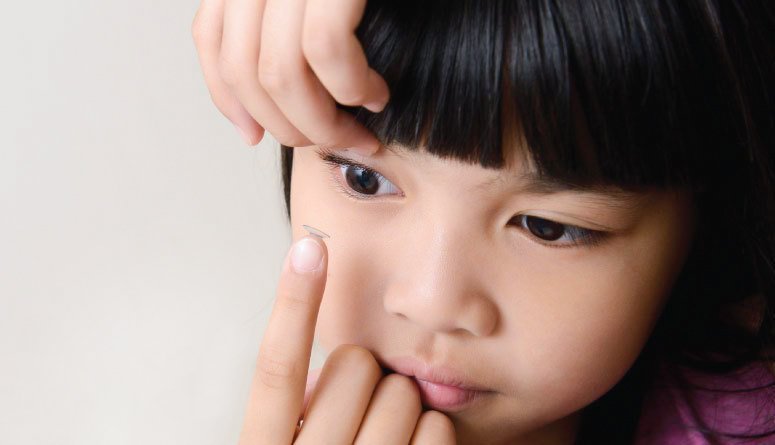
That makes the conversation about more than getting through the next eye exam. It’s about looking at how your child’s eyes are changing as they grow and deciding whether myopia control should be part of their long-term eye care.
This guide explains how Ortho-K works for children, who may be a candidate, what parents need to do at home, and the questions worth asking before getting started.
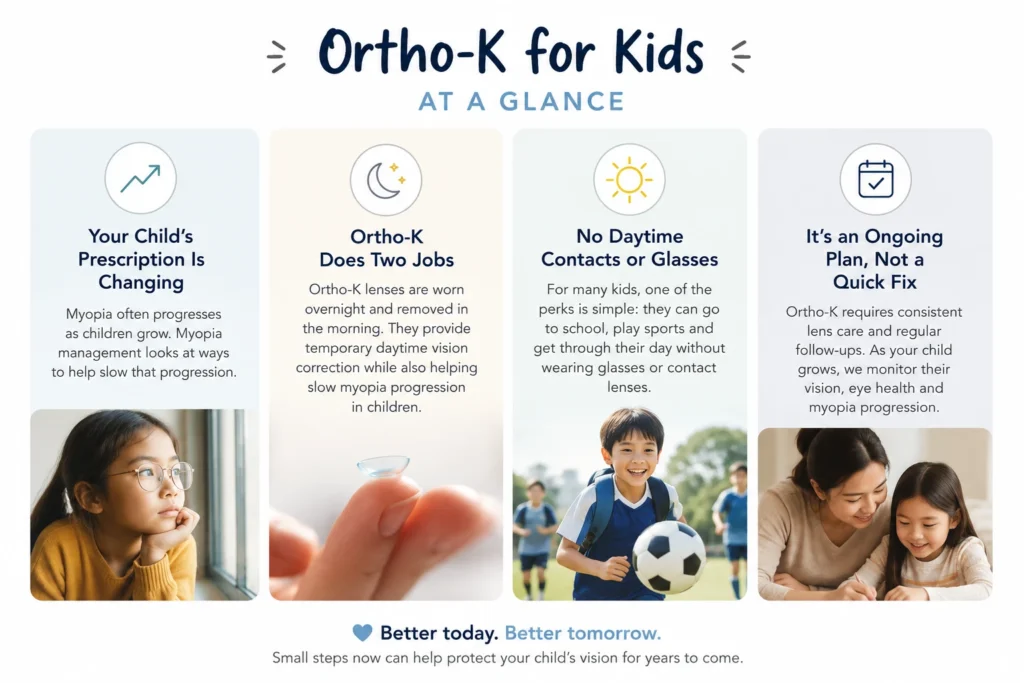
At a Glance: Ortho-K for Kids
Your Child’s Prescription Is Changing
Myopia often progresses as children grow. Instead of only correcting blurry vision with a stronger prescription, myopia management looks at ways to help slow that progression.
Ortho-K Does Two Jobs
Ortho-K lenses are worn overnight and removed in the morning. They provide temporary daytime vision correction while also helping slow myopia progression in children.
No Daytime Contacts or Glasses
For many kids, one of the perks is simple: they can go to school, have activities, and get through their day without wearing glasses or contact lenses.
It’s an Ongoing Plan, Not a Quick Fix
Ortho-K requires consistent lens care and regular follow-ups. As your child grows, we monitor their vision, eye health, and myopia progression to see how their treatment needs may change.
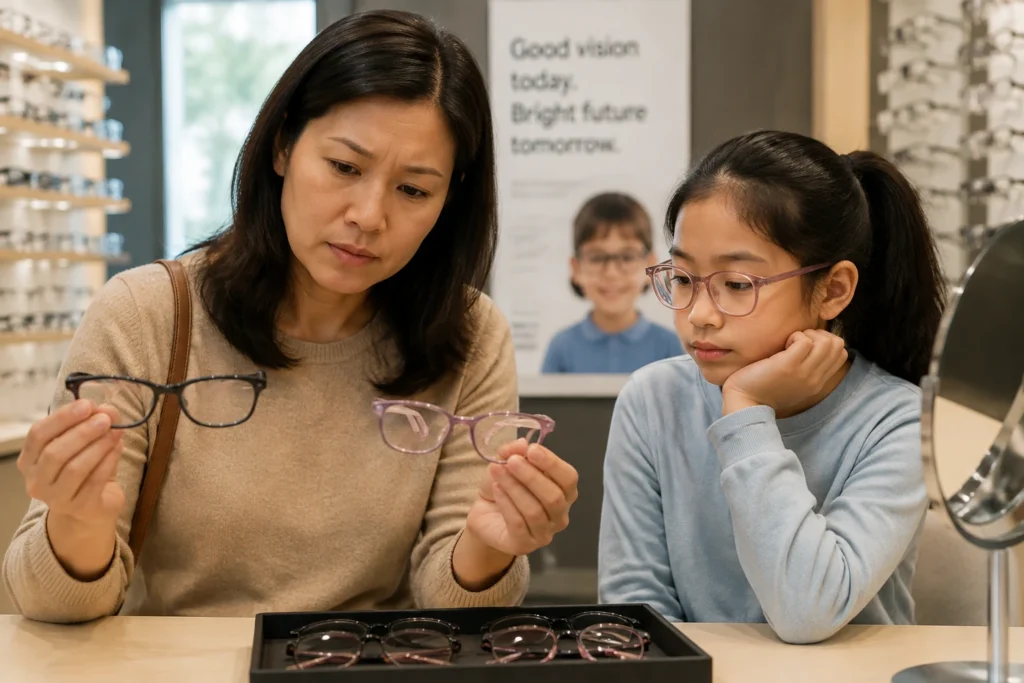
Why Does My Child’s Prescription Keep Getting Stronger?
You get your child new glasses. They can see clearly again. Then at the next eye exam, their prescription has changed.
For many parents, that’s when the bigger question starts: why does their eyesight keep getting worse?
Myopia, or nearsightedness, often develops during childhood as the eye grows. In a myopic eye, the eyeball is typically longer than it should be, causing distant objects to look blurry. When the eye continues to grow longer, myopia can progress.
Glasses correct the blur, but they don’t necessarily address that ongoing eye growth.
That’s where myopia management is different. Instead of only asking, “What prescription does my child need today?” We also look at how their eyes are changing over time and whether there are appropriate ways to slow that progression.
Ortho-K is one option. Research has found that orthokeratology can slow the elongation of the eye in children with myopia.
So the goal isn’t to get your child out of glasses. It’s to think about where their vision may be heading next.
Can We Actually Slow Myopia Down?
Yes. While we can’t promise to stop myopia completely, there are treatments designed to slow how quickly it progresses during childhood.
Ortho-K is one of those options. Children wear specially designed rigid contact lenses while they sleep. The lenses temporarily reshape the cornea, giving them clearer vision during the day after the lenses are removed.
But clearer daytime vision is only part of the story. Research shows that Ortho-K can also slow axial elongation, the lengthening of the eye associated with myopia progression in children.
Ortho-K isn’t the right choice for every child, and it isn’t the only option for myopia management. The first step is understanding how quickly your child’s vision is changing and discussing which approach makes sense for their eyes, age, lifestyle, and family.
What Does Ortho-K Actually Do While My Child Sleeps?
Your child puts the lenses in before bed, sleeps, takes them out in the morning, and can see more clearly during the day. But what actually happens to their eyes overnight?
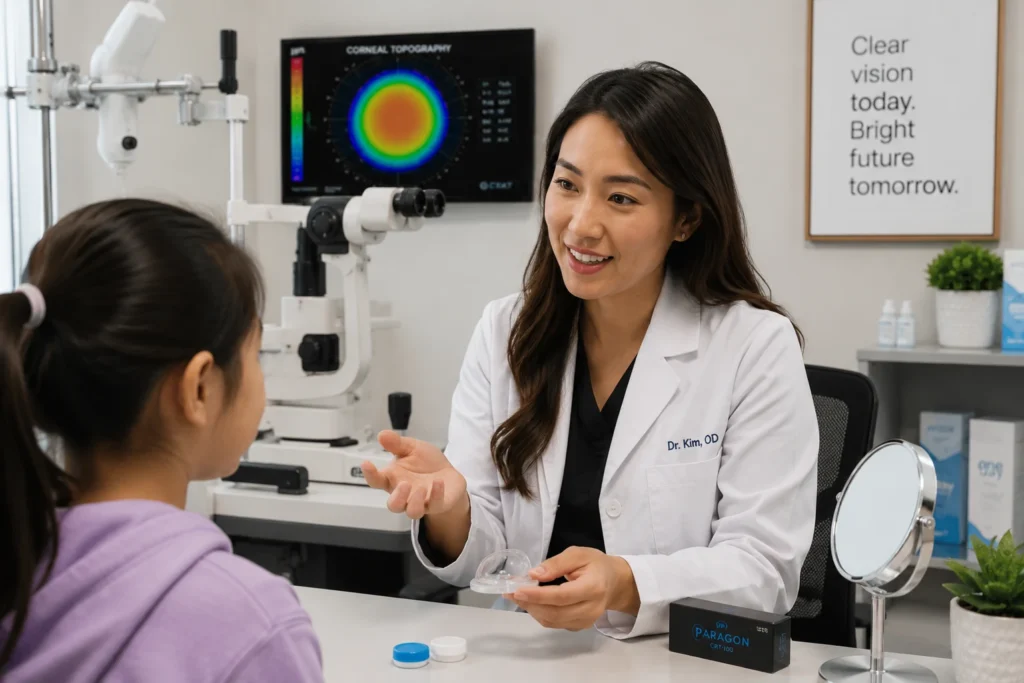
Ortho-K lenses are custom-fitted rigid contact lenses designed to temporarily change the shape of the cornea, the clear front surface of the eye. This changes how light focuses inside the eye and provides temporary vision correction after the lenses are removed.
For children with myopia, there is another reason we may use Ortho-K. The optical changes created by the lenses can also help slow myopia progression as the eye grows.
Think of it as doing two jobs while your child sleeps:
1. Correcting their vision for the next day
2. Helping manage the progression of their myopia over time
The effect isn’t permanent. If your child stops wearing Ortho-K lenses, the cornea gradually returns toward its original shape.
For a deeper look at the science, read our What Is Orthokeratology guide.
My Child Is Young. Are They Really Ready for Ortho-K?
There isn’t one perfect age to start Ortho-K. A better question is, is your child and your family ready for the routine?
Ortho-K lenses need to be inserted before bed, removed in the morning, cleaned properly, and worn consistently. Younger children may need more hands-on help from a parent, while older kids and teens may gradually take over more of the routine themselves.
When we’re considering Ortho-K for a child, age is only part of the conversation. We also look at their prescription, eye health, how their myopia is progressing, and whether they can safely manage contact lenses with the appropriate level of parental support.
A child may be ready for Ortho-K if they can:
- Tell you when a lens or eye doesn’t feel right
- Cooperate with putting lenses in and taking them out
- Follow a consistent bedtime routine
- Learn good hand and lens hygiene
- Attend regular follow-up appointments
For younger kids, parents are part of the treatment too. Helping with lens care and making sure the routine is followed can be an important part of safe Ortho-K wear.
And if your child isn’t ready yet? That doesn’t mean you’ve missed your chance to manage their myopia. An eye exam can help you discuss other options now and revisit Ortho-K later.
What Does Our Family Actually Have to Do Every Night?
Ortho-K happens while your child sleeps, but it isn’t a completely hands-off treatment.
There is a routine to learn. Before bed, the lenses are cleaned and inserted. In the morning, they’re removed, cleaned, and stored according to the care instructions provided by your optometrist. Consistent wear is important because the vision-correcting effect of Ortho-K is temporary.
For younger children, expect to be involved. At first, that might mean washing hands together, helping with insertion and removal, or simply checking that the lenses have been cleaned properly.
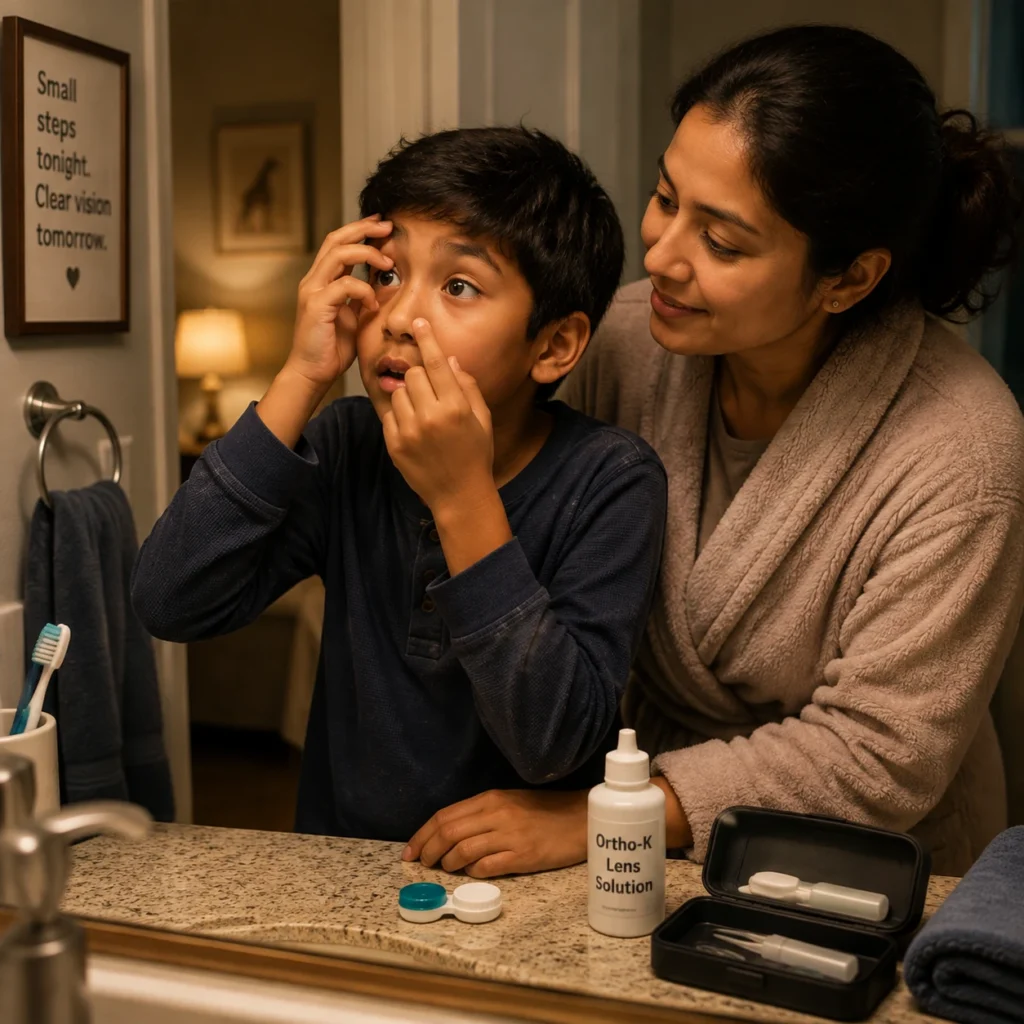
As kids get older, they can often take on more responsibility. Ortho-K can also continue to be used for myopia management during the teenage years.
And then real life happens…
They forget a night. Their daytime vision may not be as clear as usual.
They’re going to a sleepover. The lenses and proper cleaning supplies need to go too.
You’re travelling. Lens care doesn’t get a vacation.
They’re exhausted and don’t want to put them in. This is where routine matters.
Ortho-K shouldn’t feel like a test your child has to pass. The goal is to build a routine your family can realistically maintain.
And if that routine doesn’t sound realistic for your household, tell us. Ortho-K is one option for managing childhood myopia, not the only one.
Can Kids Play Sports and Swim With Ortho-K?
Yes. In fact, not having to wear glasses or daytime contact lenses can be one of the practical reasons families consider Ortho-K for active kids. Ortho-K lenses are worn overnight and removed in the morning, leaving the child with corrected vision during the day.
Think about the situations where glasses can become a nuisance:
Sports and Recreation
No glasses slipping, fogging up, or getting knocked during play.
Gymnastics and dance
Nothing sitting on the face during tumbling, inversions, or performances.
Swimming:
Your child isn’t relying on regular contact lenses while they’re in the pool.
For a kid who seems to spend half their life running, jumping, flipping or getting wet, clear daytime vision without something sitting on their face can be a pretty big deal.
What Are the Downsides of Ortho-K for Kids?
Ortho-K can help slow myopia progression in children, but it comes with responsibilities that families should understand before deciding whether it fits their lives.
It requires a nightly routine. Your child needs to wear, remove, clean and store their lenses correctly. Younger children will usually need more help from a parent.
It isn’t permanent. Ortho-K temporarily reshapes the cornea. If your child stops wearing the lenses, the vision-correcting effect gradually wears off.
There are ongoing appointments. Follow-up visits are important for checking lens fit, corneal health, vision and how your child’s myopia is progressing.
There is an infection risk. Ortho-K is still contact lens wear. Poor hygiene, improper cleaning and water exposure can increase the risk of complications.
It doesn’t guarantee myopia will stop progressing. Research supports Ortho-K as a way to slow myopia progression, not permanently stop or cure it.
Is Ortho-K Safe for Kids?
For appropriately selected children, Ortho-K can be a safe option for vision correction and myopia management when the lenses are professionally fitted, cared for correctly, and monitored through regular follow-up visits.
But Ortho-K lenses are worn overnight, so good habits matter.
Children should learn to wash and dry their hands before handling their lenses, follow the prescribed cleaning routine, avoid exposing their lenses to water, and tell a parent if an eye doesn’t feel right. Younger children may need parents to handle some or all of this routine.
Know Your Ortho-K Red Flags
The Morning Red-Eye Rule
A little lens awareness is different from waking up with a painful, irritated eye.
If your child wakes with significant eye pain, unusual redness, sensitivity to light, discharge, or suddenly reduced or blurry vision, remove the lens and contact your optometrist promptly.
Don’t send them to school wearing the lens and hope the redness goes away.
Contact lens-related infections can become serious, which is why teaching children to speak up when something feels wrong is just as important as teaching them how to clean their lenses.
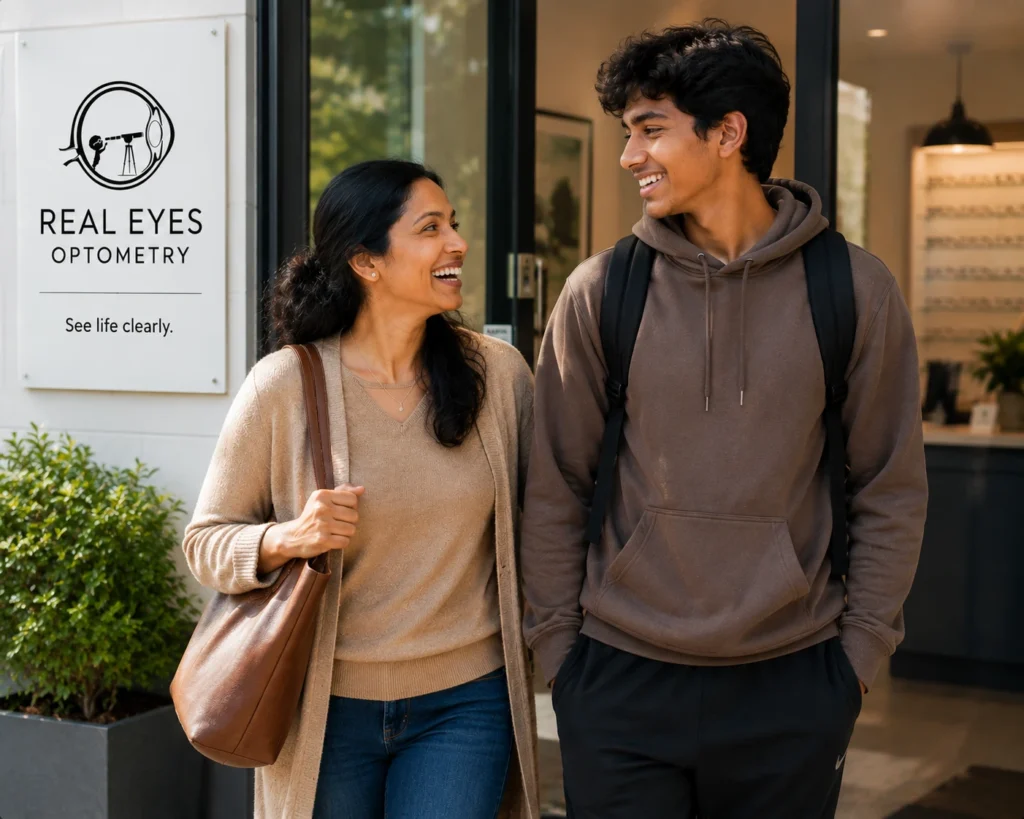
Growing With Your Family
At Real Eyes Optometry, kids’ eye care isn’t meant to be a one-time appointment. Through our Kids First Program, we want children to feel comfortable with eye care from the beginning and give parents a place they can return to as their child grows.
From their first eye exam to changing prescriptions, myopia management, Ortho-K, and eventually those teenage years, we’re here for the different stages along the way.
Because one day they’re learning how to put in their first Ortho-K lens. Then somehow, they’re taller than you and walking out of the clinic beside you.
We’d love to grow with your family.
FAQ about Orthokeratology for Kids
My kid forgets everything. Are they really ready for Ortho-K?
Maybe. Being ready for Ortho-K isn’t just about age or being perfectly responsible. Younger children can use Ortho-K with appropriate parental involvement. The bigger question is whether your family can consistently manage the nightly routine, cleaning, and follow-up care.
What happens when my child goes to a sleepover?
Ortho-K can travel. Your child will need their lenses, case, and recommended cleaning supplies, plus clean hands and a suitable place to handle their lenses. If they’re not ready to manage that independently, you may want to plan ahead with your optometrist for occasional missed nights.
My child hates anything near their eyes. Is Ortho-K already a lost cause?
Not necessarily. Inserting and removing contact lenses is a skill that can take practice. Some children surprise their parents once they’ve had a chance to learn without pressure. If your child isn’t ready, that’s okay too. There are other approaches to myopia management that you can discuss with your optometrist.
Will Ortho-K stop my child’s prescription from getting worse?
Ortho-K can slow myopia progression, but it cannot guarantee that your child’s myopia will stop completely. Research supports orthokeratology as a myopia-management option for children, including evidence of reduced progression over longer follow-up periods.
My child’s prescription barely changed this year. Do we still need to think about myopia control?
Yes, it can still be worth asking. One year’s prescription is only part of the picture. Your child’s age, prescription history, family history, eye measurements, and other risk factors can help your optometrist assess how their myopia may be progressing.
What if my child forgets to wear their Ortho-K lenses one night?
Don’t panic. Because the effect of Ortho-K is temporary, your child’s vision may simply be a little less clear the following day. How much it changes can vary from child to child.
Don’t double up on wear to make up for the missed night. Follow the schedule recommended by your optometrist, and ask what your child should use for backup vision correction when needed.
Can my child wear glasses on days when their Ortho-K vision isn’t quite right?
Possibly, but don’t automatically reach for their old glasses.
Ortho-K temporarily changes the shape of the cornea and your child’s vision correction needs can change throughout treatment. Their previous glasses prescription may therefore no longer be appropriate.
Ask your optometrist whether your child should have backup glasses and what prescription they should use, particularly during the first few weeks of Ortho-K or for occasional missed nights.
My child plays sports five days a week. Is that actually a reason to consider Ortho-K?
One practical benefit of Ortho-K for active kids is that the lenses are removed in the morning. Your child can play soccer, hockey, basketball, gymnastics, dance, or other sports without relying on glasses or daytime contact lenses for their corrected vision.
But sports alone don’t determine whether Ortho-K is appropriate. The bigger advantage for a child with progressing myopia is that Ortho-K can provide daytime vision correction while also being used for myopia management.
For a kid who practically lives at the rink, field, gym, or pool, that combination can be worth discussing with their optometrist.
My teenager suddenly wants contact lenses. Should we consider Ortho-K instead?
This catches parents searching for contact lenses for kids/teens who don’t even know. It’s worth discussing. Regular contacts primarily correct blurry vision while they’re being worn. Ortho K can provide daytime vision correction while also being used for myopia management.
That doesn’t automatically make Ortho-K the better choice. Your optometrist can compare the options based on your teenager’s eyes, lifestyle, myopia progression, and ability to manage lens care.
Does starting Ortho K mean my child has to use it until they’re an adult?
No, but stopping Ortho-K should be a decision you make with your child’s optometrist. Ortho-K itself isn’t permanent, and its corneal reshaping effect gradually wears off after treatment stops. However, your child’s myopia may still be progressing, so their optometrist may recommend continued myopia management or another treatment option.
My child wakes up with one really red eye. Should they go to school or to the optometrist?
A painful or significantly red eye shouldn’t be dismissed as a normal Ortho-K adjustment. Remove the lens and contact your eye-care provider promptly, particularly if redness is accompanied by pain, light sensitivity, discharge, or reduced vision. Contact lens wear carries a risk of infection, which is why proper care and early attention to symptoms matter.
Am I signing myself up to put contact lenses in my child’s eyes every night?
Possibly at first.
Some children become comfortable inserting, removing, and caring for their lenses independently. Others need help for longer. Parent involvement is particularly important with younger Ortho-K wearers because good hygiene and consistent lens care are part of using the treatment safely.
You don’t have to decide that your child is ready before the appointment. That’s part of the conversation with your optometrist.
Real Eyes Optometry
Ortho-K isn’t a one-and-done contact lens purchase. Your fitting includes detailed measurements, custom lens fitting and follow-up care as your eyes adapt.
At Real Eyes Optometry in Metrotown, our optometrists can assess your eye health, prescription, corneal shape and lifestyle to determine whether overnight vision correction may be appropriate for you.
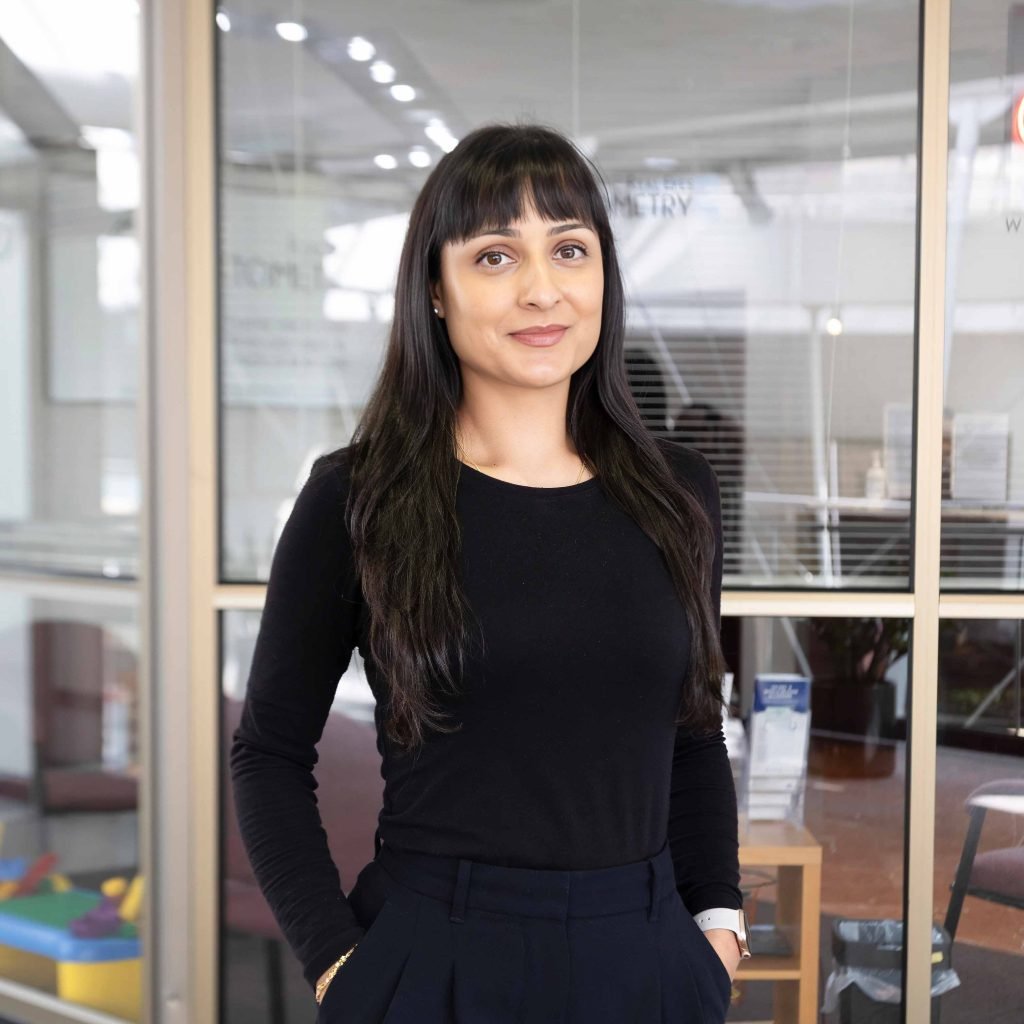
Dr. Sahota has a special interest in dry eye care and advanced in clinic treatments, including radio frequency technology, and is known for providing thorough, personalized dry eye consultations in multiple languages.

Dr. Pati enjoys caring for patients of all ages, with a particular passion for family eye care and pediatric eye health, helping kids build strong visual habits early in life.

Dr. Wang is highly experienced in contact lens fitting, with a special focus on specialty lenses, and has helped many patients who thought they could never wear contacts comfortably.
Disclaimer: This information is for educational purposes and does not replace professional medical advice
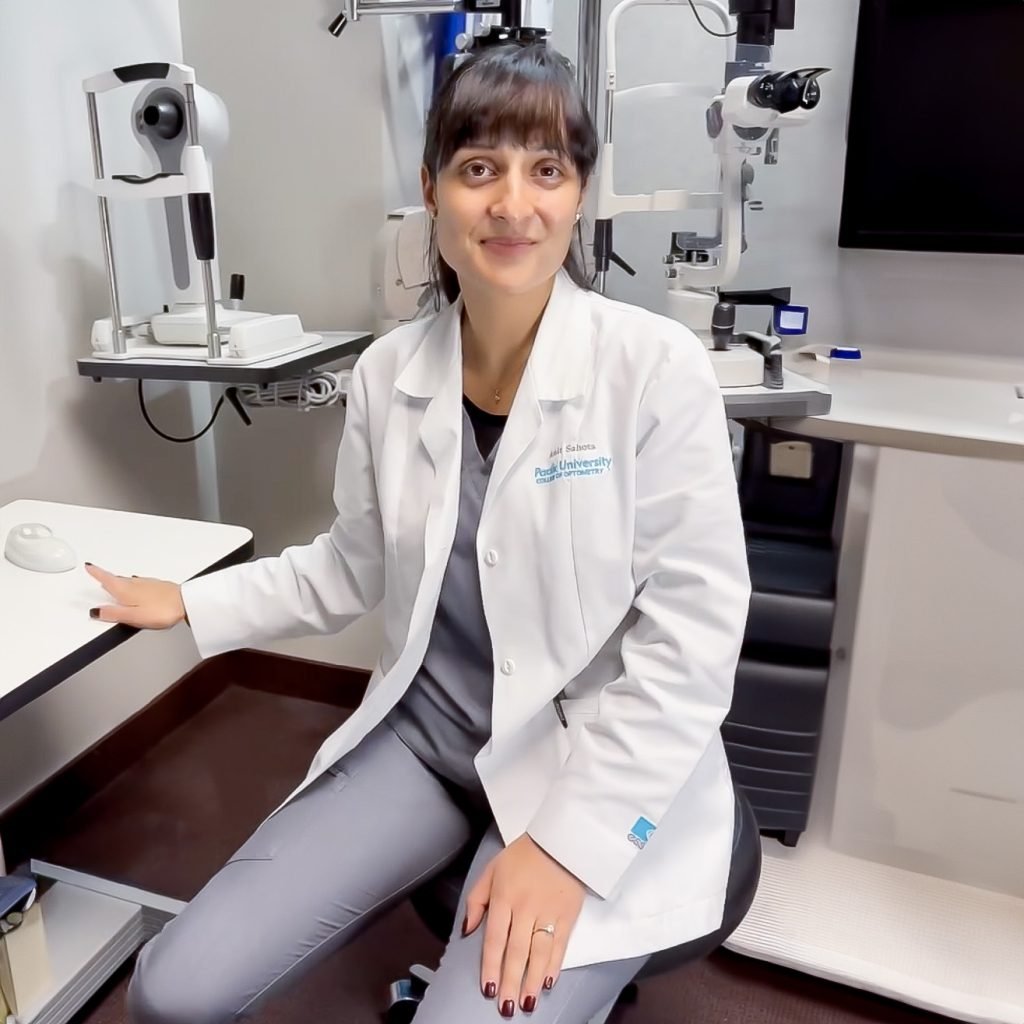
Medically Reviewed by Dr. Amit Sahota, Registered Optometrist (BScOD)
Aug 8, 2026