At Real Eyes Optometry, we provide pediatric eye exams in Burnaby for babies, toddlers, preschoolers, school-age kids, and teens. Our clinic is in Metrotown, and we welcome families looking for a calm, thorough, kid-friendly eye exam. Your child does not need to know letters or read to have their eyes tested. We can use pictures, matching, symbols, and direction-based charts to check vision in a way that feels easier and less pressured. These eye exams can be especially helpful if your child is struggling with reading, losing their place, squinting, avoiding schoolwork, getting headaches, or feeling overwhelmed during medical visits.
Is it time for a pediatric eye exam?
Book an exam if your child is squinting, getting headaches, struggling with reading, or if you simply feel something is off. Children do not need to read to have their vision checked.
Same-day walk-ins with Kids and Toddlers are welcome
Ages: babies, toddlers, kids, teens
Time: 30 to 60 minutes
Kids do not need to read (pictures and matching)
MSP: covered for kids 0 to 18 once per year
Location: Metrotown, Burnaby (free parking)
Accessibility: We make accommodations for kids who are neurodivergent
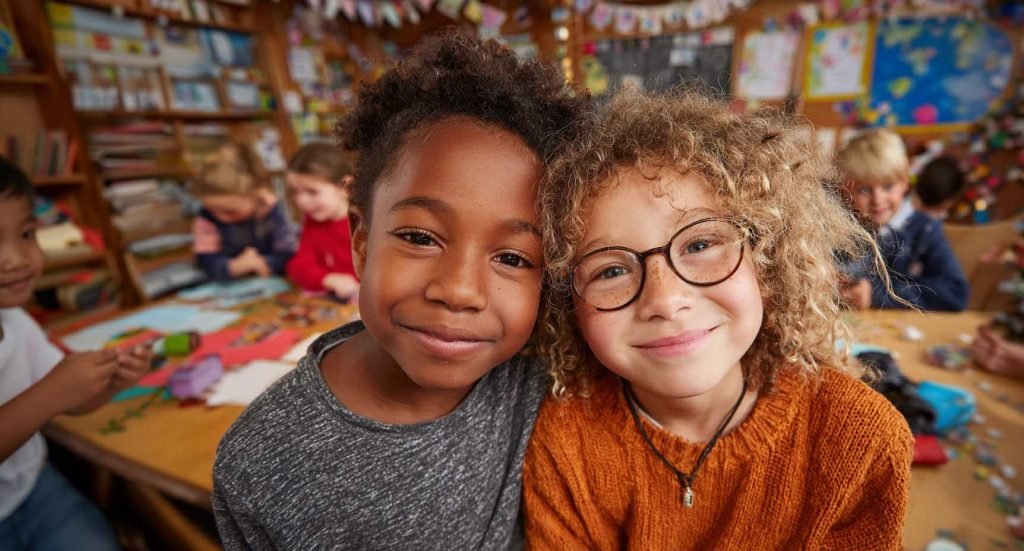
Kid Friendly and Educational Eye Exams with Dr Pati: What to Expect
A kid’s eye exam at Real Eyes Optometry is playful and encourages curiosity. Your child does not need to know letters or be able to read. We can use pictures, shapes, matching, and games to check vision.
How long is a kid’s eye exam? Most appointments take about 30 to 60 minutes, depending on age and what testing is needed.
What does an optometrist check for at a kid’s eye exam?
- Eye health, including dilation when needed.
- Vision clarity in each eye
- Refraction and spectacle rx if required.
- Eye teaming and alignment (lazy eye, eye turn)
- Focusing and tracking for close work
If dilation is recommended, we’ll explain why and what to expect before we do anything.
Book a Pediatric Eye Exam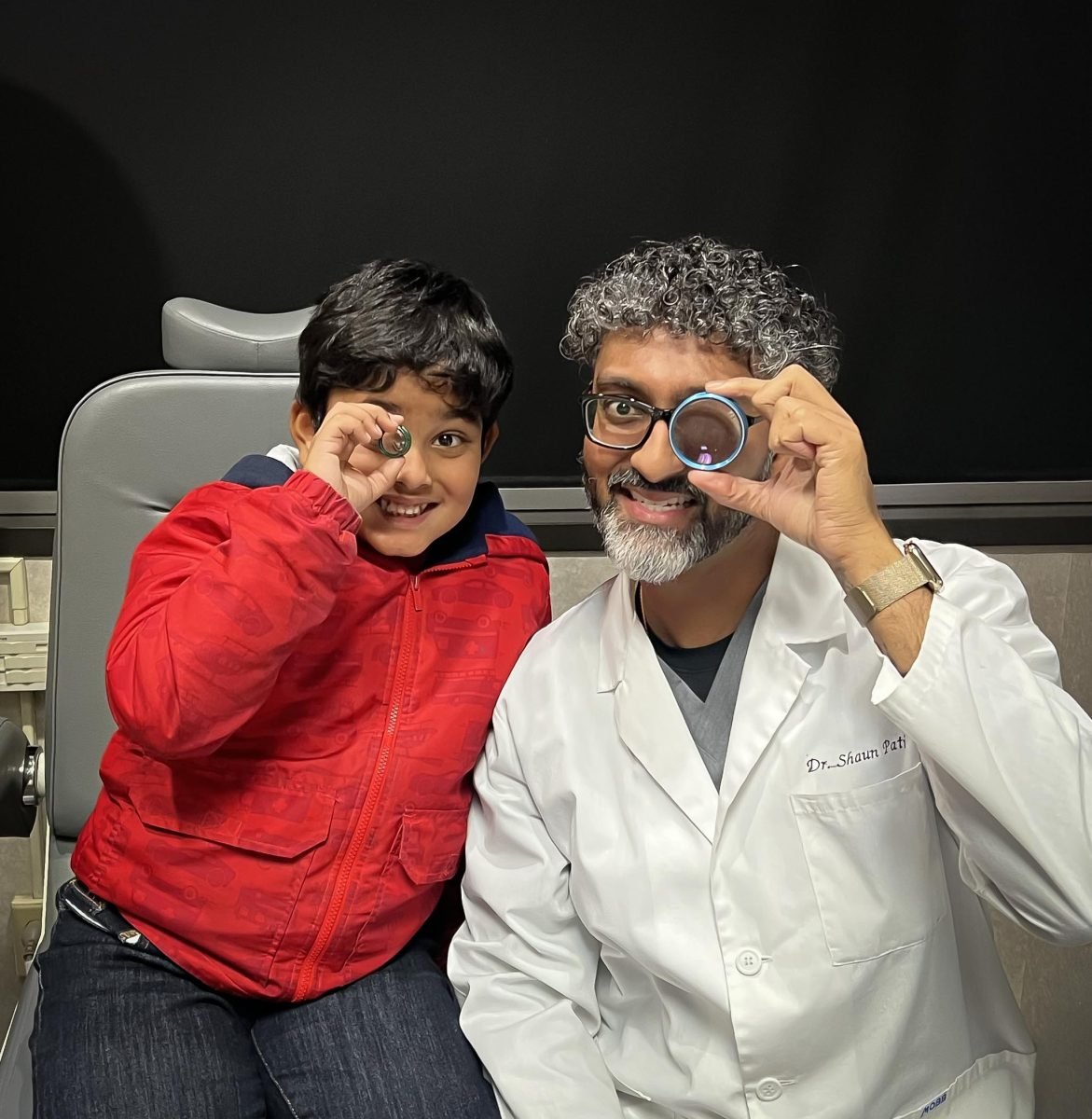
Dr. Shaun Pati giving a kid’s eye exam
When should my child get an eye exam?


Baby Eye Exams: 6 to 9 months old
Signs your baby needs an eye exam:
- One eye turns in or out consistently, especially after about 4 months of age
- Not tracking faces or toys by around 3 to 4 months
- Eyes that shake or jiggle (nystagmus)
- One eyelid droops and blocks vision part of the time
- Constant tearing, lots of discharge, or strong light sensitivity
- Frequent eye rubbing that seems more than “tired baby” rubbing
- You feel something is off, even if you cannot describe it well
Babies who should not wait
Even if you are not seeing symptoms, book earlier if your baby:
- Was premature
- Has a family history of lazy eye, eye turns, very strong prescriptions, or childhood eye disease
- Has a developmental delay or other medical conditions where vision problems are more common
When it’s urgent
If you see a white glow in the pupil in photos, one pupil looks white, or there is sudden, eye swelling or redness, treat it as urgent and call right away. Family doctors often screen for serious signs like this with the red reflex, but an eye exam is the deeper check.

Dr. Amit Sahota Pediatric Eye Exam
Signs Your Child May Need an Eye Exam
Children don’t always realize when their vision is blurry, so it’s important to look for early clues. Book a pediatric eye exam if you notice your child:
- Squints, rubs their eyes often, or covers one eye while reading or watching TV
- Holds books or screens very close
- Trips or bumps into things more than usual
- Complains about headaches, sore eyes, or light sensitivity
- Has difficulty focusing on schoolwork or loses their place when reading
A simple parent rule that works
If your child is doing the “quiet compensations”, sitting closer, turning their head, avoiding puzzles or books, getting cranky during close-up tasks, it is worth booking. Preschoolers often cannot explain what is wrong; they just adapt.
If you have a family history of eye issues, do not wait.
School-Aged Kids’ Eye Exams
Signs your School- Aged kid needs an eye exam:
For school-age kids, the tricky part is that you often do not know, because kids adapt fast and do not always complain. That’s why Canadian optometry guidance recommends an eye exam every year for ages 6 to 19, even if everything seems fine.

Physical Signs to Watch For
- One eye turns in, out, up, or down at any time
- Eyes not lining up, or one eye wandering
- Red or irritated eyes or eyelids
- Excess tearing or watery eyes
- Excessive blinking
- Frequent eye rubbing during or after short periods of close-up activity
Taking early action can make a significant difference in your child’s visual development and overall well-being.
A quick parent test you can do at home
Ask two questions, low pressure:
- “Is the board ever blurry at school?”
- “Do your eyes feel tired after reading or screen time?”
If they hesitate, shrug, or say “I guess”, I’d book. Kids may think blurry is normal because it’s all they know.
Behaviour Signs Your Kid May Need an Eye Exam
- Squinting, closing, or covering one eye
- Sitting very close to screens, or moving closer to the front screen or board
- Holding books or tablets very close to the face, or pressing them down on the desk
- Head tilting when looking at something up close or far away
- Struggling with reading, including losing their place, skipping lines, and avoiding homework
- Drop in grades, or “they’re smart but suddenly hate schoolwork”
- Headaches after school, tired eyes, and rubbing the eyes a lot
- Avoids books and puzzles, prefers toys they can handle
- Feels objects rather than looking at them first
- Clumsiness during sports, trouble catching a ball, and depth perception issues
- Colouring challenges, cannot stay within lines (age dependent) or ignores the lines
Book urgently, same day, if any of this happens
- Sudden vision loss, flashes, new severe eye pain
- Eye injury
- A new obvious eye turn
- A white glow in the pupil in photos
My child needs glasses. What happens next?
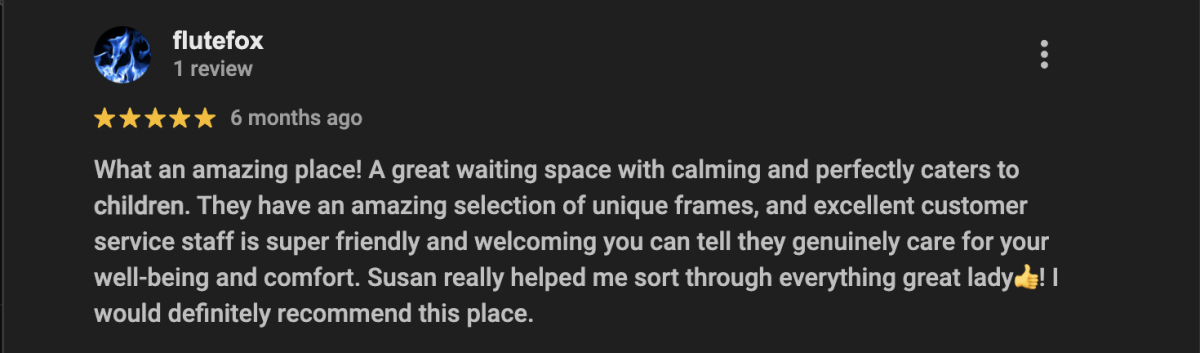
If your child needs glasses, we’ll explain the prescription in plain language and help you pick frames that fit and hold up to a kid’s exciting lifestyle.
We can help with:
- Frames that fit properly and survive kid life
- Lens choices based on school, sports, and screen time
- Tips to help your child adjust (without constant battles)
- Follow-up support if the glasses fit feels off or your child refuses to wear them
School-age “myopia watch” signs
If your child’s nearsightedness is starting or changing, you might notice:
- They keep choosing the front row
- They say things are blurry
- They need new glasses more often than expected
Kids and Contacts
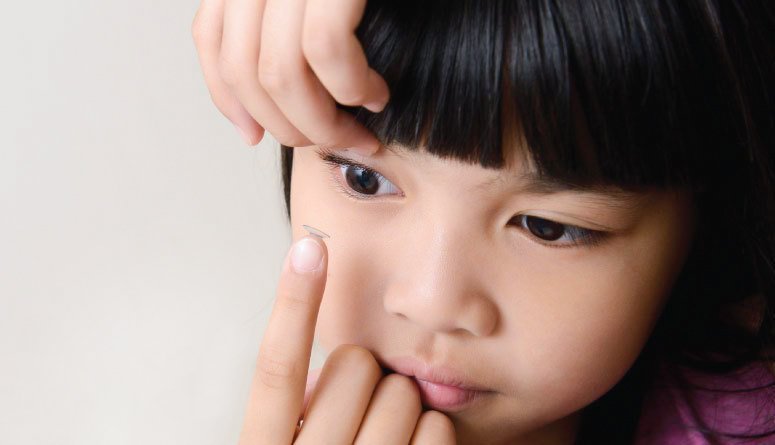
Some kids do great with contacts, especially active kids in sports, teens, and some children in myopia control programs. We’ll only recommend contacts if it makes sense for your child and your family.
We can talk through:
- Daily disposable contacts (simple and low maintenance)
- Orthokeratology options (overnight lenses, no daytime lenses)
- Hygiene and safety, plus what “good readiness” looks like
Myopia Management for Kids in Burnaby
If your child is becoming more nearsighted, early planning matters. Myopia often gets worse during the school years, especially when kids are spending more time reading, doing homework, and using screens.
We monitor for changes over time and talk with families about whether glasses alone are enough or whether it makes sense to discuss myopia management options. If your child needs stronger glasses more often, squinting to see the board, or moving closer to screens, bring it up during the exam.
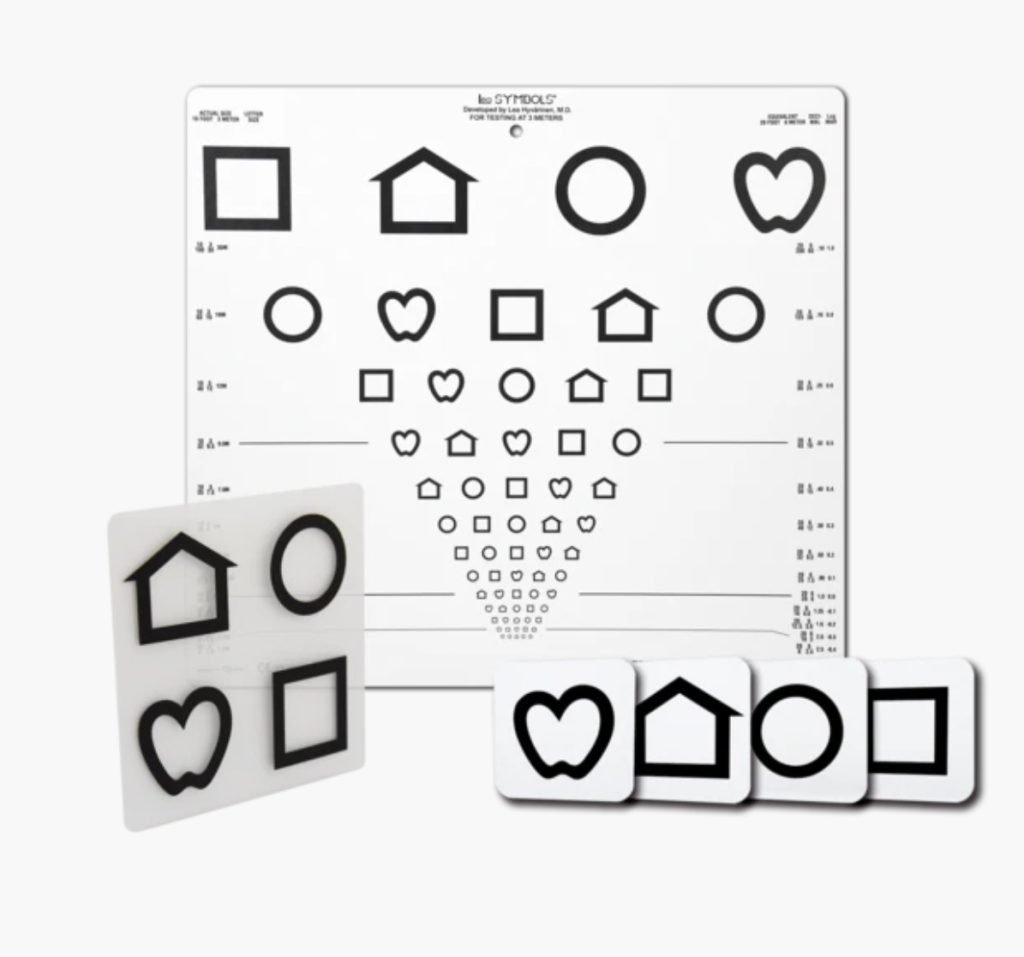
symbol-based eye charts
What happens at the eye exam if my child can’t read?
If your child can’t recognize letters yet, struggles to track words on a page, avoids reading, or loses their place easily, an eye exam can help rule out vision-related barriers.
Depending on your child’s age and comfort, we can use:
- Picture and symbol charts (great for younger kids and pre-readers)
- Matching charts (your child points or matches what they see, no reading out loud)
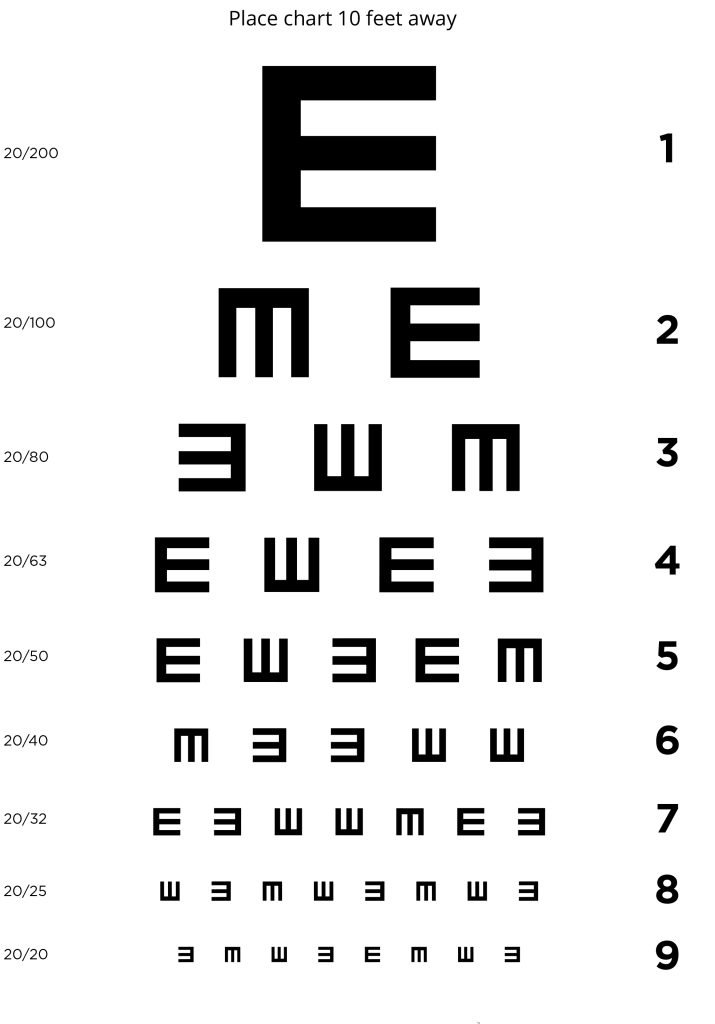
- Direction based options (pointing to the way a shape faces, helpful when letters feel frustrating)
Eye Chart Options for Kids Who Struggle With Letters or Reading
Not every child is comfortable with a standard letter chart, and that is completely okay. During a pediatric eye exam, we can use picture charts, matching cards, symbol charts, and direction-based eye charts to test vision without putting extra pressure on reading.
One common option is a directional “E” chart, where your child points to the way the letter is facing instead of naming letters out loud. This can be especially helpful for younger kids, pre-readers, and children who find letter-based testing frustrating.
This can also be helpful for some children with dyslexia or other reading difficulties. Dyslexia is a language-based learning difference, not a vision problem, but reading can still feel tiring or stressful during an eye exam. Using non-letter chart options can help the visit feel more comfortable and more doable.
Our goal is to choose the chart style that gives us the best information while helping your child feel calm and successful.
Neurodivergent Eye Exams
A neurodivergent pediatric eye exam is an eye exam adapted to support children with sensory, communication, attention, or anxiety-related needs. The goal is not to force a child through a standard visit. It is to create a calmer, more flexible experience so your child can feel safe, understood, and successful during their exam.
We can often accommodate extra time, slower pacing, breaks when needed, fewer instructions at once, comfort items like headphones or fidgets, and explaining tools before we use them. When possible, we can also reduce sensory overload by dimming lights and adjusting our approach to match your child’s communication style.
When booking, feel free to tell us what helps your child most: best time of day, sensory triggers, comfort items, communication preferences, and anything that has been difficult at past medical visits.
Peace of Mind with a Top-Rated Pediatric Eye Exam
Gain peace of mind when you take your children to a caring, professional, and helpful optometrist.
As a parent, time is particularly precious, and your child deserves only the best. Annually, experts review all pediatric eye doctors with a rigorous 50-point inspection to make it easy to find the right pediatric eye doctors in key cities. Dr. Shaun Pati has been a recommended Optometrist 6 years in a row by Bestrated.com
The 50-Point Inspection includes the following:
✅ Reputation
✅ Cost
✅ Location
✅ Satisfaction
✅ Excellence
✅ Ratings
✅ Trust
✅ Credentials
✅ Qualifications
✅ Age-appropriate Equipment
✅ Staff interaction
✅ History
Why Choose Real Eyes Optometry for Your Kid’s Pediatric Eye Exam?
Parents are usually looking for more than just a prescription check. They want an optometrist who is good with kids, explains things clearly, and makes the visit feel manageable.
At Real Eyes Optometry, families choose us because we offer:
- kid-friendly testing for babies, pre-readers, and school-age children
- eye chart options that do not rely on reading
- a calm, educational approach that is not rushed
- support for neurodivergent kids and sensory-sensitive visits
- a convenient Metrotown location with free parking
- direct billing support and yearly MSP coverage for eligible children in BC
If your child is nervous, easily overwhelmed, struggling with reading and/or has school-related visual symptoms, tell us when you book so we can plan the visit accordingly.
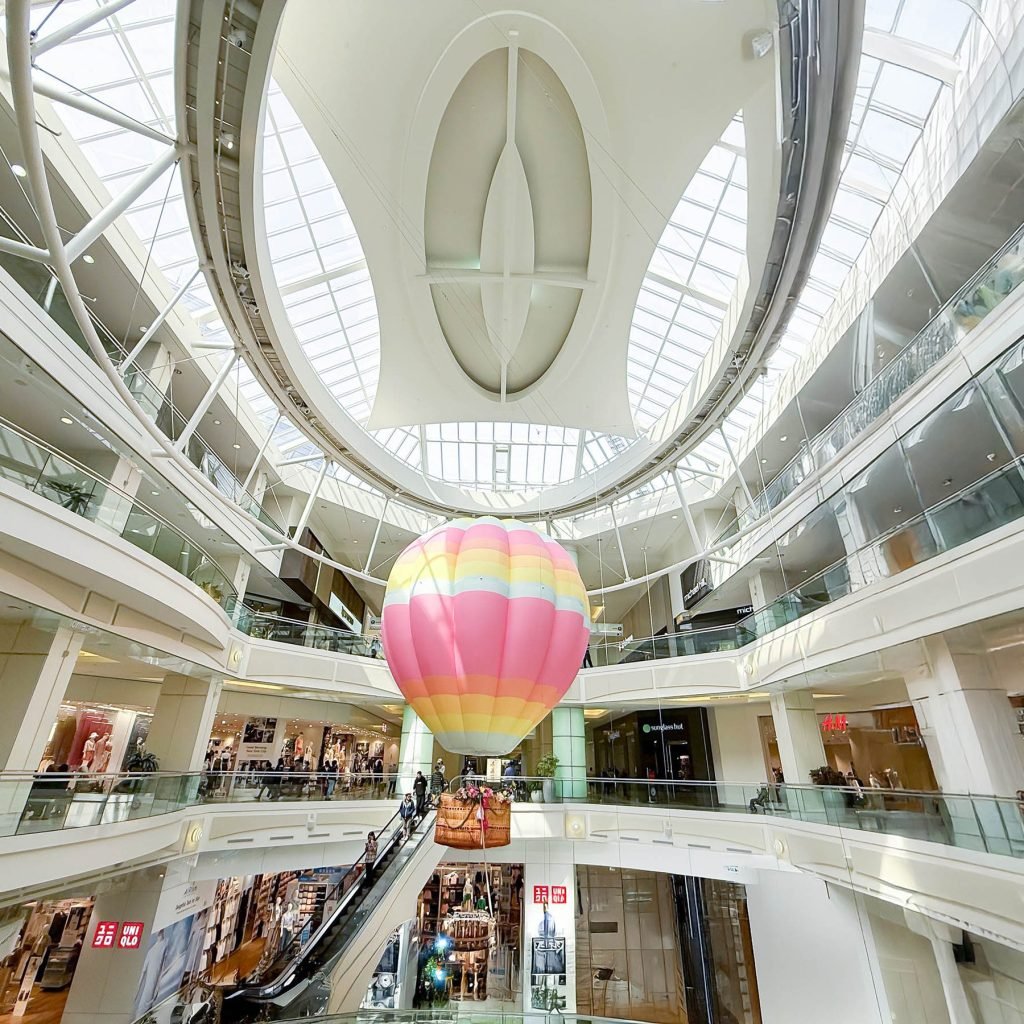
How to Find Real Eyes Optometry at Metrotown?
- Go to Metropolis at Metrotown
- Head to Office Galleria (OG) Level
- Take the elevator to the 4th floor
- We’re right above the Grand Court area
Tip: If you’re running late please give us a call!
Real Eyes Optometry
Real Eyes Optometry is centrally located in Metrotown Mall. Our convenient location includes free, accessible parking and the ability for parents to complete errands without driving all over the city.
Consider being able to run to a grocery store, make a clothing return, and grab a quick bite, all while your child is having an eye exam. Of course, accompanying your kid during their eye exam is always a good idea. For details on how to find us, click here.
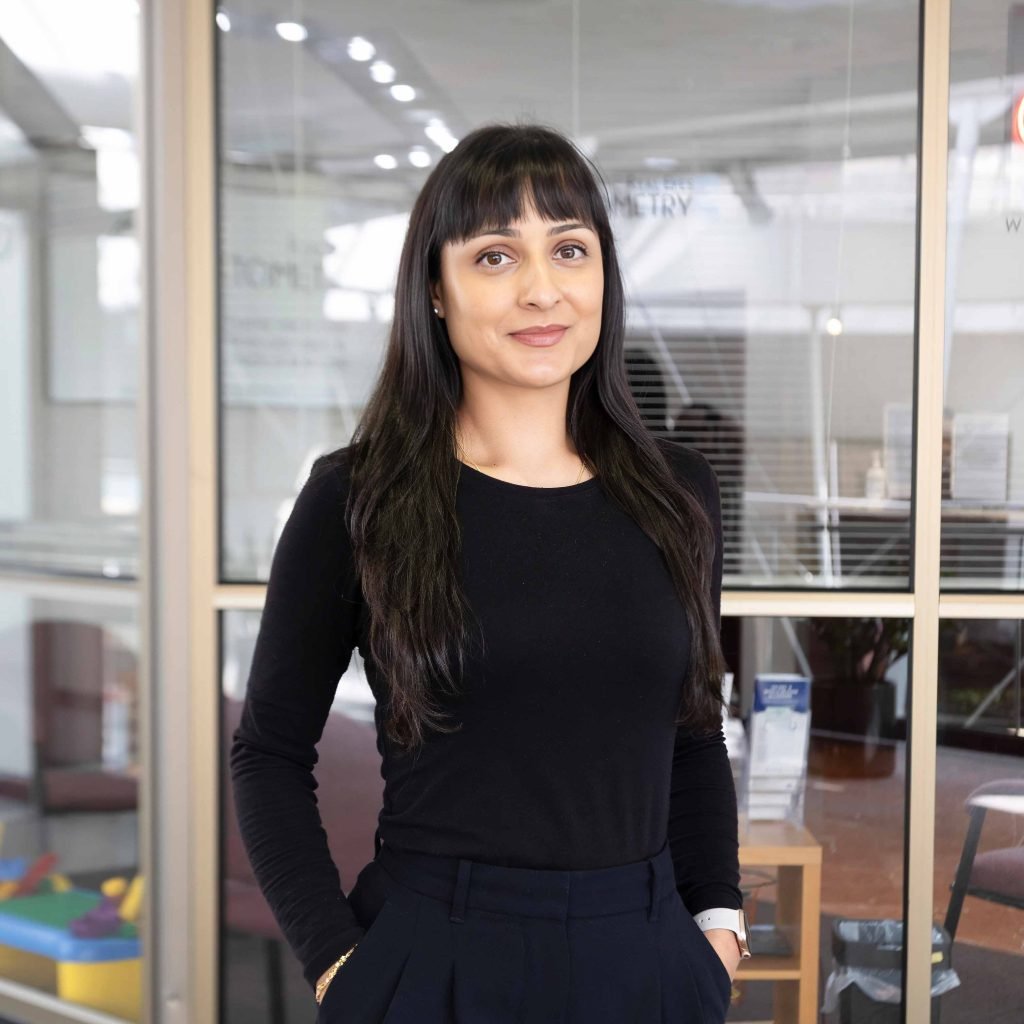
Dr. Sahota has a special interest in dry eye care and advanced in clinic treatments, including radio frequency technology, and is known for providing thorough, personalized dry eye consultations in multiple languages.

Dr. Pati enjoys caring for patients of all ages, with a particular passion for family eye care and pediatric eye health, helping kids build strong visual habits early in life.

Dr. Wang is highly experienced in contact lens fitting, with a special focus on specialty lenses, and has helped many patients who thought they could never wear contacts comfortably.
Disclaimer: This information is for educational purposes and does not replace professional medical advice
Common Questions Parents Ask about Pediatric Eye Exams
Continue exploring our Services: adult eye exams, what to expect, children’s eye exams, senior eye exams, inclusive eye exams, and contact lens evaluations.
Is the pediatric eye exam covered by MSP or insurance?
In British Columbia, MSP covers routine eye exams for children aged 0–18 once per year. If your child needs a follow-up visit or further testing, that may also be partially covered under medical necessity. At Real Eyes Optometry at Metrotown, we make things easier for families by offering direct billing to most major insurance providers. If you’re unsure about your plan, read about it here, or ask our front desk team to help you with your benefits before your appointment, so there are no surprises.
What Happens If My Child Needs Glasses or Other Support?
If your kid needs glasses, we’ll explain the prescription in simple terms and help you choose frames that are comfortable, durable, and fun to wear. We carry a wide range of kids’ eyewear, from flexible toddler frames to lightweight teen styles.
In some cases, our optometrists may recommend additional vision support, such as special lens coatings for screen time, eye exercises, or referrals for further evaluation. We’ll always walk you through each option and follow up to make sure your child is adjusting well.
My child cannot recognize letters or read yet, can you still do an eye exam?
Absolutely. Kids do not need to read for a pediatric eye exam. We can use pictures, shapes, matching, and simple games to check vision, eye teaming, and focusing.
My child has reading and learning challenges. What can an eye exam help with?
If a child avoids reading, loses their place, struggles with homework, or gets headaches, an eye exam can check for vision issues that can add extra friction, like focusing fatigue, tracking problems, or eyes not working well together. An eye exam does not diagnose learning disabilities, ADHD, or dyslexia, but it can rule vision in or out as part of the bigger picture.
Can you accommodate ADHD, autism, or sensory sensitivities?
Yes. We can adjust pacing, simplify instructions, offer breaks, and use a calmer approach. You are welcome to bring comfort items like headphones, a fidget, or a stuffy. If you tell us what helps your child when booking, we can plan the visit around it.
My child is nervous. What should I tell them before the eye exam?
Keep it simple and honest. Try:
“We’re going to play some eye games and take pictures of your eyes.”
“You’re not in trouble, we’re just checking how your eyes are growing.”
“If anything feels weird, you can tell us, and we can take a break.”
You can also promise a small reward after, like a snack stop.
What happens at a kid’s eye exam, in plain language?
We check how each eye sees, how the eyes work together, how focusing and tracking are working, and we check eye health. For younger kids, we use pictures, matching, shapes, and games. Your child does not need to read.
My child cannot recognize letters yet. Can you still test vision?
Yes. Pre-readers are welcome. We use age-appropriate tests like pictures, symbols, matching, and observation-based tools.
What should I bring to my child’s eye exam?
If you can, bring:
Any current glasses or contacts.
A list of concerns, even one sentence, helps.
School notes if the teacher has mentioned reading, attention, or headaches.
A comfort item for anxious kids (headphones, fidget, stuffed toy)
Sunglasses or a hat for after dilation, if dilation is done.
My child hates eye drops. What happens then?
You are not alone. We can often:
Explain and show the drops first.
Use a slower approach, breaks, or a calm “one and done” plan.
Prioritize the most important parts of the exam if your child is overwhelmed.
If drops are truly needed for safety or accuracy, we’ll talk you through options.
My child is struggling in school. Can an eye exam help
An eye exam can check for vision issues that can make learning harder, like focusing fatigue, tracking problems, or eyes not working well together. It does not diagnose ADHD, autism, or dyslexia, but it can rule vision in or out and give you clear next steps.
My child might need glasses. What happens if you find a prescription?
If glasses are needed, we explain the prescription in plain language and help you choose a practical setup for kid life. We also help with comfort and fit, because a great prescription is useless if the glasses slide down or hurt to wear.
I’ve heard of Ortho K. Is that an option for kids?
Ortho K, also called orthokeratology, are custom overnight contact lenses to reshape the front of the eye while your child sleeps, so they can see clearly during the day without glasses or contacts. It can be an option for some kids, especially when myopia is progressing. It is not for everyone, and it requires good hygiene and follow-ups, but it is worth a conversation if nearsightedness is changing quickly.
My child wants contacts for sports. How do we know if they’re ready?
Readiness is more about habits than age. Good signs include:
Can wash hands well, every time.
Can follow a simple routine without rushing.
Can handle a little discomfort without panicking.
The parent is willing to supervise at first.
Daily disposable contacts are often the easiest starting point for families.
It’s my child’s first time with contacts. How can I help them succeed?
A few practical tips:
Book on a day when you are not rushing.
Let them practice touching near the eye at home, like tapping the cheekbone, eyebrow, then eyelid.
Keep language calm, no “this won’t hurt” repeatedly, it makes kids expect pain
Celebrate small wins, even one lens in is progress
If they melt down, we can pause and try again. For some kids, it takes two sessions, and that is normal.
What if my child refuses to cooperate?
We expect this sometimes. We can still learn a lot with a gentle approach, breaks, and choosing the right tests. If we cannot complete everything in one visit, we will tell you what we did get, what still matters, and the best plan for the next steps.
What is the difference between my family doctor checking my child’s eyes, a school vision screening, and a comprehensive optometric eye exam?
A family doctor check is a safety scan, a school screening is a quick filter, an optometrist eye exam is the full deep dive.
If your child “passed” a school screening but you still notice squinting, headaches, avoiding reading, or one eye drifting, a comprehensive eye exam is the next step.
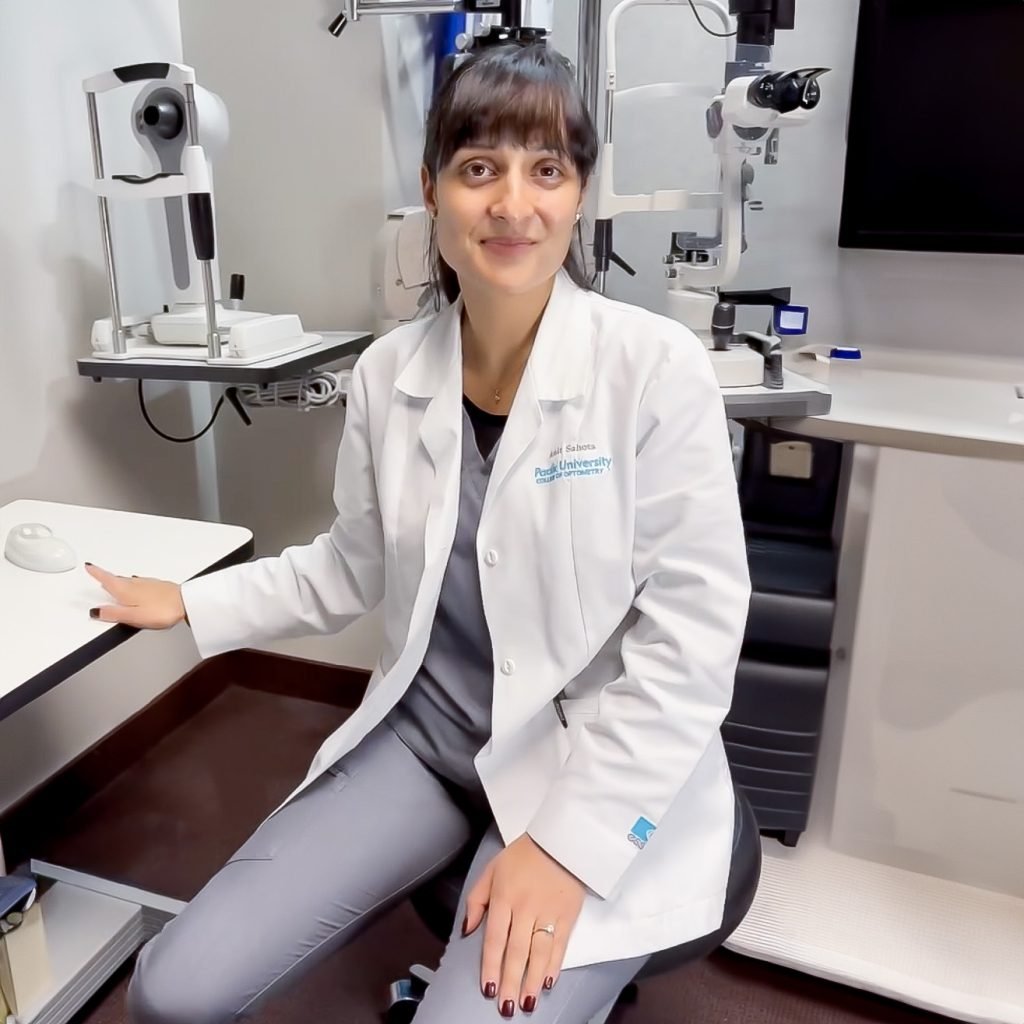
Reviewed by Dr. Amit Sahota, Registered Optometrist (BSc, OD)
Last updated: March 6, 2026