Most people spend months researching LASIK, PRK, EVO ICL, and other vision correction procedures, yet the surgery itself often takes less than 30 minutes.
What many patients don’t realize is that laser eye surgery involves a team of eye care professionals working together before, during, and after the procedure. Your optometrist helps determine whether surgery is appropriate, your surgeon (ophthalmologist) performs the procedure, and follow-up care helps ensure your eyes heal properly and your vision remains stable.
At Real Eyes Optometry, we help guide patients through this process. After your refractive surgery evaluation, we provide recommendations of experienced refractive surgeons, answer questions about your options, and provide many of the post-operative visits needed during recovery.
Whether you’re considering LASIK, PRK, EVO ICL, or another vision correction procedure, understanding the journey from evaluation to recovery can help you make more informed decisions about your eye care.
At a Glance:
✓ Understand the referral and recovery process
✓ Learn what happens after your refractive surgery evaluation
✓ Recommendations to experienced LASIK, PRK, and EVO ICL surgeons
✓ Understand your procedure options and recovery timeline
✓ Local follow-up care with your trusted Burnaby optometrist
✓ Long-term eye health monitoring after surgery
How the Laser Eye Surgery Process Work
Laser eye surgery is often a team effort. While your surgeon performs the procedure, your optometrist helps guide the process before and after surgery.
One way to think about it is this:
Your optometrist is like the detective. We gather information, evaluate your eyes, identify potential concerns, and help determine which procedures may be appropriate for you. The surgeon then uses that information, along with their own testing and expertise, to recommend and perform the procedure.
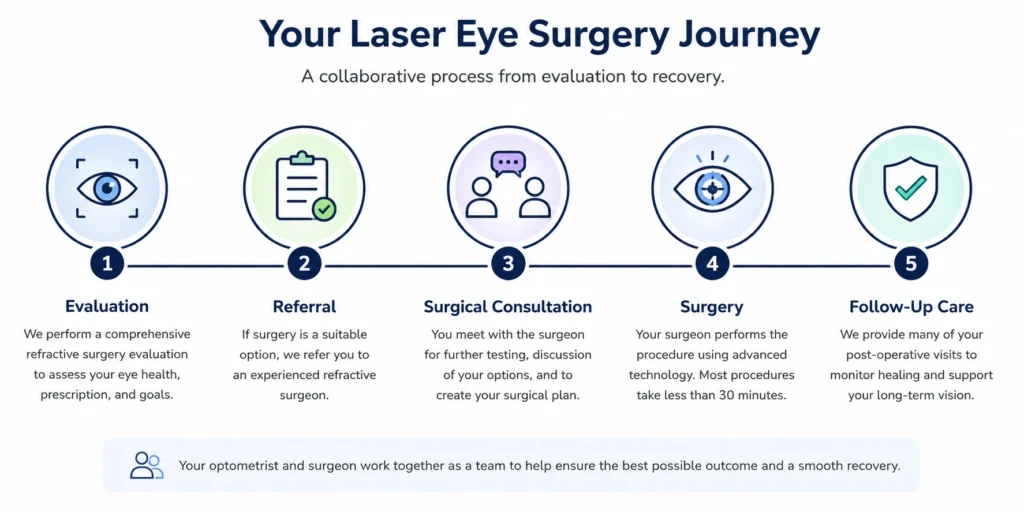

Step 1: Refractive Surgery Evaluation
Your journey begins with a comprehensive refractive surgery evaluation. We assess your prescription, eye health, corneal measurements, lifestyle, and visual goals to determine whether laser eye surgery may be a suitable option.
Step 2: Contact the Surgery Centre
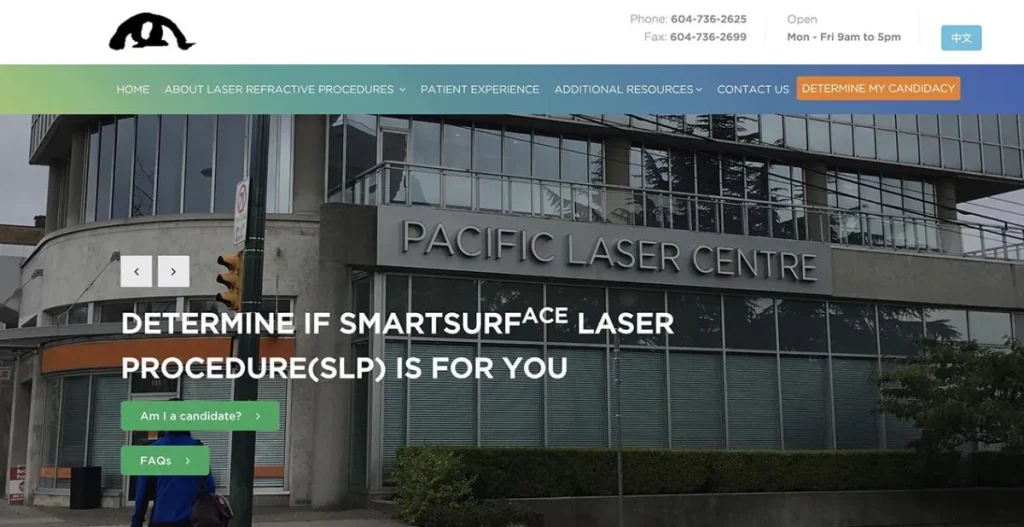
If surgery appears appropriate, we can recommend experienced refractive surgeons. In many cases, our patients choose Pacific Laser Eye Centre, although the most appropriate surgery centre may vary depending on your individual needs and circumstances.

Step 3: Surgical Consultation
The surgeon performs additional testing and reviews your eye health, measurements, and visual goals. This appointment is an opportunity to ask questions, discuss procedure options, and determine whether you would like to move forward.
Step 4: Surgery Day
If you decide to proceed, the surgeon performs the procedure and provides instructions for your recovery.
Step 5: Follow-Up Care
Many of your post-operative appointments can be completed with your optometrist. We monitor healing, answer questions, assess your visual recovery, and communicate with the surgeon if needed throughout the recovery process.
How to Choose a Surgeon?
Every patient’s eyes, lifestyle, and goals are different. Rather than recommend everyone to the same provider or procedure, we help connect patients with a surgeon who is appropriate for their individual needs.
When discussing options, we consider:
- The procedure that may be most suitable for your eyes
- Your prescription and overall eye health
- Corneal measurements and dry eye status
- Technology and procedures available at the surgical centre
- Your lifestyle, occupation, and visual goals
- Location, travel time, and accessibility
Convenience is often an overlooked part of the decision. Most patients will attend multiple appointments before and after surgery, and you’ll need someone to drive you home on the day of your procedure. Choosing a surgical centre that is accessible from Burnaby, Vancouver, the Tri-Cities, North Shore, Richmond, or other parts of the Lower Mainland can make the experience much smoother.
Many of our patients choose Pacific Laser Eye Centre, a well-established refractive surgery centre in downtown Vancouver. However, the most appropriate surgery centre depends on your individual circumstances, preferences, and treatment options.
Our goal is to help you understand your choices and connect you with a surgeon who can provide the procedure and support that best align with your vision and long-term goals.
What Happens After my Comprehensive Refractive Surgery Evaluation?
Once you decide on a refractive surgeon, the next step is a surgical consultation. This appointment allows the surgeon to review your eye health, discuss your goals, and confirm whether surgery is appropriate for your eyes.
Surgical Consultation
During your consultation, you’ll meet with the surgeon and their team to review your history, discuss procedure options, and ask any questions you may have about surgery, recovery, and expected outcomes.
Additional Testing
Most surgical centres perform their own measurements and imaging before recommending a procedure. This may include additional corneal mapping, pupil measurements, prescription verification, and other tests to help guide treatment planning.
Final Procedure Recommendation
After reviewing all of your information, the surgeon will recommend the procedure they believe is most appropriate for your eyes. Depending on your prescription, eye health, and visual goals, this may include LASIK, PRK, EVO ICL, or another vision correction option.
Surgery Booking
If you decide to proceed, you’ll receive instructions on how to prepare for surgery, what to expect on the day of your procedure, and how your follow-up care will be coordinated.
Your Recovery Journey
Every patient heals differently, but most recoveries follow a similar timeline.
Day of Surgery
Your surgeon performs the procedure and reviews your post-operative instructions. Most patients return home shortly afterward to rest and begin the healing process.
First Week
This is when the majority of healing occurs. You may attend one or more follow-up appointments to monitor your recovery, assess your vision, and ensure your eyes are healing as expected.
First Month
Vision often continues to stabilize during the first few weeks after surgery. Follow-up visits help monitor your progress and address any questions or concerns that may arise.
Long-Term Follow-Up
Even after your recovery is complete, regular eye exams remain important. Laser eye surgery can reduce dependence on glasses or contact lenses, but it does not prevent future eye conditions such as cataracts, glaucoma, or macular degeneration. Ongoing eye care helps protect your long-term vision and eye health.
Why Follow-Up Care Matters
Laser eye surgery may take only minutes to perform, but healing and visual recovery continue long after you leave the surgical centre. Follow-up appointments allow your eye care team to monitor your progress, answer questions, and ensure your eyes are recovering as expected.
Healing and Dry Eye Monitoring
As your eyes heal, it’s normal to experience temporary symptoms such as dryness, fluctuating vision, glare, or light sensitivity. Follow-up visits help monitor the health of your cornea and identify any concerns that may require additional treatment or support.
Visual Recovery and Prescription Stability
Most patients notice improved vision quickly, but it can take time for vision to fully stabilize. During your follow-up appointments, we assess your visual recovery, monitor changes in your prescription, and track your progress throughout the healing process.
Long-Term Eye Health
Laser eye surgery changes how light focuses in your eye, but it does not prevent other eye conditions from developing later in life. Cataracts, glaucoma, macular degeneration, diabetic eye disease, and other eye health concerns can still occur regardless of whether you have had LASIK, PRK, or EVO ICL.
Do I Still Need Eye Exams After LASIK or Refractive Eye Surgery?
Yes.
Many patients are surprised to learn that regular eye exams remain important after eye surgery. While LASIK and other refractive procedures may reduce your dependence on glasses or contact lenses, they do not eliminate the need for ongoing eye care.
Routine eye exams allow us to monitor your eye health, evaluate any changes in your vision, and detect potential problems before they affect your sight.
Learn more about what happens during a comprehensive eye exam and why regular eye care remains important throughout your life.
Why Patients Appreciate Co-Management
One of the benefits of co-management is continuity of care. From your initial laser eye surgery consultation through recovery and long-term eye health monitoring, you continue working with an eye care team that understands your history, prescription, and visual goals.
A Familiar Clinic and Team
Many patients appreciate returning to a clinic they already know and trust. Whether you have questions after surgery, concerns during recovery, or need ongoing eye care years later, you’ll have access to a team that is familiar with your eye health journey.
Convenient Local Follow-Up Appointments
While your surgical consultation and procedure may take place at a refractive surgery centre in Vancouver, many post-operative visits can often be completed closer to home. This can make recovery more convenient, especially during the first few weeks when follow-up appointments are most frequent.
Communication Between Your Surgeon and Optometrist
Co-management allows your surgeon and optometrist to work together throughout your care. Test results, surgical recommendations, recovery progress, and any concerns can be shared between providers to help ensure a smooth experience from consultation through recovery.
At Real Eyes Optometry, our goal is simple: to help you feel informed, supported, and confident throughout every stage of your laser eye surgery journey.
FAQ for Eye Surgery
If two surgeons recommend different procedures, who should I listen to?
Different surgeons may recommend different procedures because more than one option may be appropriate for your eyes. Factors such as your prescription, corneal health, dry eye history, lifestyle, and recovery goals can all influence their recommendation. If you’re unsure, your optometrist can help explain the pros and cons of each option so you can make an informed decision.
Can I change my mind after having a consultation with a surgeon?
Absolutely. A consultation does not commit you to surgery. The consultation is an opportunity to learn more, ask questions, and explore your options. Many patients take time to think about their decision or seek a second opinion before moving forward.
Why would an optometrist recommend surgery while another recommends waiting?
Recommendations can vary based on factors such as age, prescription stability, dry eye symptoms, eye health, lifestyle, and future vision needs. Sometimes surgery is the right next step. Other times, waiting may provide better long-term results. A thorough evaluation helps determine what is most appropriate for your individual situation.
What questions should I ask during my surgical consultation?
Consider asking:
Why are you recommending this procedure?
What are the alternatives?
What risks apply to my eyes specifically?
What should I expect during recovery?
Will I still need glasses for certain activities?
What happens if my vision changes in the future?
Will my vision needs change again in 10 or 20 years?
Laser vision correction can permanently correct your prescription at the time of treatment, but your eyes can still change due to aging, cataracts, health conditions, or natural changes in the lens inside the eye. Some patients may eventually require glasses, reading glasses, or additional treatment.
What is the difference between LASIK and refractive surgery?
Many people use the term “LASIK” to describe all laser eye surgery, but LASIK is only one type of refractive surgery. Refractive surgery is the broader category of procedures designed to reduce dependence on glasses or contact lenses. Depending on your eyes, options may include LASIK, PRK, EVO ICL, or refractive lens exchange (RLE).
A refractive surgery evaluation helps determine which option may be most appropriate for your prescription, eye health, age, and lifestyle.
What if I am a good candidate for more than one procedure?
This is actually quite common. Some patients may qualify for LASIK, PRK, or EVO ICL. In these situations, the decision often comes down to factors such as recovery time, dry eye history, occupation, hobbies, prescription strength, and long-term visual goals. Your surgeon and optometrist can help you understand the trade-offs between each option.
How do I know if a surgeon is recommending the procedure that is best for me?
A good surgical consultation should include a discussion of all reasonable options, including the benefits, risks, and limitations of each procedure.
This is one reason many patients appreciate having an independent optometrist involved in the process. We can help explain recommendations and answer questions before you make a decision.
Can my hobbies or occupation affect which procedure is recommended?
Yes. Athletes, first responders, pilots, military personnel, tradespeople, and people who spend long hours on computers may have different visual needs.
Your lifestyle is often just as important as your prescription when determining the most suitable procedure.
What if I decide not to have surgery after my evaluation?
That is completely okay.
The goal of a refractive surgery evaluation is to provide information and help you make an informed decision. Some patients choose surgery immediately, some wait, and others decide that glasses, contact lenses, or other options better suit their needs.
Can dry eye prevent me from having laser eye surgery?
Sometimes.
Dry eye is one of the most common reasons additional treatment may be recommended before surgery. Managing dry eye beforehand can improve comfort, healing, and visual outcomes after the procedure.
What happens if I develop cataracts after LASIK?
Many people who have LASIK eventually develop cataracts simply because cataracts are a normal part of aging.
Having LASIK does not prevent future cataract surgery. However, it is important for your eye care providers to know your surgical history when planning future vision correction procedures.
Why Doesn’t My Surgeon Perform All of My Follow-Up Appointments?
Laser eye surgery is often a team effort between your surgeon and optometrist.
While the surgeon performs the procedure and oversees your surgical care, many follow-up appointments can be completed by your optometrist closer to home. This allows your recovery to be monitored without requiring frequent trips back to the surgical centre.
Your optometrist communicates with the surgeon throughout the process and can monitor healing, assess visual recovery, answer questions, and identify any concerns that may require additional attention.
This collaborative approach is known as co-management and helps provide convenient, continuous care before, during, and after surgery.
Why Do I Need an Optometrist After Surgery?
Even after a successful procedure, your eyes continue to heal and adapt. Follow-up appointments help monitor healing, assess visual recovery, manage dry eye symptoms, and ensure your vision remains stable.
Many patients appreciate returning to a familiar clinic for post-operative care rather than travelling back to the surgical centre for every visit.
Your optometrist also plays an important role in your long-term eye health. While laser eye surgery can reduce dependence on glasses or contact lenses, it does not prevent future conditions such as cataracts, glaucoma, or macular degeneration. Regular eye exams remain an important part of protecting your vision.
Who Performs Laser Eye Surgery: An Optometrist or an Ophthalmologist?
Laser eye surgery is performed by an ophthalmologist, a medical doctor who specializes in eye surgery.
Your optometrist plays a different but equally important role. Optometrists perform refractive surgery evaluations, monitor your recovery, and often provide many of the follow-up visits after surgery.
By working together, your optometrist and ophthalmologist help ensure you receive the most appropriate procedure and ongoing care for your eyes.
Considering Laser Eye Surgery?
Whether you’re exploring LASIK, PRK, EVO ICL, or simply looking for more information, the first step is a comprehensive refractive surgery evaluation.
At Real Eyes Optometry, we’ll assess your eye health, discuss your visual goals, answer your questions, and help determine whether refractive surgery may be right for you.
If surgery is appropriate, we can guide you through the referral process and continue supporting your care throughout recovery.
Real Eyes Optometry
Real Eyes Optometry is centrally located in Metrotown Mall. Our convenient location includes free, accessible parking and the ability for parents to complete errands without driving all over the city.
Consider being able to run to a grocery store, make a clothing return, and grab a quick bite, all while your child is having an eye exam. Of course, accompanying your kid during their eye exam is always a good idea. For details on how to find us, click here.

Dr. Sahota has a special interest in dry eye care and advanced in-clinic treatments, including radio frequency technology, and is known for providing thorough, personalized dry eye consultations in multiple languages.

Dr. Pati enjoys caring for patients of all ages, with a particular passion for family eye care and pediatric eye health, helping kids build strong visual habits early in life.

Dr. Wang is highly experienced in contact lens fitting, with a special focus on specialty lenses, and has helped many patients who thought they could never wear contacts comfortably.
Disclaimer: This information is for educational purposes and does not replace professional medical advice
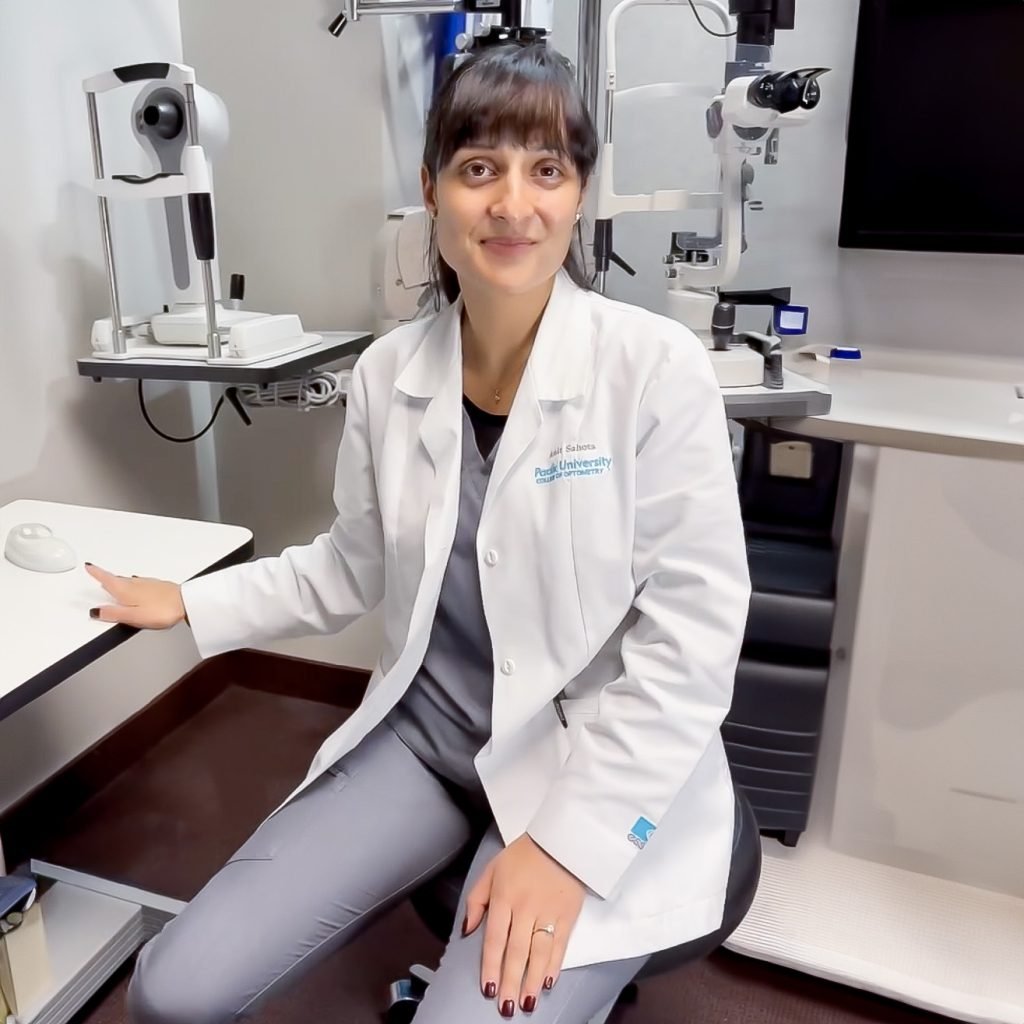
Medically Reviewed by Dr. Amit Sahota, Registered Optometrist (BScOD)
August 13, 2026