If you’ve found yourself holding restaurant menus farther away or searching the house for your reading glasses, you’re not alone. Presbyopia, the age-related loss of near focusing ability, affects nearly everyone after the age of 40.
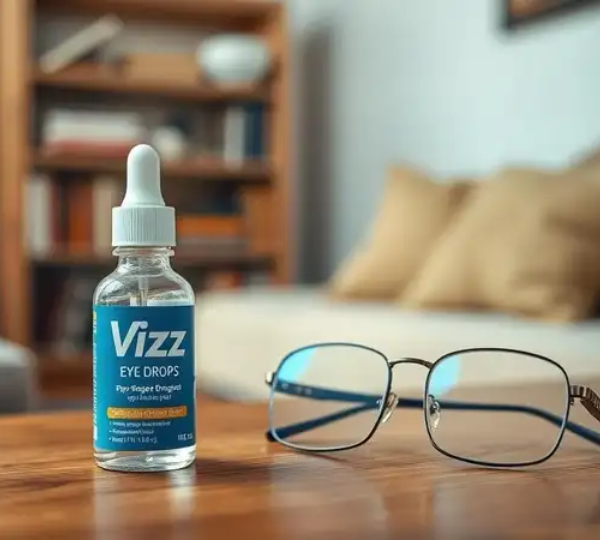
A new prescription eye drop called VIZZ has recently been approved by the U.S. Food and Drug Administration (FDA) for the treatment of presbyopia. Unlike reading glasses, it works by temporarily improving near vision for some adults through a different optical mechanism. As of July 2026, however, VIZZ has not been approved by Health Canada and is not available in Canada.
So, how does it work? Is it likely to replace glasses? And what should Canadians know while waiting to see whether it becomes available here? Let’s take a closer look.
At a Glance
New prescription eye drops are changing how some adults manage age-related reading vision, but they aren’t a replacement for reading glasses for everyone. This guide explains how these treatments work, who may benefit, and what Canadians should know before they become available.
What you’ll learn:
- What presbyopia is and why glasses become necessary after age 40
- How Vizz and Vuity eye drops improve near vision
- The differences between prescription drops and reading glasses
- Potential benefits, side effects, and limitations of these treatments
- Why are these eye drops currently unavailable in Canada
- Who may be a good candidate and who should proceed with caution
- Questions to ask your optometrist before considering treatment
Quick takeaway
Prescription eye drops may reduce the need for reading glasses during some daily activities, but they aren’t the right solution for everyone. A comprehensive eye exam is the best way to determine which options fit your vision, eye health, and lifestyle.
Understanding Presbyopia (a.k.a. Why Reading Glasses Exist in the First Place)
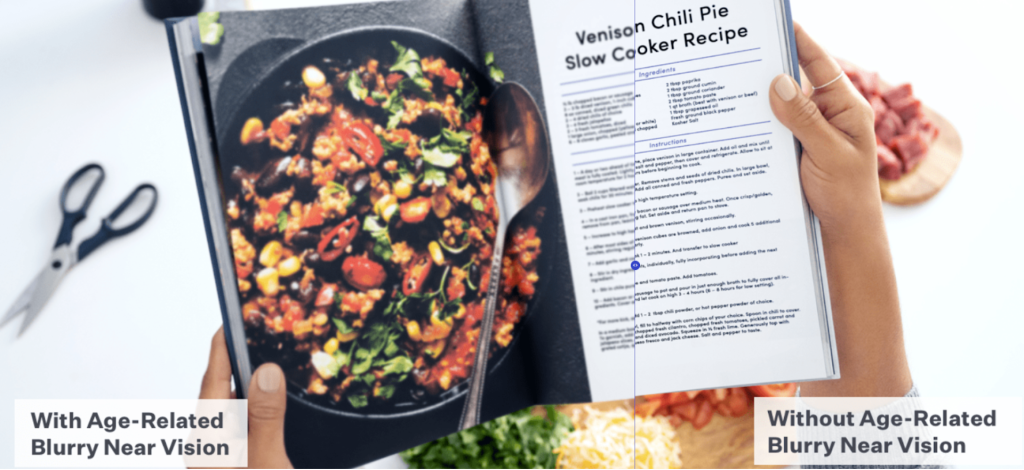
If you’re over 40 and suddenly holding menus at arm’s length, welcome to the world of presbyopia. It’s not a disease, it’s a natural part of aging where the lens in your eye becomes less flexible. That flexibility is what allows your eyes to shift focus from far to near. Once it stiffens, the fine print on your phone, books, or pill bottles gets blurry.
Traditionally, reading glasses have been the simplest fix. They bend light in a way that brings near objects into focus, letting you get on with your life. But if you’ve ever wished you could avoid having a pair in every room of the house, you’re not alone. Millions of people are searching for options that let them read without relying on glasses all day.
Current Treatment Options for Presbyopia
Before prescription eye drops, most people managed presbyopia with one or more of these options:
- Reading glasses
- Progressive lenses
- Multifocal contact lenses
- Monovision contact lenses
- Refractive lens exchange or other surgical options for selected patients
Prescription eye drops are one of the newest additions to this list and may suit some people, but they are not intended to replace every existing treatment.
1. How VIZZ Eye Drops Could Reduce Your Need for Reading Glasses
So, what’s all the buzz about? The newly FDA-approved treatment is called Vizz (developed by Lenz Therapeutics). Like earlier Vuity drops, it uses a miotic agent that makes your pupil slightly smaller. This “pinhole effect” increases your depth of focus, meaning you can see up close without needing glasses.
Here’s the exciting part: clinical studies showed that within about 30 minutes, many patients were reading small print clearly—and the effect lasted up to 10 hours. Imagine popping in eye drops in the morning and going through most of your workday without pulling out your glasses.
Of course, like any medical treatment, it’s not perfect. Side effects can include:
- Headaches
- Dim vision (especially in low light)
- Mild irritation
For most patients these are temporary, but it highlights why having an eye exam and personalized advice from your optometrist is so important before considering new treatments.
A Quick Note for Canadians
While these new eye drops are FDA-approved in the United States, Health Canada hasn’t approved them yet. That means you can’t pick them up at your local pharmacy.
As of July 2026, VIZZ has not been approved by Health Canada and is not available through Canadian pharmacies. If approval is granted in the future, your optometrist can discuss whether it may be an appropriate option for your vision needs.
2. Reading Glasses vs. Eye Drops: What’s the Real Trade-Off?
This is where it gets interesting. Over-the-counter glasses are cheap, effective, and easy to buy. But they also come with drawbacks:
- You constantly need to carry them.
- They’re easy to lose or break.
- Switching between distance and glasses can be frustrating.
- For some people, it makes them feel “older” than they’d like.
Eye drops, on the other hand, promise freedom—no constant swapping, no digging through your bag at a restaurant, no awkward moments when you can’t read a text in dim lighting. They’re discreet and quick to use, and if they work for you, they could replace your daily reliance on glasses.
But eye drops aren’t for everyone. Some people with certain eye health issues (like retinal concerns or glaucoma) may not be good candidates. And unlike Visine eye drops, which you can grab at the drugstore, presbyopia-correcting drops are prescription-only. That means you’ll need to see your local eye doctor to get evaluated.
3. Vuity Eye Drops vs. Vizz: What’s New?
If this all sounds familiar, it’s because Vuity eye drops hit the market first. Vuity also shrinks the pupil for better near vision, but some patients found it didn’t last as long as they hoped or caused more side effects in low light.
How Does VIZZ Compare with Vuity?
Both medications improve near vision by creating a temporary pinhole effect through pupil constriction. Early clinical research suggests VIZZ may provide a longer duration of effect than Vuity for many patients. However, there are currently limited head-to-head clinical trials directly comparing the two medications, making it difficult to conclude that one is universally better than the other.
The most appropriate option depends on your eye health, visual needs, and your optometrist’s recommendation.
Still, both Vuity eye drops and Vizz are part of the same exciting trend: moving beyond glasses as a popular solution for managing presbyopia.
| Reading Glasses | Prescription Eye Drops |
|---|---|
| Work immediately | Begin working in about 30 minutes |
| No prescription needed | Prescription required |
| No medication | Medication with possible side effects |
| Work for almost everyone | Not suitable for everyone |
| Inexpensive | Higher cost |
So, Should You Ditch Your Reading Glasses?
Here’s the bottom line: glasses aren’t going anywhere. They’re reliable, they work instantly, and they’ll always be the simplest choice. But if you’re motivated to cut back on your dependence on them, these new eye drops represent a real shift in how presbyopia could be managed.
The key questions to ask yourself are:
- Do I want more freedom from glasses during my daily routine?
- Am I comfortable trying a new prescription treatment that may have side effects?
- Do I want to be on the cutting edge of eye care, or am I fine sticking with what works?
If your curiosity is piqued, the next best step is to schedule an eye exam and have a conversation with a trusted optometrist.
Several prescription eye drops for presbyopia are now approved in the United States. This article focuses on VIZZ and Vuity because they are currently the best-known options. Other products may become available as research and regulatory approvals continue.
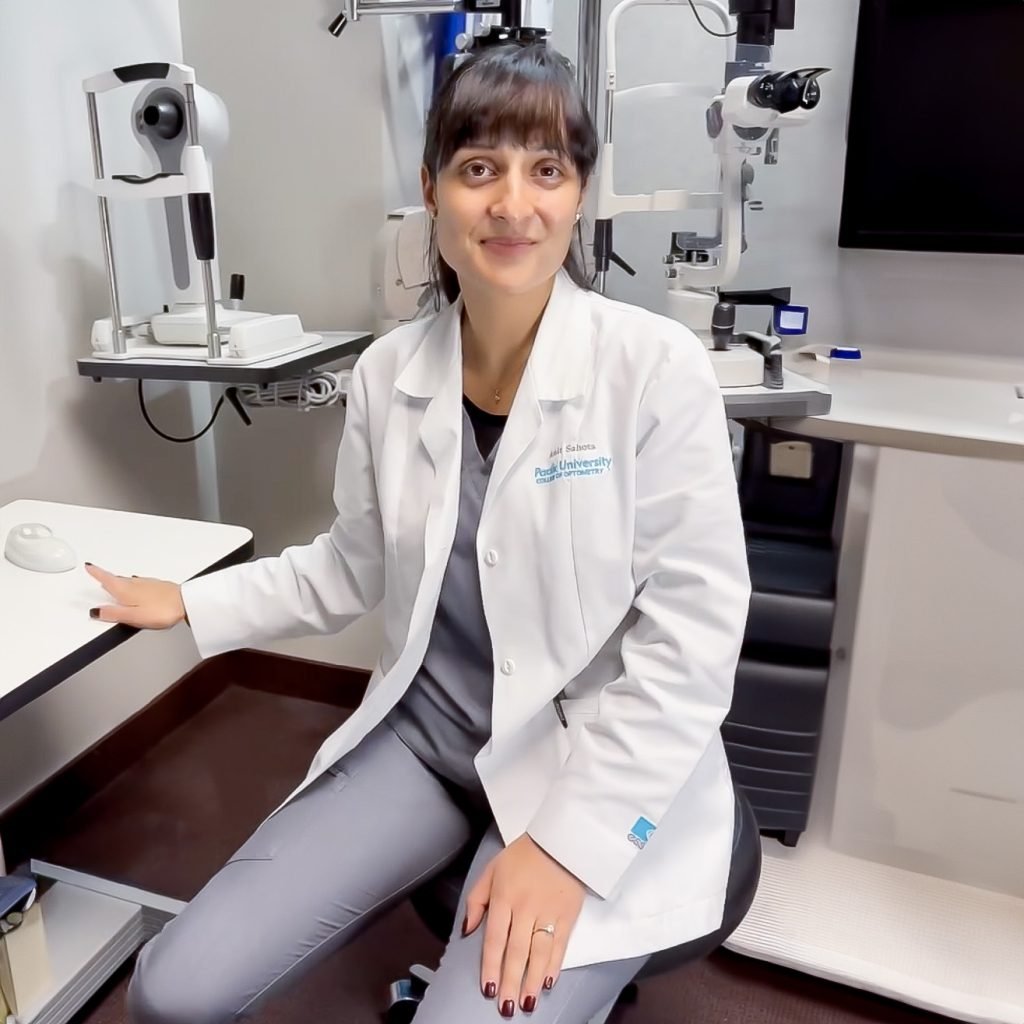
Reviewed by Dr. Amit Sahota, Registered Optometrist (BSc, OD)
July 10, 2026
Real Eyes Optometry: Your Partner in Clear Vision
At Real Eyes Optometry, we know that patients aren’t just looking for “quick fixes”—you’re looking for solutions that fit your lifestyle. Whether it’s glasses, the latest eye drops, or understanding if you’re a good candidate for treatments like Vizz or Vuity drops, our role is to give you honest, personalized guidance.
We believe in empowering patients with information so you can make the right choice for your eyes. If you’ve been wondering whether there’s life beyond glasses, now’s the time to come in, ask questions, and explore your options.
Schedule your appointment with Real Eyes Optometry today, and let’s figure out together what solutions make the most sense for your vision and lifestyle.
FAQs about New Prescription Eye Drops
1. What are Vizz eye drops for presbyopia?
Vizz eye drops are a newly FDA-approved prescription treatment designed to help people with presbyopia see up close without glasses. They use an aceclidine-based formula to create a “pinhole effect,” improving near vision for several hours.
2. How do presbyopia drops work?
Presbyopia eye drops work by slightly shrinking the pupil, which increases depth of focus. This allows the eye to see near objects more clearly without changing the lens itself.
3. How long do Vizz drops last?
Clinical studies suggest Vizz eye drops can begin working within about 30 minutes and may last up to 10 hours, depending on the individual.
4. Are Vizz eye drops better than Vuity?
Both Vizz and Vuity drops treat presbyopia using a similar mechanism. However, Vizz may offer longer-lasting results and fewer issues with dim or nighttime vision for some patients.
5. Can eye drops replace reading glasses?
For some people, presbyopia drops may reduce or temporarily replace the need for glasses. However, they are not a permanent cure and may not work equally well for everyone.
6. Are presbyopia eye drops safe?
Presbyopia eye drops are FDA-approved and generally safe when prescribed by an eye doctor. Some users may experience side effects like headaches, eye irritation, or dim vision in low light.
7. Who is a good candidate for presbyopia eye drops?
Good candidates are typically adults over 40 with age-related near vision changes. However, people with certain eye conditions, such as glaucoma or retinal issues, may not be suitable and should consult an optometrist.
8. Are Vizz eye drops available in Canada?
No, Vizz eye drops are currently only FDA-approved in the United States and are not yet approved by Health Canada.
Information current as of July 2026. Medication availability and Health Canada approval status may change over time.