When your eyes feel strained, your prescription doesn’t seem right anymore, or you’re just wondering about your eye health, it’s easy to get confused by all the titles out there. You might find yourself typing “optometrist vs ophthalmologist” into Google, hoping for a clear answer.
Here’s the good news: you’ve landed in the right place. This blog will help you understand the difference between an optometrist and an ophthalmologist, when you should see each one, and why knowing the distinction can save you time, money, and stress.
What Is an Optometrist?
Let’s start with the role most people encounter first: the optometrist. An optometrist is your primary eye care provider—the professional you see for regular check-ups, comprehensive eye exams, and getting your eye prescription updated.
Optometrists handle:
- Routine eye exams
- Prescribing glasses and contact lenses
- Screening for eye diseases (like glaucoma or cataracts)
- Contact lens fittings (yes you need to fit them like glasses!)
- Managing common vision problems like nearsightedness, farsightedness, or astigmatism
Think of the optometrist as the trusted guide for your everyday vision care. If your eyes feel tired from screens, if your child is squinting to see the board at school, or if you simply need to renew your prescription, the optometrist is your go-to.Let’s start with the role most people encounter first: the optometrist. An optometrist is your primary eye care provider—the professional you see for regular check-ups, comprehensive eye exams, and getting your eye prescription updated.
Optometrists handle:
- Routine eye exams
- Prescribing glasses and contact lenses
- Screening for eye diseases (like glaucoma or cataracts)
- Contact lens fittings (yes you need to fit them like glasses!)
- Managing common vision problems like nearsightedness, farsightedness, or astigmatism

Think of the optometrist as the trusted guide for your everyday vision care. If your eyes feel tired from screens, if your child is squinting to see the board at school, or if you simply need to renew your prescription, the optometrist is your go-to.
What Is an Ophthalmologist?
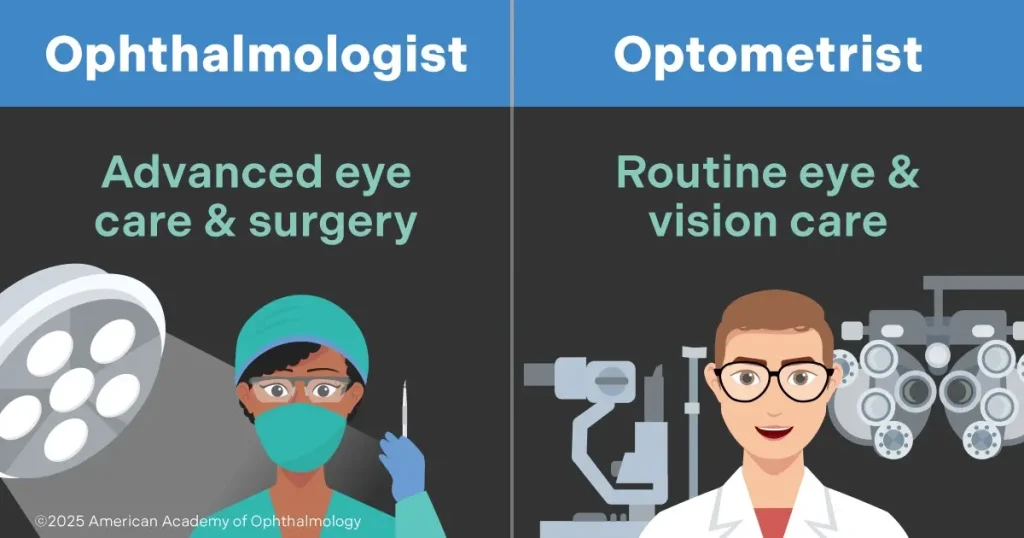
Here’s where the “optometrist vs ophthalmologist” question gets interesting. An ophthalmologist is a medical doctor who has completed extensive training in ophthalmology, the branch of medicine that specializes in diagnosing and treating serious eye conditions, often with surgery.
Ophthalmologists handle:
- Eye surgeries (like cataract removal or LASIK)
- Complex medical eye conditions (such as advanced macular degeneration or diabetic retinopathy)
- Advanced treatment plans that go beyond routine care
If you think about it in medical terms, the optometrist is like your family doctor for your eyes, while the ophthalmologist is like a specialist surgeon you may be referred to if your condition is more serious.
Optometrist vs Ophthalmologist: How to Decide
Here’s the real question: how do you know which one to book an appointment with?
- Routine checkups, prescriptions, and preventative care → See your optometrist.
- Surgery or advanced treatments for eye disease → You’ll likely need an ophthalmologist.
Not sure? Start with your optometrist—they can examine your eyes, explain what’s going on, and refer you to an ophthalmologist if necessary.
Why Does This Matter?
If you schedule directly with an ophthalmologist when you just need an updated eye prescription, you might be waiting longer than you need to. On the other hand, if your optometrist spots something serious, you’ll be guided to the right specialist without delay.
The beauty of understanding “ophthalmologist vs optometrist” is that it puts you in control of your care. You’ll know where to go first, saving you time, and avoiding frustration.
4 Common Questions About Optometry & Ophthalmology
1. Can an Optometrist Detect Serious Eye Conditions?
Yes. Optometrists are trained to screen for conditions including glaucoma, cataracts, and macular degeneration. While they don’t perform surgery, visiting your local eye doctor is the most common way to catch issues early! In fact, 75% of vision loss can be prevented or treated with proper care.
2. Are There Alternative Options Between an Optometrist and an Ophthalmologist?
Yes! While ophthalmologists handle surgery and advanced medical treatments, some best-in-class optometrists offer services that provide non-surgical alternatives. Examples include vision therapy to strengthen how the eyes work together, ortho-K (special contact lenses that reshape the cornea overnight), radiofrequency treatment for dry eyes, and other advanced procedures. These options are ideal for patients who may not be ready for surgery, don’t feel comfortable with it, or simply want to explore less invasive ways to improve their vision.
3. What if I Need Both?
Sometimes patients need the support of both professionals. For example, your optometrist may discover early signs of cataracts and continue monitoring your prescription, while an ophthalmologist handles the surgery to remove a cloudy lens.
4. Do I Need a Referral to See an Ophthalmologist?
Yes. Many patients start with an optometrist, who can refer them to the appropriate ophthalmologist, if needed. Your family doctor can also refer you to an ophthalmologist, however, the family doctor is not conducting any eye specific testing and your referral will usually go to a general ophthalmologist. Starting with your optometrist ensures you’re getting referred to the appropriate specialist.
Real Eyes Optometry: Your First Stop for Eye Care
At Real Eyes Optometry, we know you’re not just looking for information—you’re looking for care you can trust. As your local optometrist in Burnaby Metrotown, we’re here to handle everything from routine exams and eye prescriptions to spotting issues early and referring you to an ophthalmologist if advanced care is needed.
Why start with us? Because we make the process seamless. You’ll get an approachable, professional team that listens, answers your questions, and guides you to the right next step for your eyes. No confusion, no wasted time—just clarity and confidence.
Book your appointment today, and let’s keep your vision clear and your life in focus.