If reading menus has become harder or you find yourself switching between distance glasses and readers throughout the day, you may be ready for progressive lenses.
But choosing progressive glasses is not simply a matter of picking the most expensive lens available as there are different designs are built for different visual demands, and the right choice depends on how you use your eyes every day.
For many people in their 40s and beyond, the change is related to presbyopia—the natural loss of the eye’s ability to focus on nearby objects. It usually becomes noticeable in the early to mid-40s and can make reading, computer work, and other close-up tasks increasingly difficult.
At Real Eyes Optometry in Burnaby’s Metrotown area, we often help patients sort through exactly this question: Do I actually need progressives, and if I do, which kind makes sense for my life?
The answer depends on more than age or prescription.

In This Guide
We’ll explain:
- What progressive lenses are and how they work
- Who typically benefits from progressive glasses
- The difference between everyday and office progressive lenses
- Why progressive lenses cost more than standard single-vision lenses
- What affects the progressive lenses cost you see at an optical clinic
- How to choose a lens based on the way you actually use your eyes
- When an eye exam is the better next step than simply ordering new glasses
Progressive Lenses at a Glance
| Type | Best For | Main Advantage | Consideration |
|---|---|---|---|
| Bifocals | People who need distinct distance and near correction | Clear distance and near zones | Visible dividing line and less seamless transition |
Everyday progressive lenses | People who need distance, intermediate and near vision throughout the day | One pair for multiple distances | Design and fitting matter |
Office progressive lenses | Computer-heavy work and close/intermediate tasks | Designed around desk and screen distances | Usually not intended for driving |
Premium/custom progressive lenses | People with demanding prescriptions or high expectations for visual range | More personalized optics and potentially wider usable areas | Higher cost |
Single-vision reading glasses | People who only need help with close work | Simple and affordable | Does not correct distance vision |
There is no universally “best” progressive lens. The best lens is the one that matches your prescription, frame, visual habits, and daily activities.
What Are Progressive Lenses?
Progressive lenses are multifocal lenses that provide different strengths for different viewing distances without a visible line across the lens.
The upper portion is primarily used for distance vision. As your eyes descend downward, the prescription gradually shifts from intermediate vision and into the section of the lens used for viewing nearby objects, allowing you to switch from glancing across the room to reading something in your hands without changing glasses.
That seamless transition is one of the biggest advantages of progressive lenses over traditional bifocals. The Canadian Association of Optometrists describes progressives as multifocal lenses with a seamless transition between viewing distances.
There is, however, a trade-off.
Because multiple prescriptions have to fit within one lens, the usable areas of vision are more complex than with a single-vision lens. Some people notice a period of adaptation when they first start wearing progressives.
That is why a great patient outcome requires an up-to-date prescription and a lens that be properly designed, measured, fitted and matched to your eyes.
Why Use Progressive Glasses?
Most people who start considering progressive glasses are experiencing presbyopia.
Presbyopia isn’t a disease. It is a normal age-related change in the eye’s ability to focus on nearby objects. As the natural lens inside the eye becomes less flexible, shifting focus from distance to near becomes more difficult with symptoms like:
- Reading small print requiring more effort
- Holding a phone farther away
- Needing brighter light to read
- Eyes feeling tired after close work
- Developing headaches after reading or computer work
- Ability to see clearly across the room but struggle with something directly in front
The change can feel abrupt, even though the underlying process occurs gradually, therefore many patients may begin using progressive glasses selectively during the day to aid in reading or computer work. Others frequently move between locations and benefit from having a single pair of glasses that can handle the most of their day.
The right solution depends on your visual demands.
Book an Eye ExamOptometrist Tip
For some patients, having more than one pair of progressive lenses can be surprisingly practical. Your visual needs aren’t necessarily constant throughout the day—you might need to read a menu at a restaurant, focus on a presentation across a conference room, work at a computer, or quickly switch between near and distance vision while travelling.
As a result, some patients choose to keep multiple pairs of progressive glasses in the places they use them most, such as at home, at work, in the car, or in a frequently used bag. It can be a simple way to make sure the right vision correction is always within reach, particularly for people whose days involve frequent changes in distance and activity.
When It’s Worth Booking an Eye Exam
If you’re noticing that reading is getting harder, you’re relying increasingly on readers, or your current glasses no longer feel adequate, an booking an eye exam in Burnaby is a useful place to start.
A comprehensive exam does more than determine whether you need a stronger prescription. It also evaluates your overall eye health and can identify conditions that may not produce obvious symptoms.
Real Eyes Optometry in Metrotown can help determine which vision correction approach fits your prescription, work demands and everyday routine.
3 Types of Progressive Lenses
This is where the conversation becomes more useful than simply asking, “How much are progressive lenses?”
Two pairs of progressive glasses can look almost identical from the outside while providing quite different visual experiences.
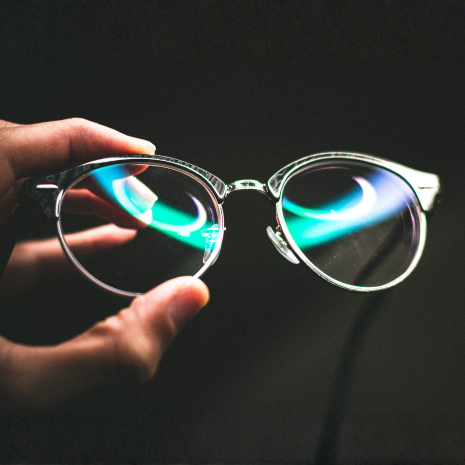
1. Standard, Everyday Progressives
esigned for people who move regularly between distance, intermediate and near vision. They’re often a good fit for someone who wants one primary pair of glasses for everyday activities such as:
- Driving
- Walking outdoors
- Shopping
- Watching television
- Using a phone
- Working at a computer
- Reading
For many patients, this is the most versatile option.
2. Personalized Progressive Lenses
Standard everyday progressives work well for many people, but certain prescriptions, visual habits and previous experiences can make a more customized design worth considering.
- Stronger or more complex prescriptions: A more severe astigmatism, significant difference in prescription between the two eyes, or other complex vision concerns can require a more personalized solution.
- Sensitivity to visual distortion: Progressive lenses several range of prescriptions within the same lens. Some patients notice blur or distortion in the peripheral areas, particularly when shifting their gaze. A customized design can provide wider areas of usable vision and may make these transitions feel more natural.
- Previous difficulty adapting to progressives: Persistent difficulty finding the clearest part of the lens, discomfort when moving between viewing distances, or a sense that vision is constantly “in the wrong spot” may indicate that a different lens design or fitting approach is worth exploring.
- Hours of visually demanding work: Computer-heavy work can involve frequent shifts between screens, documents, colleagues and objects at different distances. A standard progressive requires the gaze to move between its different vision zones throughout the day, while a customized design can provide more usable vision across the distances most relevant to the work.
3. Occupational Progressive Lenses
Office progressive lenses, designed specifically for intermediate and near tasks rather than full-time distance vision.
They’re particularly useful for people who spend much of their day at a computer.
Instead of prioritizing a wide distance-viewing area, an office design can give you a more useful range for activities such as:
- Computer screens
- Multiple monitors
- Documents
- Meetings across a desk
- Reading
- Close-up work
This can be especially helpful if you spend eight hours a day at a desk but find that your everyday progressives don’t feel ideal for your workspace.
There is an important distinction, though:
Office progressive lenses are not generally a replacement for your everyday driving glasses.
Think of them as a specialized tool for a specific visual environment.
5 Factors That Affect Progressive Lens Cost
So, how much are progressive lenses? There isn’t one standard price, the cost depends on several elements.
Like any product, the progressive lenses cost can vary considerably depending on the lens design, prescription, customization, materials, coatings, and the level of fitting involved.
1. Your Prescription
A comprehensive eye exam determines the prescription needed to correct vision at different distances. That prescription provides the starting point for the lens manufacturer, including the amount of nearsightedness or farsightedness, the degree and direction of astigmatism, and the near correction needed for presbyopia.
Each eye is prescribed separately, so the two lenses do not necessarily have the same prescription. A more significant or complex correction can also require a different lens material or thickness to produce a comfortable, practical lens. This is one reason stronger prescriptions can sometimes cost more: they may require more specialized materials or manufacturing.
2. Lens Design
Not all progressive lenses use the same optical design. Every progressive provides distance, intermediate and near vision, but the way those areas are distributed across the lens can vary.
More advanced individualized progressive lens designs can use additional information about the prescription, frame and how the lens will sit in front of the eyes to calculate the optical surface. This can allow the lens to be optimized for factors such as wider areas of usable vision, smoother transitions between viewing distances or reduced peripheral distortion.
The more sophisticated the lens design and the amount of individualization involved, the more the lens may cost. That doesn’t mean the most advanced design is necessary for everyone; the goal is to match the design to the visual demands and prescription.
3. Lens Materials & Coatings
Additional lens features can also change the price, including anti-reflective coatings, photochromic lenses that darken outdoors, scratch-resistant treatments and specialized sun or screen-related options.
These features aren’t automatically necessary. The useful question is which ones address the patient’s prescription, lifestyle and visual needs.
4. The Frame Selected
The frame does more than hold the lenses in place—it affects how the lenses can be positioned in front of the eyes.
Frame size and shape determine how much lens material is needed and how much space is available for the different viewing areas of a progressive. The frame’s curvature and the angle at which it sits on the face can also affect the optical performance of the lens.
For example, a highly curved frame may require a lens design that accounts for that curvature. If the frame and lens aren’t well matched, the wearer may experience more peripheral distortion or difficulty using the intended viewing areas.
This is why choosing a frame for progressive glasses isn’t simply a matter of appearance. The frame needs to work optically with the lens design and prescription.
5. Measurements & Fitting
Your eyes aren’t positioned exactly the same distance apart as everyone else’s, so pupillary distance (PD) measures the distance between the centres of the pupils. This measurement helps position each lens directly in front of the eye it is correcting.
That positioning is particularly important with progressive lenses because the lens contains different areas for distance, intermediate and near vision. If those areas aren’t positioned correctly in relation to the eyes, vision can be affected—even when the prescription itself is correct.
PD and other fitting measurements generally don’t add a separate cost to progressive lenses. They are part of the process of accurately fitting the lenses to the individual patient. However, some more advanced individualized progressive lens designs use additional measurements when calculating the lens, which can contribute to the cost of that particular lens design.
If your glasses constantly slide down your nose, sit unevenly or aren’t positioned correctly, the visual experience can be affected. A good frame fit isn’t just about comfort. It is part of the optical prescription.

Are Progressive Lenses Covered by Insurance?
Many Canadian extended health plans provide coverage toward prescription eyeglasses, which can include progressive lenses. However, coverage varies by plan, so the amount reimbursed may be different from the total cost of the glasses.
For example, a plan may provide a set vision-care allowance every two years that can be applied toward prescription eyewear. If the cost of progressive glasses exceeds that allowance, the remaining balance is generally the patient’s responsibility.
Coverage can also have other conditions, such as limits on how frequently eyewear can be replaced or separate allowances for eye examinations and prescription eyewear.
Provincial health coverage is different from extended health benefits so before purchasing new progressive glasses, it is worth checking the specific details of the vision-care plan, including the maximum benefit, replacement period and eligible expenses. For added convenience, Real Eyes Optometry offers direct billing to many extended health plans.
Questions to Ask Yourself
Rather than starting with a price list, start with your day.
Ask yourself:
- Where do I need to see clearly?
- If you drive frequently, your distance vision matters.
- If you work at a computer all day, intermediate vision matters.
- If you read, use your phone or do detailed close work, near vision matters.
- If you move between all three, an everyday progressive design may make sense.
- If your day is primarily spent at a desk, office progressive lenses may give you a better solution for your workspace than trying to make your everyday glasses do everything.
And if you already wear progressives but aren’t happy with them, don’t assume that “progressives just aren’t for me.”
The problem could be the prescription, lens design, frame, measurements, fit or simply an adjustment issue.
The Bottom Line
Progressive lenses can be an excellent solution when you need clear vision at multiple distances, but the right progressive lens isn’t necessarily the most expensive one.
Your prescription, daily activities, working distance, frame and fitting measurements all contribute to the final result.
If you’re starting to notice that reading is harder, your current glasses aren’t keeping up, or you’re tired of switching between different pairs, a comprehensive eye exam is the best place to start.
At Real Eyes Optometry in Burnaby’s Metrotown area, the goal isn’t simply to prescribe a pair of progressive glasses. It’s to understand how you use your vision and recommend correction that fits your actual life.
Whether that means everyday progressives, office progressive lenses, reading glasses or another option, the right solution starts with understanding what your eyes need.
FAQ Progressive Lenses
FAQ Progressive Lenses
Presbyopia commonly becomes noticeable between the early and mid-40s, although the timing varies. Some people initially need reading glasses, while others benefit from multifocal or progressive correction as they begin needing clear vision at several distances.
Are progressive glasses difficult to get used to?
Some people adapt quickly, while others need more time. Because the lens contains a gradual change in prescription rather than separate distance and near sections, your brain and eye movements may need time to become accustomed to the new viewing pattern.
Consistent wear can help with adaptation. If problems persist, the glasses should be checked for prescription, fit and measurements rather than simply assuming you cannot wear progressives.
Why do my progressive glasses feel blurry when I look at my computer?
Your computer screen is usually at an intermediate distance, which falls between the distance and near zones of a standard progressive lens.
If you spend much of your day at a computer, office progressive lenses may provide a more suitable visual range for that environment.
Are office progressive lenses good for driving?
Generally, no. Office progressive lenses are designed around closer working distances and are not intended to provide the full distance field of view needed for activities such as driving.
They are best considered a dedicated work pair rather than a replacement for everyday progressive glasses.
Why are progressive lenses more expensive than regular glasses?
Progressive lenses are more complex to manufacture because different vision strengths have to be incorporated into one lens with a gradual transition between viewing distances. More customized designs can involve additional optical calculations and personalization.
How much are progressive lenses in Burnaby?
There isn’t one fixed price for progressive lenses in Canada. The final cost depends on the lens design, prescription, customization, materials, coatings and frame, among other factors.
If you’re comparing prices, make sure you’re comparing similar lens designs and features rather than comparing the price of one basic progressive with a highly customized option.
Can I wear contact lenses instead of progressive glasses?
Possibly. Multifocal contact lenses are available for people with presbyopia, although suitability depends on your prescription, eye health, comfort and visual requirements. Your optometrist can discuss whether multifocal contacts, monovision or glasses make the most sense for you.
Why can’t I just buy progressive glasses online?
Progressive lenses require accurate measurements and proper positioning within the frame. The Canadian Association of Optometrists notes that fitting considerations include lens height, pupillary distance, frame adjustment and other measurements that are particularly important for multifocal lenses.
That doesn’t mean online eyewear is never an option. It does mean progressive glasses are a particularly good example of where individualized measurements and professional fitting can make a difference.
Sources & Further Reading
The information in this article is informed by guidance from the Canadian Association of Optometrists, including its resources on presbyopia, multifocal lenses, eye examinations and progressive-lens fitting.
For additional information about presbyopia, the American Optometric Association provides an overview of symptoms, diagnosis and treatment options.
Canada’s National Strategy for Eye Care also identifies presbyopia as a common age-related vision condition that can be corrected through options including reading glasses, bifocals, progressive lenses, and contact lenses.
American Optometric Association: Presbyopia
Canadian Association of Optometrists: Presbyopia
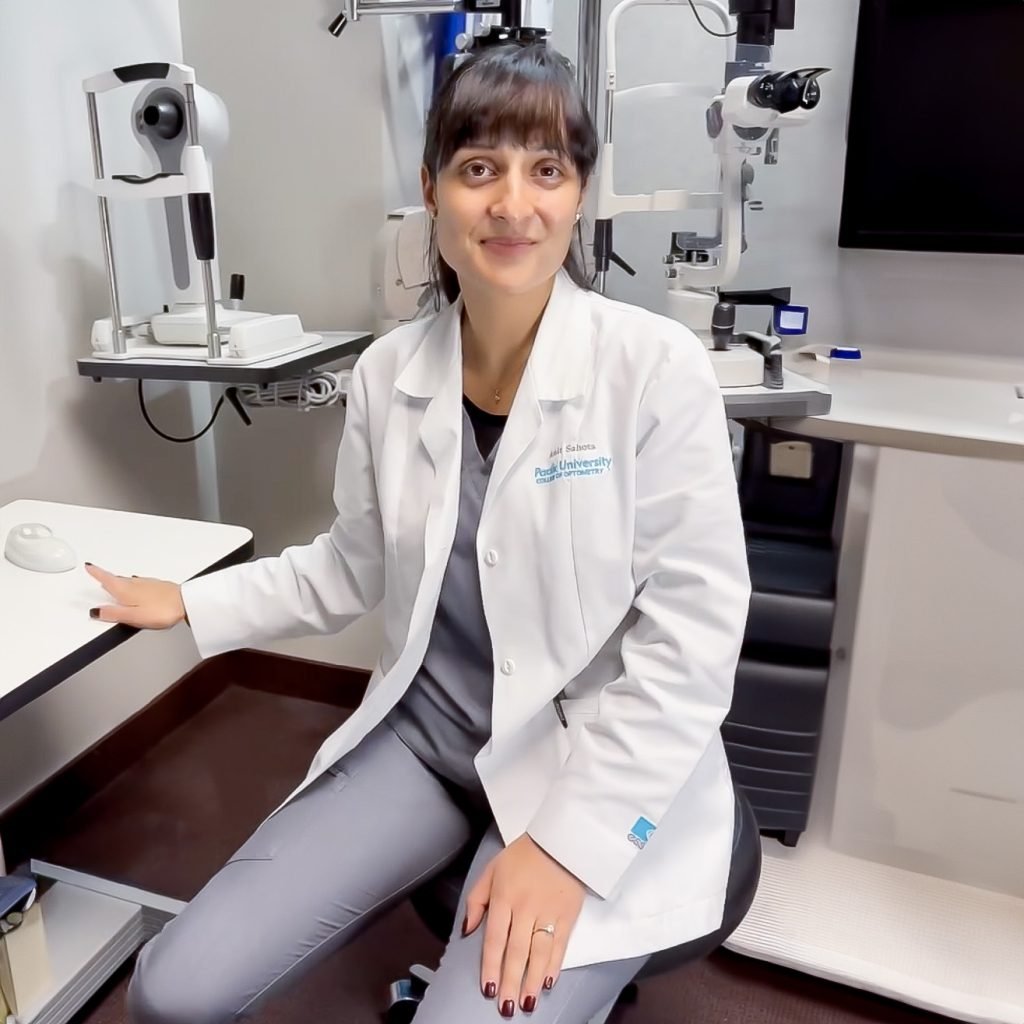
Reviewed by Dr. Amit Sahota, Registered Optometrist (BScOD)
September 18, 2026