Eyeglass Lenses: How to Choose the Right Option for You
Choosing eyeglass lenses is about more than making letters look sharp. The right lenses should match your prescription, the way you use your eyes, your frame, your work, and the environments where you need clear and comfortable vision. At Real Eyes Optometry, we help patients compare lens designs, materials, coatings, and tints so the final choice makes sense for real life.
This guide explains the main types of eyeglass lenses, what different options can and cannot do, and which questions to ask before ordering your next pair.
Which eyeglass lenses are best for you?
Start with your prescription type and visual tasks: single-vision lenses suit one main distance, while progressive lenses combine distance, intermediate, and near powers in one lens. Then compare lens material and index for thickness, weight, impact resistance, and budget, and add only the coatings that match your routine, such as anti-reflective, scratch-resistant, UV, photochromic, or blue-light options. The best eyeglass lenses depend on your prescription, lifestyle, comfort, frame, and budget—not one universal winner.
Eyeglass Lenses at a Glance
- Lens design: single vision, bifocal, progressive, occupational, or another design based on how you focus.
- Lens material: the material can affect thickness, weight, impact resistance, and appearance.
- Coatings and tints: options can help with reflections, scratches, sunlight, or specific visual preferences.
- Measurements and fit: accurate measurements and a well-fitted frame are part of good lens performance.
Prescription eyeglass lenses should be compared by design, material, coatings, fit, and price. When comparing the best eyeglass lenses brands, ask our optometrist or optician which lens products Real Eyes currently offers for your prescription and frame, then compare the available warranty, coatings, and follow-up support rather than choosing by brand name alone.
What Are the Main Types of Eyeglass Lenses?
Eyeglass lenses are designed around the distances and visual tasks you need to see clearly. Your eye examination identifies the prescription, while your daily routine helps determine which lens design may be most practical.
Single-vision lenses
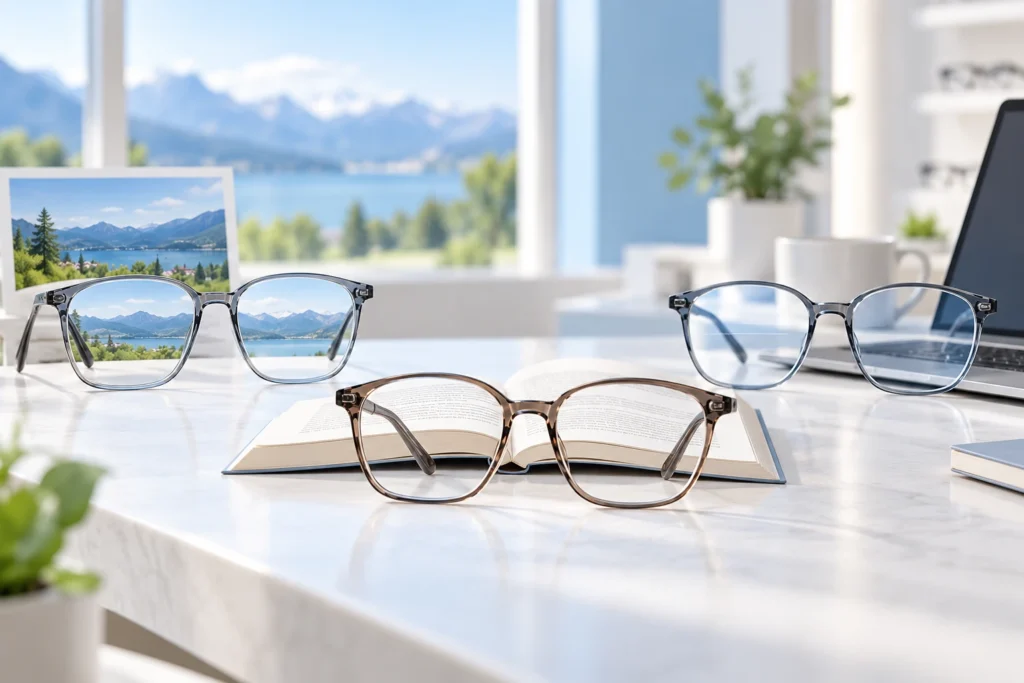
Single-vision lenses have one prescription across the lens. They may be used for distance vision, reading, computer work, or another specific task. A person who needs separate glasses for driving and reading may have more than one pair of single-vision lenses, each designed for a different working distance.
Bifocal and trifocal lenses
Bifocal lenses provide two main viewing zones, commonly distance and near. Trifocal lenses add an intermediate zone. The visible segment lines can be useful for people who prefer clearly defined areas, although many patients now choose a progressive or task-specific design instead.
Progressive eyeglass lenses
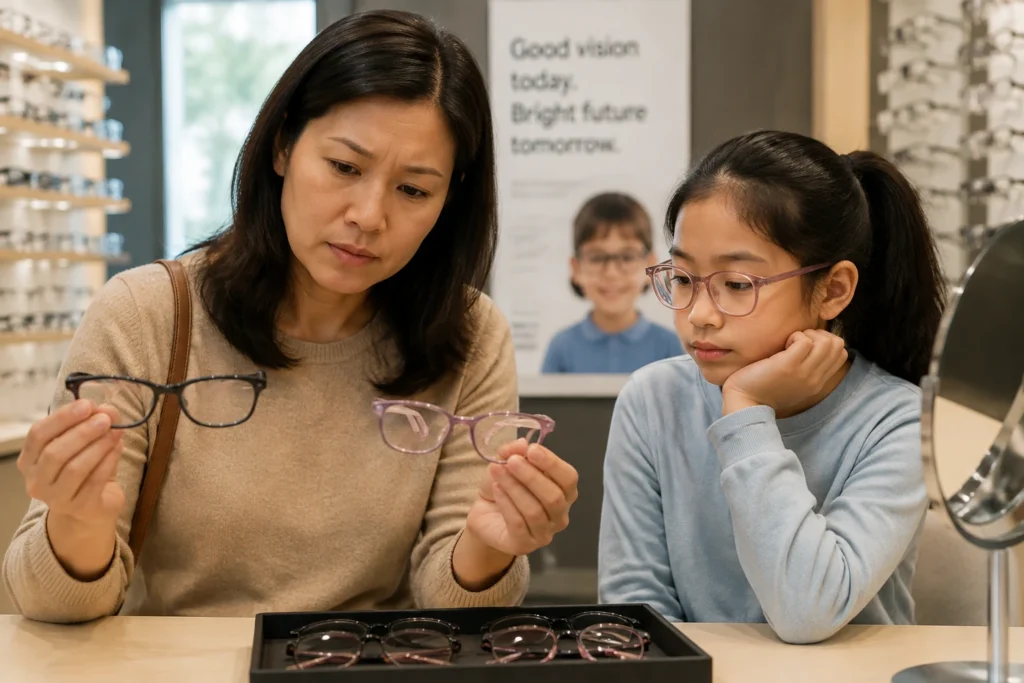
Progressive eyeglass lenses provide distance, intermediate, and near powers in one lens without a visible line. The prescription changes gradually from the top toward the bottom. Because the usable areas and adaptation experience vary by design, fitting, prescription, and frame, measurements and follow-up matter. If a progressive lens feels uncomfortable, it is worth checking the fit and measurements rather than assuming you simply need to tolerate the problem.
Occupational and computer lenses
Occupational lenses are designed around a particular work pattern, such as a desk, studio, workshop, or clinical environment. Computer lenses may give more space for intermediate and near tasks than a general-purpose progressive. They are not automatically right for every screen user, so the working distance, posture, lighting, and prescription should be discussed together. You can also compare frame and lens categories in our types of eyewear guide.
Prism lenses
Prism is a prescribed lens feature that can help manage specific binocular-vision or eye-alignment problems. It is not a general upgrade for ordinary blur or eye fatigue. If you experience double vision, unusual visual fatigue, or difficulty keeping words single while reading, arrange an assessment rather than ordering prism on your own.
How Do Lens Materials Affect Thickness, Weight, and Comfort?
Lens material is different from lens design. Design describes how the prescription is distributed across the lens; material describes what the lens is made from. Material selection can affect thickness, weight, impact resistance, optical performance, and cost.
Standard plastic lenses
Standard plastic lenses can be a practical choice for many prescriptions and everyday frames. They are often selected when a patient wants a balanced combination of clarity, affordability, and appearance.
High-index lenses
High-index materials can help reduce thickness for some stronger prescriptions. They are not automatically better for every person, because the best result also depends on prescription power, frame size, lens shape, and how the frame sits on your face.
Polycarbonate or Trivex may be considered when impact resistance, light weight, or a particular frame and lifestyle make those properties useful. Children, people who play sports, and patients who work around eye hazards may need a different conversation than someone choosing everyday dress glasses. Your optometrist or optician can explain which material is appropriate for your prescription and intended use.
Which Eyeglass Lens Coatings and Tints Are Worth Considering?
Coatings and tints change how a lens behaves or looks, but they do not replace a proper prescription or regular eye care. Common options include anti-reflective, scratch-resistant, UV, photochromic, and blue-light filtering features. The right choice depends on what bothers you, where you use your glasses, and which products are available for your prescription and frame.
Anti-reflective coating
Anti-reflective coating can reduce reflections from the front and back surfaces of a lens. That may be helpful with night driving, bright indoor lighting, photography, video calls, and cosmetic appearance. A peer-reviewed study in the Canadian Journal of Ophthalmology examined contrast sensitivity with glare and anti-reflective-coated spectacle lenses. The practical takeaway is that reducing reflections can be useful in glare, but the benefit should be considered alongside the lens, frame, prescription, and environment.
Scratch-resistant treatment
Scratch-resistant treatments can make a lens surface more durable, but no eyeglass lens is completely scratch-proof. Store glasses in a case, rinse away grit before wiping, and use a clean microfiber cloth. Paper towels, clothing, and household cleaners can damage or contaminate the surface.
Photochromic and transition lenses
Photochromic lenses darken in response to light conditions and return toward clear indoors. They can be convenient for people who move between indoor and outdoor environments, but the amount of darkening depends on the lens design and conditions. They may not replace dedicated prescription sunglasses for every activity, especially when you need strong sun protection or polarized glare reduction.
Polarized lenses
Polarized lenses can reduce glare from reflective surfaces such as water, snow, and roads. They are often useful for driving and outdoor activities. They can also interact with some digital displays, so tell your optician how you plan to use them.
Blue-light filtering lenses
Blue-light filtering is often marketed as a solution for screen discomfort, but it should not be treated as a guaranteed medical benefit. A McGill University study of anti-fatigue lenses during a computer task found no significant advantage over placebo lenses for the measures tested. Screen comfort also depends on prescription accuracy, blink habits, working distance, lighting, glare, breaks, and dry-eye symptoms. If screens are uncomfortable, start with a complete assessment rather than assuming a blue filter is the answer.
For more practical guidance, see our digital eye strain information and ask which lens features fit your actual work environment.
How Should I Choose Eyeglass Lenses for My Lifestyle?
Start with the situations where your current glasses are not working well. Instead of asking only for the most expensive lens, describe what you do and what you notice. A comprehensive eye exam confirms the prescription before you compare lens options.
- Driving at night: ask about reflections, glare, frame fit, and whether your prescription is current.
- Computer-heavy work: bring the approximate screen distance and explain whether you need one focal distance or several.
- Reading and close work: describe the distance, duration, lighting, and whether you move between paper and screens.
- Outdoor activities: mention water, snow, cycling, sports, and time spent in bright conditions so sun and glare options can be compared.
- Children and teens: discuss school, sports, durability, myopia monitoring, and how the glasses will be used day to day. A pediatric eye exam can help identify the visual needs behind the lens choice.
- Strong prescriptions: ask how frame size, shape, material, and lens thickness will affect the final appearance and comfort.
Why Do Measurements and Frame Fit Matter?
Even a well-designed lens can feel wrong if the frame is slipping, the lenses are positioned incorrectly, or the measurements do not match how the frame sits on your face. Pupillary distance, optical centre height, fitting position, frame tilt, and vertex distance can all matter, especially for progressive, high-prescription, or specialty lenses.
That is why ordering lenses from a prescription alone is not always enough. A professional fitting helps connect the prescription to the actual frame and your visual tasks. If your new glasses cause persistent blur, headaches, nausea, double vision, or trouble judging steps, stop guessing and contact the dispensing team for a fit and prescription check.
How Should I Clean and Care for Eyeglass Lenses?
- Rinse the lenses with lukewarm water to remove loose particles.
- Use a small amount of lotion-free dish soap if the lenses need deeper cleaning.
- Rinse thoroughly and dry with a clean microfiber cloth.
- Keep glasses in a case when they are not on your face.
- Do not use hot water, household glass cleaner, paper towels, or a shirt sleeve.
- Ask about professional cleaning or replacement if scratches, coating damage, or frame problems interfere with vision.
When Should I Book an Eyeglass Lens Consultation?
Book an assessment if your vision has changed, your current lenses are uncomfortable, you are struggling with screens or night driving, or you are unsure which lens option matches your routine. Bring your current glasses and, if possible, examples of the tasks that are difficult. This helps the team make a practical recommendation instead of treating lens selection as a one-size-fits-all upgrade.
If you have sudden vision loss, new double vision, flashes, a sudden increase in floaters, severe eye pain, or an eye injury, seek urgent medical care rather than waiting for a routine lens appointment.
FAQ About Eyeglass Lenses
What are eyeglass lenses made of?
Eyeglass lenses are made from materials such as standard plastic, high-index plastic, polycarbonate, or Trivex. The best material depends on your prescription, frame, lifestyle, thickness, weight, impact-resistance needs, and budget.
Are progressive eyeglass lenses hard to get used to?
Some people need an adaptation period with progressive lenses. Fit, measurements, frame choice, prescription, and lens design all affect comfort. Persistent blur or headaches should be checked.
Are high-index eyeglass lenses always better?
No. High-index lenses can reduce thickness for some stronger prescriptions, but they are not automatically better for every person. Prescription power, frame size, lens shape, fit, and cost also matter.
Do blue-light filtering lenses help with screen-related eye strain?
Blue-light filtering lenses are not a guaranteed treatment for screen-related eye strain. Comfort also depends on prescription accuracy, blinking, working distance, lighting, glare, breaks, and dry-eye symptoms.
Are polarized eyeglass lenses good for driving?
Polarized lenses can reduce glare from roads, water, and snow, so they are often useful for driving and outdoor activities. They may interact with some digital displays.
Why do my new eyeglass lenses feel blurry or give me headaches?
Blur or headaches can result from prescription, fit, measurements, lens design, or frame position. Contact the dispensing team for a fit and prescription check if symptoms persist.
Can I put new prescription lenses in my old frames?
Often, yes, if the old frames are in good condition and the new lenses can be fitted safely. The optician should inspect frame condition, measurements, shape, and compatibility first.
What eyeglass lenses are best if I work at a computer all day?
The best option depends on your working distance, posture, screen use, prescription, and whether you need one focal distance or several. An occupational or computer lens may help some patients.
How often should I replace my eyeglass lenses?
Replace eyeglass lenses when your prescription changes, vision becomes uncomfortable, lenses are scratched or coating-damaged, or the frame no longer fits well. Regular eye exams help determine when.
How much do eyeglass lenses cost?
Cost varies with the prescription, lens design, material, coatings, frame, and whether specialty or sun lenses are needed. An eye exam and fitting help the optometrist or optician recommend options that match your visual needs and budget. Ask which products Real Eyes currently offers and what is included in the quoted price.
How does an optometrist help me choose eyeglass lenses?
An optometrist confirms the prescription, discusses the distances and tasks you need to see, and considers your frame, measurements, comfort, lifestyle, and budget. The team can then explain the lens products available at Real Eyes and help you compare design, material, coatings, and fit instead of relying on a one-size-fits-all recommendation.
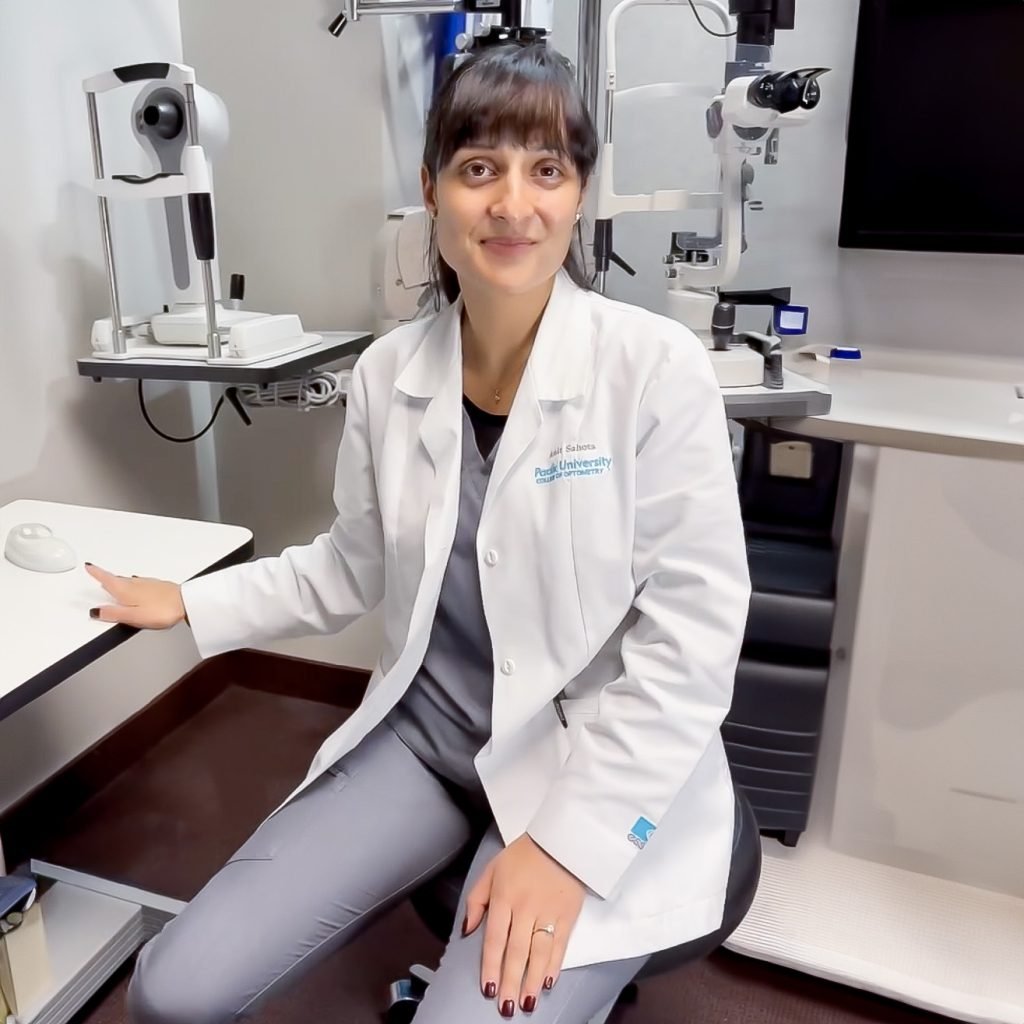
Reviewed by Dr. Amit Sahota, Registered Optometrist
Review date: October 14
Canadian peer-reviewed research
Anti-reflective coatings and contrast sensitivity in glare
McGill study of anti-fatigue lenses during computer work
Canadian research on eyewear fogging and visual task performance
University of Waterloo research on myopia-control spectacle lenses