If you’re searching for the best contact lenses for dry eyes, you may discover there isn’t one lens that’s right for everyone.
The best option depends on more than your prescription. Your tear film, eye health, lifestyle, how long you wear your lenses, and even how much time you spend on digital screens can all affect how comfortable your contact lenses feel throughout the day.
Many people with dry eyes find that daily disposable or silicone hydrogel lenses provide better comfort, but choosing the right lens starts with understanding why your eyes feel dry in the first place. In some cases, treating the underlying dry eye condition is just as important as changing your contact lenses.
In this guide, we’ll explain what causes contact lens discomfort, the features that may improve comfort, and the contact lenses our optometrists commonly prescribe for patients with dry eye symptoms. You’ll also learn when a contact lens change may help and when a comprehensive dry eye assessment may be the better first step.

At a Glance
- Dry eyes don’t necessarily mean you have to stop wearing contact lenses.
- Daily disposable lenses are often a comfortable option for many people with dry eyes.
- Silicone hydrogel lenses allow more oxygen to reach the eye and may improve comfort for some wearers.
- The right contact lens depends on your tear film, prescription, lifestyle, and eye health.
- Sometimes treating the underlying dry eye condition is just as important as changing your contact lenses.
- A contact lens fitting helps determine which lenses are most appropriate for your eyes.
Why Do Contact Lenses Feel Dry?
Dry eyes can happen for many reasons, and contact lenses aren’t always the cause. Your natural tears keep the surface of your eyes smooth, comfortable, and healthy. When the tear film becomes unstable or evaporates too quickly, contact lenses may begin to feel dry, gritty, or uncomfortable.
Several factors can contribute to contact lens discomfort, including:
- Dry eye disease
- Spending long hours on computers or digital devices
- Air conditioning, heating, or windy environments
- Seasonal allergies
- Wearing contact lenses for long periods
- An outdated contact lens prescription
- Contact lens material or replacement schedule
Many people assume they need to stop wearing contact lenses altogether. In reality, a different lens material, replacement schedule, or treating the underlying dry eye condition may significantly improve comfort.
What Makes a Good Contact Lens for Dry Eyes?
If you’re looking for the best contact lenses for dry eyes, it’s helpful to focus on the features that may improve comfort rather than searching for one “best” brand.
Daily Disposable Lenses
Daily disposable contact lenses provide a fresh, clean lens every day. Because they aren’t reused, there’s less buildup of deposits that can contribute to irritation, making them a comfortable option for many people with dry eyes.
Silicone Hydrogel Materials
Many modern contact lenses are made from silicone hydrogel, a material that allows more oxygen to reach the cornea than traditional hydrogel lenses. Increased oxygen transmission may improve comfort and support eye health for some contact lens wearers.
Moisture-Retention Technology
Some contact lenses are designed with surface technologies that help maintain moisture throughout the day. Depending on your eyes, these designs may reduce dryness and improve overall wearing comfort.
The Right Fit Matters
Even the most advanced contact lens may not feel comfortable if it isn’t the right fit for your eyes. Your prescription, tear quality, corneal shape, and daily routine all influence which lens is most appropriate. A contact lens fitting helps determine which option is likely to provide the best combination of comfort, vision, and eye health.


Recommended Contact Lenses Overall: Bausch & Lomb ULTRA
Bausch + Lomb ULTRA lenses are made from silicone hydrogel, a breathable material that allows more oxygen to reach the cornea than traditional hydrogel lenses. They also feature MoistureSeal® Technology, which is designed to help retain moisture throughout the day and may improve comfort for some contact lens wearers, particularly those who spend long hours using digital devices.
Many people blink less while using computers, tablets, and smartphones, which can contribute to contact lens discomfort. While no contact lens can completely prevent dry eyes, breathable materials and moisture-retention technologies may help maintain comfort throughout the day for some wearers. The right contact lens depends on your individual eye health, tear film, and lifestyle.
Recommended Contact Lenses for Transitional: Acuvue OASYS with Transitions
Acuvue OASYS with Transitions™ contact lenses are designed for people who are sensitive to changing light conditions. They automatically adapt to changing light indoors and outdoors, helping reduce exposure to bright light while filtering blue light and blocking UV rays. Some wearers find they are more comfortable during screen use or when moving between different lighting environments.
While these lenses can help manage light exposure, they are not a replacement for sunglasses. Sunglasses are still recommended outdoors because contact lenses protect only the portion of the eye they cover.
Best Contact Lenses for Astigmatism: Acuvue OASYS for Astigmatism
Astigmatism is caused by an irregular curve in the cornea or lens, which can make vision appear blurred or distorted. Standard contact lenses may rotate on the eye, reducing vision quality and comfort for people with astigmatism.
Acuvue OASYS for Astigmatism is a toric contact lens designed to provide clear, stable vision by helping the lens stay in the correct position on the eye. It also features Hydraclear® Plus Technology to support all-day comfort. Depending on your prescription and lifestyle, Acuvue offers options for daily disposable, two-week, and monthly replacement schedules, allowing your optometrist to recommend the lens that’s most appropriate for your needs.
- Acuvue Vita for Astigmatism – Monthly
- Acuvue Oasys 1-Day Astigmatism – Daily
- Acuvue Oasys for Astigmatism – Biweekly

Recommended Contact Lenses (Multifocal): Oasys 1 Day Max Multifocal
ACUVUE® OASYS MAX 1-Day Multifocal lenses are designed for people with presbyopia who need clear vision at near, intermediate, and far distances. Their multifocal design allows many wearers to see comfortably throughout the day without switching between different pairs of glasses. As a daily disposable lens, they also offer the convenience of a fresh lens each day.
Another multifocal option is DAILIES TOTAL1® Multifocal. These lenses feature Water Gradient™ technology, which creates a highly lubricated lens surface that may improve comfort for some people, particularly those who experience dryness while wearing contact lenses. They are also designed to provide clear vision at multiple distances for people with presbyopia.
Recommended Daily Contact Lenses: Acuvue Oasys 1-Day
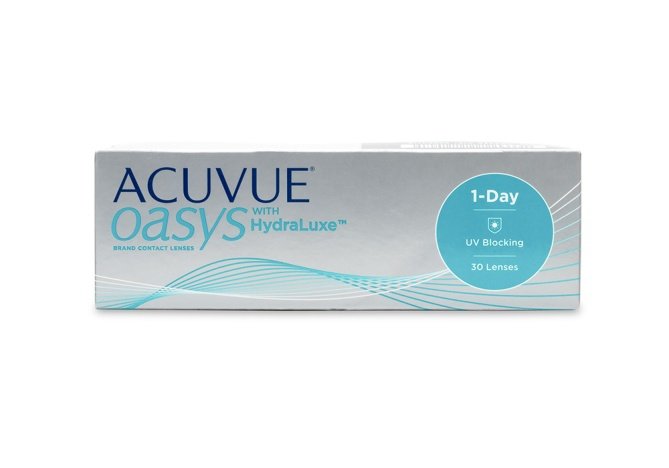
Acuvue OASYS 1-Day is a daily disposable contact lens designed for all-day comfort. It features HydraLuxe® Technology, which helps support a stable tear film and may improve comfort for some contact lens wearers. The lens also provides Class 1 UV protection and is available in toric designs for people with astigmatism, helping deliver clear, stable vision when properly fitted.
Note: While contact lenses offer an added layer of UV protection, they do not replace sunglasses because they only cover part of the eye.
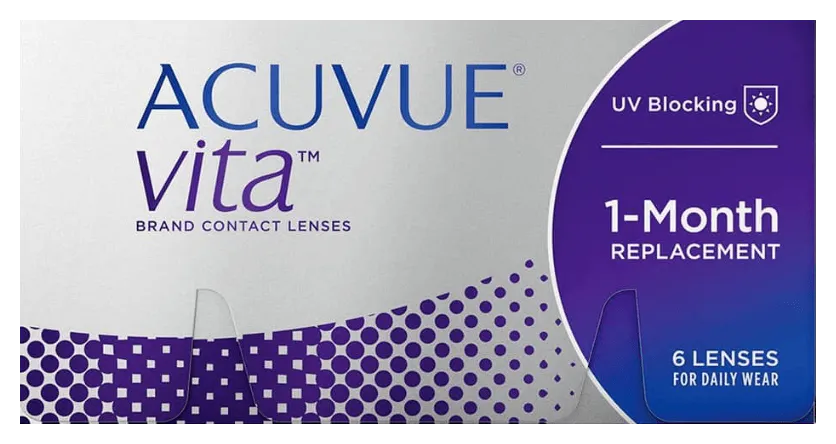
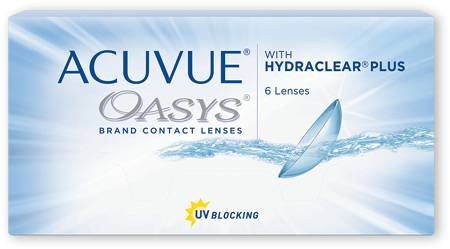
Budget-Friendly: Acuvue Vita Monthly & Acuvue Oasys 2-Week
IAcuvue Vita monthly lenses and Acuvue OASYS two-week lenses are popular options for people looking for a reusable contact lens. Both are designed to provide comfortable wear throughout their recommended replacement schedule while allowing high levels of oxygen to reach the cornea.
These lenses feature technologies that help maintain a stable tear film and reduce dryness for some wearers. They also provide Class 1 UV protection, blocking more than 99% of UVB rays and more than 90% of UVA rays. Contact lenses should not replace sunglasses, but they can provide an additional layer of UV protection.
Both lens families are available in a range of prescriptions, including options for astigmatism. Your optometrist can help determine which replacement schedule, lens material, and design are most appropriate based on your prescription, eye health, and lifestyle.
Daily vs. Monthly Contact Lenses for Dry Eyes
Many people assume daily contact lenses are always better for dry eyes, but the answer depends on your eyes and your lifestyle.
Daily Disposable Contact Lenses
Daily disposable lenses provide a fresh lens every day. Because they aren’t reused, they reduce the buildup of deposits, allergens, and debris that may contribute to discomfort. For many people with dry eyes, this makes daily lenses a comfortable option. Silicone hydrogel daily lenses are especially popular because they allow more oxygen to reach the eye while maintaining comfort.
Monthly Contact Lenses
Monthly lenses can also work well for some people, particularly when they’re made from modern silicone hydrogel materials and cleaned properly each day. They are often a more economical choice for regular contact lens wearers, although they require consistent cleaning and replacement.
If you’re experiencing dry eyes, switching from a monthly lens to a daily disposable lens may improve comfort, but it’s not the only solution. An eye examination can help determine whether your symptoms are caused by your contact lenses, dry eye disease, allergies, or another underlying condition.
Tips for Wearing Contact Lenses with Dry Eyes
If your contact lenses feel dry or uncomfortable, a few simple changes may help improve your comfort throughout the day.
Use Artificial Tears
Preservative-free artificial tears can help replenish moisture and reduce irritation. Not all eye drops are designed for use with contact lenses, so ask your optometrist which lubricating drops are appropriate for your lenses.
Follow Your Replacement Schedule
Wearing contact lenses longer than recommended can lead to protein deposits, reduced comfort, and an increased risk of eye infections. Replace your lenses according to your prescribed schedule, even if they still feel comfortable.
Give Your Eyes a Break
Long hours on digital devices can reduce how often you blink, causing your tear film to evaporate more quickly. Taking regular screen breaks and blinking intentionally may help reduce dryness while wearing contact lenses.
Stay Hydrated
Drinking enough water and avoiding overly dry environments whenever possible can help support your natural tear film.
Don’t Sleep in Contact Lenses Unless Directed
Sleeping in contact lenses that aren’t approved for overnight wear can increase your risk of irritation, infection, and corneal complications.
Choosing contact lenses when your eyes are dry
The right lens depends on your prescription, tear film, wearing schedule, eye health, and budget. Daily disposable and silicone hydrogel lenses may help some patients, but comfort should be evaluated rather than assumed.
- Daily disposables can reduce buildup for some wearers.
- Silicone hydrogel materials allow more oxygen to reach the eye.
- Treating the underlying dry eye may matter as much as changing lens brands.
- A professional fitting helps match the lens and wearing schedule to your eyes.
Explore Dry Eye Care
Continue exploring dry eye care: contact lens evaluations, contact lens care and dry eye symptoms.
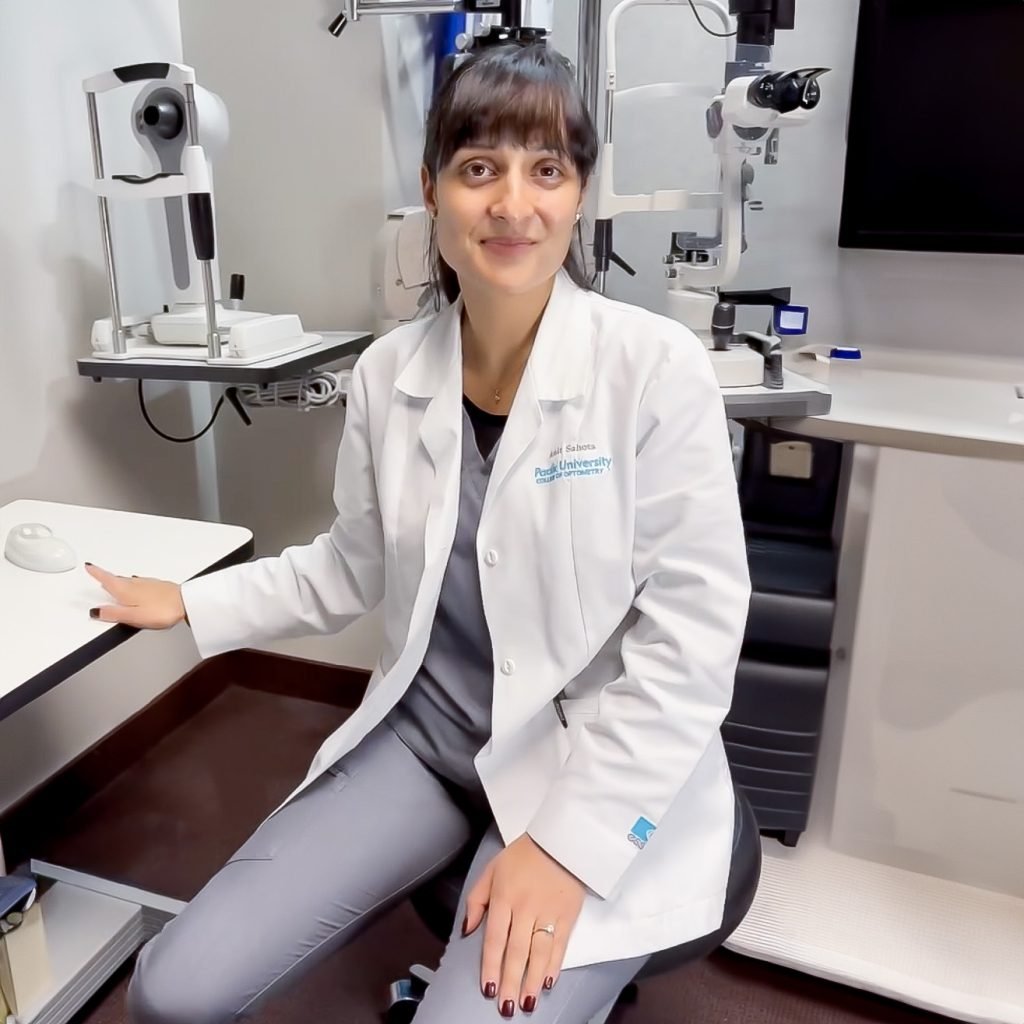
Reviewed by Dr. Amit Sahota, Registered Optometrist (BScOD)
July 28, 2026
What contact lenses are best for dry eyes?
There is no single best lens for everyone. Daily disposable and silicone hydrogel lenses may improve comfort for some people, but the choice depends on your prescription, tear film, fit, and wearing schedule.
Are daily disposable contacts better for dry eyes?
They can be more comfortable for some wearers because there is less time for deposits to build up, but a professional fitting is still important.
Why do my contacts feel dry by the end of the day?
Reduced blinking, tear evaporation, deposits, lens fit, environmental conditions, or an underlying dry-eye problem can all contribute.
Can dry eye treatment make contact lenses more comfortable?
Yes. Improving the tear film or eyelid-gland function may help, although some patients also need a different lens or shorter wearing schedule.
Can I wear contacts if I have meibomian gland dysfunction?
Some people can, but comfort and safety depend on severity, lens fit, wearing time, and treatment of the gland dysfunction.
Should I switch brands if my contacts feel uncomfortable?
Possibly, but changing brands without an assessment can miss other causes. An optometrist can compare material, fit, replacement schedule, and eye health.
When should I stop wearing contacts because of dryness?
Remove lenses if discomfort is persistent or accompanied by pain, redness, light sensitivity, discharge, or vision changes, and seek professional advice.
How does an optometrist fit contacts for dry eyes?
The evaluation considers prescription, corneal health, tear film, eyelids, lens movement, wearing goals, and how your eyes respond during the day.