
At a Glance:
- Red eye emergencies can happen when redness is accompanied by symptoms that may require urgent assessment. While many red eyes are caused by irritation, allergies, dry eye, or infections, some symptoms should not be ignored.
- Eye pain, sudden vision changes, chemical exposure, serious eye injury, or flashes and floaters with vision changes should be assessed promptly.
- If your red eye is mild but does not improve, worsens, or develops new symptoms, contact an optometrist for guidance.
- Seek emergency medical care immediately for severe eye trauma, sudden loss of vision, or chemical burns.
What Is a Red Eye Emergency?
A red eye emergency is a red or bloodshot eye accompanied by symptoms that may indicate a serious eye condition requiring urgent assessment. While many cases of eye redness are caused by minor problems such as allergies, dry eye, or viral conjunctivitis, redness combined with severe pain, sudden vision changes, chemical exposure, significant injury, or flashes and floaters can be a sign of a sight-threatening condition that should not be ignored.
The redness itself is rarely the emergency. It’s the symptoms that occur alongside it that help determine how urgently you should seek care. Conditions such as acute angle-closure glaucoma, keratitis, uveitis, and certain eye injuries can cause a painful red eye and may threaten your vision if treatment is delayed.
If you’re experiencing a red eye with severe pain, sudden vision loss, chemical exposure, significant trauma, or new flashes and floaters, contact an optometrist immediately. If you cannot access urgent eye care or have severe vision loss or a chemical injury, go to the nearest emergency department or call 911.
When Is a Red Eye Considered an Emergency?
A red eye does not always mean you need emergency care. Many cases are caused by irritation, allergies, dry eye, or minor infections and can often be assessed by an optometrist. However, certain symptoms alongside redness can signal a more serious problem that requires urgent attention.
Seek urgent eye care if your red eye is accompanied by:
- Severe or worsening eye pain
- Sudden changes to your vision, including blurry vision, double vision, or loss of vision
- Light sensitivity
- Halos around lights, especially with pain or nausea
- A recent eye injury or chemical exposure
- A sudden painful red eye
- New flashes of light or floaters with vision changes
Eye injuries deserve special attention because damage can occur not only to the surface of the eye but also to deeper structures. Chemical burns, foreign objects, scratches to the cornea, or blunt trauma should be assessed promptly.
If you are unsure whether your symptoms are urgent, contact an optometrist for guidance. If you experience sudden vision loss, severe trauma, or a chemical injury, seek emergency medical care immediately.
Signs Your Red Eye Needs Immediate Medical Attention
Most cases of red eye are not emergencies. However, redness combined with certain symptoms can indicate a more serious eye condition that requires urgent assessment.
If you experience any of the following symptoms, seek immediate medical attention:
Sudden Vision Loss
A sudden decrease or loss of vision in one or both eyes should always be treated as urgent. Do not wait to see if your vision improves on its own.
Severe Eye Pain
Severe or worsening eye pain, especially when combined with redness, headache, nausea, or vision changes, may require immediate evaluation.
Chemical Exposure
Chemical exposure to the eye can cause serious injury. Flush the eye immediately with clean water and seek urgent medical care, especially if pain, redness, or vision changes continue.
Eye Injury
A red eye following an injury, sports accident, foreign object exposure, scratch, or impact should be assessed promptly. Trauma can damage the surface of the eye or deeper structures and may require urgent treatment.
Flashes and Floaters With Vision Loss
New flashes of light, a sudden increase in floaters, or a shadow or curtain-like area in your vision can be warning signs of a retinal problem. These symptoms should be assessed quickly.
Severe Light Sensitivity
Redness combined with intense light sensitivity, pain, or changes in vision may indicate an underlying eye condition that requires medical attention.
Vomiting With Eye Pain
Eye pain accompanied by nausea, vomiting, headache, or halos around lights can be a warning sign of an urgent eye condition and should be evaluated immediately.
Large Amounts of Discharge After Injury
Heavy discharge following an eye injury, especially when combined with swelling, pain, or vision changes, should not be ignored. Seek professional assessment to determine the cause and appropriate treatment.
If you are unsure whether your symptoms require urgent care, contact an optometrist for guidance. If you experience severe trauma, chemical exposure, or sudden vision loss, seek emergency medical care immediately.
Common Causes of Red Eyes
Not every red eye is an emergency. Many cases are caused by common conditions that can often be assessed and managed by an optometrist.
Common causes include:
Dry Eye
Dry eye occurs when the eyes do not have enough moisture or when tears evaporate too quickly. It can cause redness, burning, irritation, and a gritty sensation.
Allergies
Allergic reactions can cause itchy, watery, red eyes, especially during certain seasons or after exposure to triggers such as pollen, dust, or pets.
Viral or Bacterial Conjunctivitis
Conjunctivitis, often called pink eye, can cause redness, discharge, irritation, and watering. The cause determines the appropriate treatment approach.
Discharge
Discharge from a red eye can occur with infections or irritation. Heavy discharge, especially after an injury or when combined with pain or vision changes, should be evaluated.
Contact Lens-Related Irritation
Contact lenses that are worn incorrectly, overused, or not properly cared for can contribute to redness and discomfort.
Foreign Bodies and Corneal Abrasions
Dust, debris, or scratches on the surface of the eye can cause sudden irritation, watering, redness, and discomfort.
Inflammation or Eye Conditions
Conditions such as uveitis, glaucoma, or other inflammatory eye problems can also cause redness and require professional assessment.
Symptoms That Shouldn’t Be Ignored
A red eye is not always an emergency. Many cases are related to common issues such as irritation, allergies, or dryness. However, redness combined with certain symptoms can signal a more urgent eye concern that requires assessment.
Pay attention to changes in your vision, increasing pain, or noticeable changes to the appearance of your eye.
Vision Changes
Blurry Vision
New or worsening blurry vision alongside a red eye should be assessed, especially if the change happens suddenly or affects your ability to see clearly.
Halos Around Lights
Seeing halos around lights, particularly when combined with eye pain, headache, nausea, or redness, can be a warning sign that requires urgent evaluation.
Double Vision
Double vision with a red eye may indicate an issue affecting the eye muscles, nerves, or surrounding structures and should not be ignored.
Sudden Vision Loss
Any sudden loss of vision, whether partial or complete, should be treated as urgent and requires immediate medical assessment.
Pain
Severe Pain
A painful red eye is more concerning than redness alone. Severe or worsening eye pain may indicate a condition requiring prompt care.
Headache Around the Eye
A headache around the eye combined with redness, pain, nausea, or vision changes can be a sign that you need urgent assessment.
Pain With Eye Movement
Pain when moving your eye can be associated with inflammation or other eye concerns and should be evaluated by an eye care professional.
Visible Changes
Swelling
Swelling around the eye or eyelids, especially when combined with redness, pain, or vision changes, may require medical attention.
Blood
Blood in or around the eye after an injury should be assessed. Eye trauma can affect structures beyond the visible surface of the eye.
Unequal Pupils
A noticeable difference in pupil size can sometimes be associated with eye trauma or other medical concerns and should be assessed, especially if it appears suddenly.
Discharge
Discharge from a red eye can occur with infections or irritation. Heavy discharge, especially after an injury or when combined with pain or vision changes, should be evaluated.
If you are experiencing a red eye with any of these symptoms, contact an optometrist as soon as possible for guidance. For severe eye trauma, sudden vision loss, or chemical exposure, seek emergency medical care.
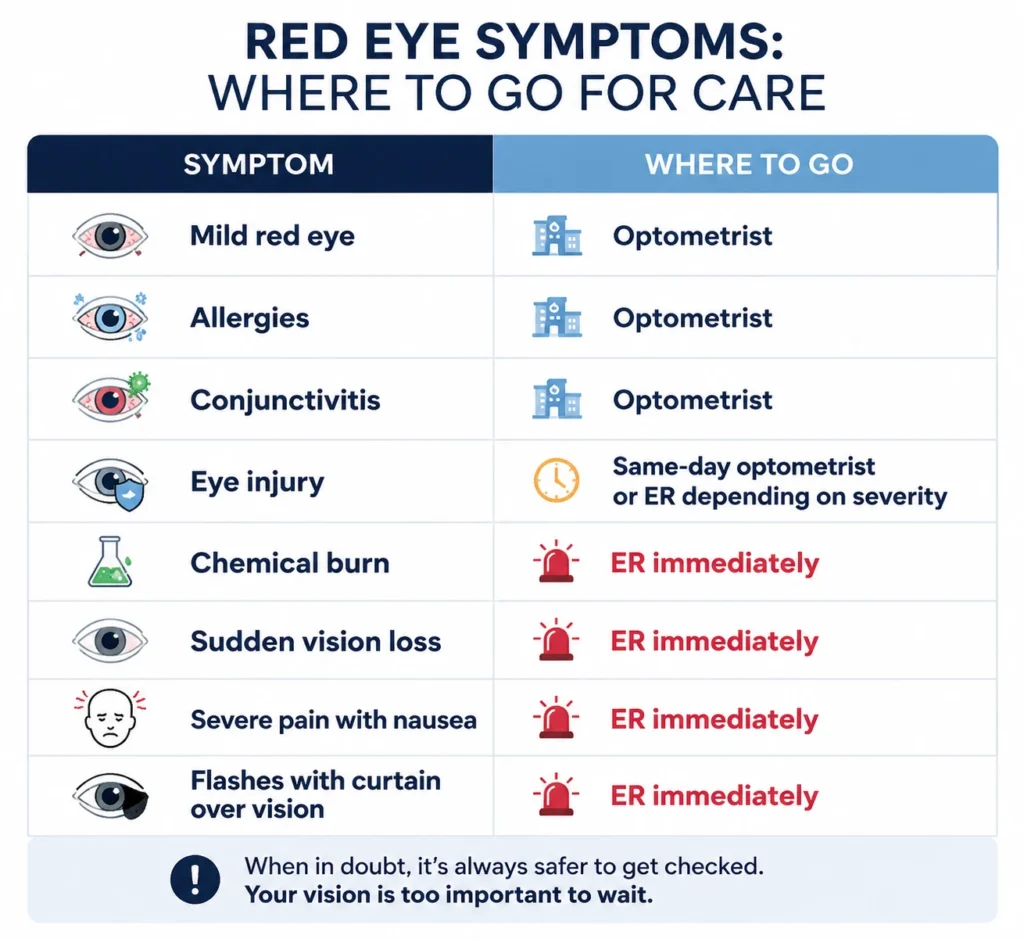
| Symptom | Where to Go |
|---|---|
| Mild red eye | Optometrist |
| Allergies | Optometrist |
| Conjunctivitis | Optometrist |
| Eye injury | Same-day optometrist or ER depending on severity |
| Chemical burn | ER immediately |
| Sudden vision loss | ER immediately |
| Severe pain with nausea | ER immediately |
| Flashes with curtain over vision | ER immediately |
What Happens During an Emergency Eye Exam?
Patients often feel anxious when they need urgent eye care, especially when symptoms appear suddenly. An emergency eye exam is designed to quickly assess what is happening, identify potential causes, and determine the appropriate next steps for treatment.
The exact tests performed will depend on your symptoms, medical history, and the reason for your visit. Your optometrist may perform several assessments, including:
Vision Assessment
The exam usually begins with checking your visual acuity and asking questions about any changes you have noticed. This helps determine whether your vision has been affected and provides important information about the urgency of your condition.
Eye Pressure Measurement
When appropriate, your optometrist may measure the pressure inside your eyes. Changes in eye pressure can be an important clue when assessing certain urgent conditions, including those involving the optic nerve.
Slit Lamp Examination
A slit lamp is a specialized microscope that allows your optometrist to examine the structures at the front of your eye in detail, including the cornea, iris, and surrounding tissues. This can help identify issues such as inflammation, infection, scratches, or foreign bodies.
Fluorescein Dye Testing
A small amount of fluorescein dye may be placed on the surface of your eye to highlight damage that may not be visible otherwise. This test can help identify corneal scratches, abrasions, or areas affected by injury.
Pupil Examination
Your optometrist may examine how your pupils respond to light and compare the appearance of both eyes. This can provide important information about the function of your eyes and visual system.
Retinal Assessment
If needed, your optometrist may examine the back of your eye, including the retina and optic nerve. This can help assess concerns such as retinal changes, flashes, floaters, or sudden vision changes. Some patients may require dilation drops to allow for a more detailed view of the inside of the eye.
Referral If Necessary
After completing the assessment, your optometrist will discuss the findings and recommend the next steps. Some conditions can be managed directly by an optometrist, while others may require referral to an ophthalmologist, emergency department, or another healthcare provider for additional treatment.
If you are experiencing severe eye pain, sudden vision changes, significant injury, or other symptoms that concern you, contact an eye care professional as soon as possible. When it comes to eye emergencies, timely assessment can help protect your vision.

Reviewed by Dr. Amit Sahota, Registered Optometrist (BSc, OD)
Last updated: July 26, 2026
Internal Linking
Learn more about Dry Eyes and how symptoms such as redness, burning, and discomfort may be connected to your tear health. Comprehensive eye exam can also help assess your overall eye health and identify potential causes behind changes in your vision or eye comfort.
If you are experiencing persistent redness, irritation, pain, or changes in your vision, contact Real Eyes Optometry to schedule an appointment.