Figuring out “what glasses suit my face” can feel overwhelming—there are so many styles, shapes, and colors to choose from!
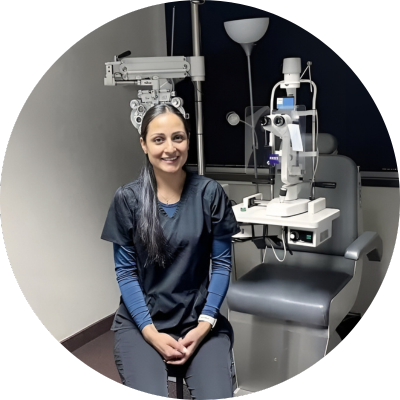
As an optometrist of color, I understand first hand that not all glasses are created with every face in mind. Your unique features—whether it’s your nose bridge, eye placement, or cheekbones—don’t just influence how glasses look on you, but also how they fit and function. The right frames should not only enhance your personal style but also support your vision needs, ensuring optimal comfort and clarity.
If you’ve been searching for “eyeglasses Metrotown” or “eye clinic near me,” you’ve come to the right place. In this article, I’ll show you how to easily identify “what glasses suit my face” and the major characteristics that influence your ideal glasses, allowing you to choose frames that look fantastic but also work well for your specific facial structure and visual needs.

Reviewed by Dr. Shaun Pati, Registered Optometrist (BSc, OD)
What Glasses Suit My Face & Why Does Your Face Shape Matter?
Face shape plays a crucial role in finding glasses that not only look great but also function effectively. Unfortunately, many glasses designed in North America are built with Eurocentric facial features in mind, which can leave individuals with diverse facial structures struggling to find the right fit.
If you’ve dealt with these imperfect fitting glasses before you may think it’s only a minor inconvenience, however, ill-fitting frames can cause the lenses to misalign from the center of your eye. Alignment is critical for ensuring proper vision correction. When the lenses aren’t positioned correctly, your glasses may fail to provide optimal visual clarity and comfort, making it even more important to choose frames designed with your unique facial needs in mind.
1. How to Determine Your Face Shape
Before you start browsing frames at an eye clinic, it’s essential to know your face shape. Here’s how:
- Stand in front of a mirror and pull your hair back if it covers your face.
- Trace the outline of your face using a lipstick or washable marker on the mirror.
- Step back and assess the shape you’ve drawn!
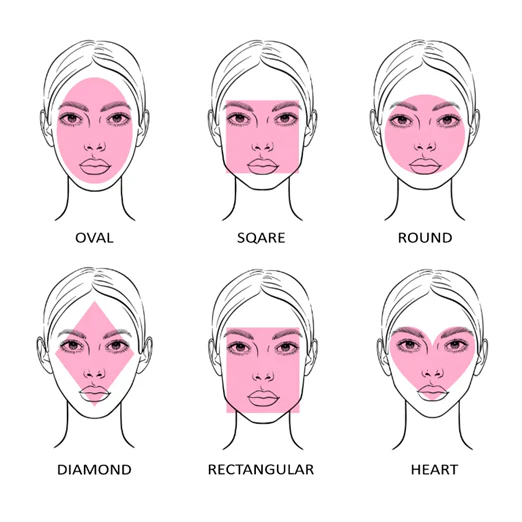
Most faces fall into one of the following categories:
- Oval: Balanced proportions, somewhat longer face and narrower jawline.
- Square: Strong jawline and broad forehead, with similar width and height.
- Round: Full cheeks, softer jawline, and similar width and height.
- Diamond: High cheekbones and a narrow forehead and chin.
- Rectangle: A long, straight face with an even width from forehead to jawline and minimal curves or tapering.
- Heart: Wider forehead narrowing to a smaller chin.
2. What Glasses Suit My Face: Consider Your Unique Features
Face shape is just the beginning. Features like nose size, eye placement, and eyelids can also influence which frames suit you best. Many individuals with diverse facial structures, particularly people of color, may encounter challenges with glasses sliding down their noses, touching their cheeks or lashes, or feeling too tight.
Nose Size & Cheekbones
Asian-fit or low-bridge glasses are specifically designed to provide a comfortable and secure fit for individuals with lower nose bridges and unique facial structures. Unlike other frames, these glasses often feature deeper, adjustable nose pads that help prevent slipping and ensure the glasses stay in place.
They also offer a snugger overall fit to better accommodate facial contours, such as wider cheeks or higher cheekbones, making them a practical and inclusive option for those who find traditional frames uncomfortable or ill-fitting.
Eye Distance
The distance between your pupils varies according to whether your eyes are smaller or broader set. Consider the central part of your lenses not properly aligning with your eyes; this would distort all of the effort your glasses are attempting to put into correcting your vision!
This is also known as Pupillary Distance (PD), the distance between your pupils.
Adults normally have an average PD of 54 mm to 74 mm:
- Average for Women: Around 62 mm
- Average for Men: Around 64 mm
Narrow vs. Wide Pupillary Distance
- Narrow PD: Less than 54 mm
- Wide PD: Greater than 70 mm
For children, PDs are smaller, typically ranging between 41 mm and 55 mm, as their facial structures are still developing.
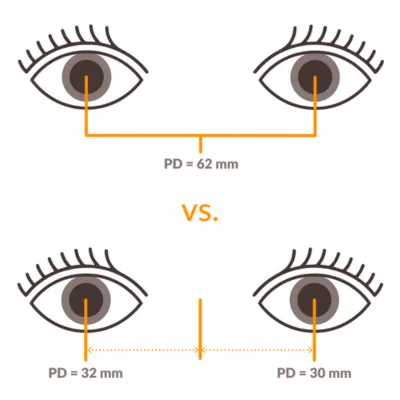
Knowing your PD is crucial for aligning the optical centers of your lenses with your pupils, ensuring proper vision correction and avoiding eye strain.
Pro Tip: If you have wide-set eyes, opt for frames with a strong, prominent bridge to bring attention to the center of your face.
Hooded Eyelids & Prominent Brows
For individuals with hooded eyelids or prominent brows, it can be challenging to find frames that don’t rest on your lashes or brows. To avoid this, opt for frames with a slightly raised or angular bridge.
This design helps ensure that the lenses sit comfortably above the lashes and brows, providing a better fit and allowing for clear vision. Additionally, frames with a bit more depth or height can help create a flattering balance with your natural features, enhancing both comfort and appearance.
Pro Tip: When seeking an “eye clinic near me,” ask for frame options specifically designed for diverse facial features.
3. What Glasses Suit My Face: Pick Colors That Complement Your Skin Tone
Your skin tone, eye color, and hair color all play a role in choosing the most flattering glasses.
- Warm Tones (golden, olive, or tan skin): Try gold, tortoiseshell, or earthy hues.
- Cool Tones (pink or bluish undertones): Opt for silvers, blacks, and jewel tones like emerald or sapphire.
- Deep Skin Tones: Transparent, brightly colored, or metallic frames can pop beautifully, highlighting your features.
But How Can You Confirm?
Check Your Veins
Look at the veins on the inside of your wrist in natural light:
- Blue or purple veins suggest you have cool undertones.
- Greenish veins suggest you have warm undertones.
- A mix of both or hard-to-tell veins might indicate you have neutral undertones.
The White Paper Trick
Hold a plain white sheet of paper next to your face in natural light:
- If your skin looks more pink, red, or blueish against the white, you have cool undertones.
- If your skin looks golden, peachy, or yellow, you have warm undertones.
If you’re still unsure, visit an optician near me or an eye doctor near me—many professionals in the beauty and eyewear industries are trained to help you match your undertones to complementary colors in glasses or makeup!
Why Trust Us with Your Eyewear
At our Metrotown eye clinic, we’re more than just optometrists—we’re partners in your vision care journey. We know how important it is to find glasses that “feel like you.” That’s why we take the time to listen, assess your needs, and recommend frames that suit your unique style, lifestyle, and preferences.
From a wide range of frame styles to custom fits tailored for diverse features, we ensure you leave with glasses that not only enhance your vision but also make you feel like the best version of yourself.
Optometrist Near Me: Book an appointment and let us help you find your perfect pair of glasses.
8 Common Questions our Customers Ask Us
1. How can glasses affect vision if my frames don’t match my facial features?
Ill-fitting frames can misalign the optical centers of the lenses with your pupils, reducing visual clarity, causing eye strain, and even worsening existing vision issues. Correct alignment is essential for both comfort and accurate prescription use.
2. What challenges do people with low nose bridges face when choosing glasses?
Frames not designed for low nose bridges can slip, sit unevenly, or cause discomfort. Asian-fit or low-bridge frames with deeper, adjustable nose pads provide a secure fit and prevent lenses from touching cheeks or lashes.
3. How does pupillary distance (PD) interact with frame selection for diverse facial structures?
PD ensures lenses are centered over your pupils. Wide-set or narrow-set eyes may require frames with a stronger bridge or adjusted lens positioning to maintain alignment, which is crucial for preventing distortion and strain.
4. Why are standard frames often incompatible with diverse facial structures?
Many frames are designed with Eurocentric facial proportions in mind, which may not accommodate higher cheekbones, lower nose bridges, or hooded eyelids. Frames designed inclusively improve both fit and visual performance.
5. How can hooded eyelids or prominent brows impact lens placement and comfort?
Frames with raised or angular bridges lift lenses above lashes and brows, preventing irritation and ensuring the full prescription is utilized without obstruction. Proper frame height also enhances aesthetic balance with natural facial features.
6. Can frame depth and width affect comfort for people with unique facial contours?
Yes—frames with added depth or a snug fit around the temples and cheeks can reduce sliding, pressure points, and uneven wear, ensuring comfort for longer periods while maintaining lens alignment.
7. How do skin undertones influence the perception of frame colors?
Frames that contrast or complement skin undertones can highlight facial features and create balance. For example, warm-toned skin is enhanced by tortoiseshell or earthy colors, while cooler undertones work well with silver or jewel tones.
8. Are there ways to verify if a frame will truly fit before purchase?
Beyond knowing face shape and PD, visiting a trained optician allows trial of frames designed for your facial structure, adjusting bridge, nose pads, and temple width for an inclusive, comfortable, and precise fit.