Eye emergencies can be frightening, especially when bloodshot or red eyes appear unexpectedly. If you’re looking for reliable answers because you have a bloodshot eye or are wondering, “Why are my eyes red?” you’re in the right place. This blog will walk you through what to do if you have a bloodshot eye or any other eye emergency, with practical advice and reassurance from an experienced optometrist. After all, knowing how to handle these situations can make all the difference in keeping your eyes healthy.
When you notice you have bloodshot eyes, it’s not just a cosmetic issue—it’s a sign that something’s amiss with your eye health. Whether it’s dust, smoke, or something more serious like an infection or injury, understanding why your blood vessels are dilating and becoming inflamed is crucial. By pinpointing the exact cause, you can tackle the problem head-on and find relief faster. If you’re searching for answers to “Why are my eyes red?” you’re in the right place.

Our optometrists have provided three effective, at-home first aid tips, so you can get back to feeling like yourself and seeing clearly. Dive in to discover what you can do right now to address your eye concerns and keep your vision in top shape.

Reviewed by Dr. Amit Sahota, Registered Optometrist (BSc, OD)
Understanding Bloodshot Eyes: What Are They and Why Do They Happen?
When your eyes turn red and bloodshot, it’s more than just an aesthetic nuisance—it’s your body’s way of signaling that something might be wrong. When the blood vessels on the surface of the eye dilate or become inflamed, they turn red and cause the eyes to seem bloodshot. It can stem from something as simple as dust or smoke, or from more significant issues like an eye infection or injury! The key is to identify the underlying cause so that you can address it effectively.
Common causes of bloodshot eyes are:
- Dry Eyes: A lack of moisture can cause redness and irritation.
- Allergies: Pollen, pet dander, and certain chemicals can make your eyes red and itchy.
- Infections: Conjunctivitis (also known as pink eye) is a common infection that causes redness.
- Injury: A foreign object or a scratch can cause localized redness and discomfort.
Are My Bloodshot Eyes Serious?
If you have a bloodshot eye on one or both sides, examining any associated symptoms can help you determine the cause. For example, a bloodshot eye with swelling and discharge may indicate an infection, whereas a red eye caused by allergies may be itchy and watery.
That being said, it’s critical to understand that impaired vision and red eyes can be related, as some eye disorders can induce both symptoms at the same time. Red eyes can be an indicator of a more serious underlying eye condition, such as uveitis, or glaucoma.
What Now? 3 At-Home First Aid for Bloodshot Eyes
If you wake up asking yourself, “Why are my eyes red?”, it’s crucial to take immediate action to address the issue. Here’s what you can do:
1. Rinse Your Eyes
If you believe that a foreign item or chemical caused your bloodshot eye(s), clean your eye(s) right away. Use sterile saline solution or clean, lukewarm water. It may be tempting to rub your eyes, but this can aggravate irritation and spread any potential infection.
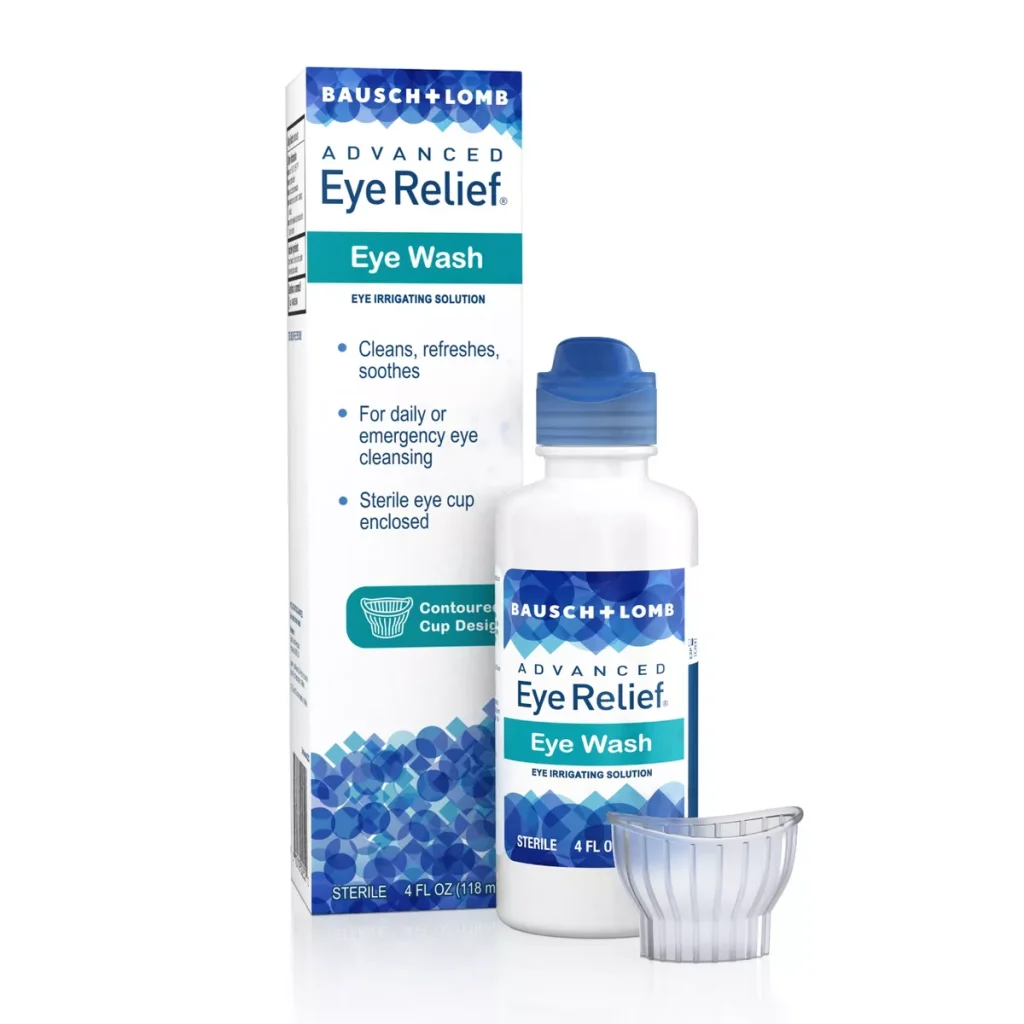
Sometimes water just isn’t enough! Warm water will not suffice in severe cases where you have been exposed to hazardous substances or chemicals. Optometrists recommend using a saline eye wash to quickly flush out these irritants and reduce the risk of long-term injury. We recommend Bausch & Lomb’s Advanced Eye Relief® Eye Wash to our patients.
2. Rest and Hydration
It may seem like an overly simple solution but sometimes, the best remedy is simply to rest your eyes. Take a break from screens and allow your eyes to recover. Staying hydrated is also important, as it helps maintain the moisture levels in your eyes.
Now that you’ve tried the non-medical options, if your bloodshot eyes are persisting, it could be an issue that requires medical attention.
3. Using Eye Drops for Red Eyes
Eye drops for inflamed eyes may provide quick relief. There are numerous types of eye drops available; choose the one that best matches your symptoms.
If you use eye drops frequently, ensure that they are preservative-free. Why does this matter? Preservatives can aggravate dryness, causing irritation and discomfort, especially in people with sensitive eyes.
When to Seek Professional Help: Signs of Serious Issues
Monitor for new symptoms and keep an eye out for any changes or worsening of existing ones. If you are experiencing severe pain, vision changes, or the redness persists, seek professional medical attention immediately.
Here are signs that it’s time to seek professional help:
- Persistent Redness: If your eyes remain bloodshot despite first-aid measures, you should see an optometrist.
- Severe Pain: Any significant discomfort or pain should be investigated to rule out serious conditions.
- Vision Changes: Any noticeable changes in your vision, including blurred vision and light sensitivity, are red flags.
- Foreign Objects: If something is stuck in your eye and you are unable to remove it, seek professional help to avoid further injury.
Ignoring these symptoms can lead to complications, so when in doubt, consult your local optometrist.
Why Our Optometry Clinic Is Here for You
When it comes to your eye health, you deserve more than just basic care; you deserve expert advice and tailored treatments. At our optometry clinic, we understand how stressful and confusing eye emergencies can be. Our experienced optometrists are committed to providing the best possible care, whether you have bloodshot eyes, a red eye, or another eye-related issue.
We provide comprehensive eye exams, emergency consultations, and tailored treatments to keep your vision and eye health in top shape. If you are experiencing discomfort or have questions about your eye health, please do not hesitate to contact us. Our friendly staff is here to help you at every stage of your eye care journey, providing solutions and peace of mind.
Ready for Expert Care?
If you have a bloodshot eye or any other type of eye emergency, remember that getting help right away can make a big difference. Contact our clinic right away to schedule an appointment or seek emergency treatment. Your eyes are precious, and we want to help you keep them healthy and clear. Don’t let eye problems bring you down; contact us and we’ll take the next step toward better eye health together.

Bloodshot Eyes FAQ
1. Why is only one of my eyes bloodshot?
A single bloodshot eye is often caused by a localized issue such as irritation, a scratched cornea, a foreign object, or an infection. If it doesn’t improve within a day or worsens, it should be evaluated.
2. Can a bloodshot eye go away on its own?
Yes, mild cases caused by dryness, fatigue, or minor irritation often resolve on their own within a few hours to a day. Persistent redness may indicate an underlying issue that needs treatment.
3. What should I avoid doing when my eye is red?
Avoid rubbing your eyes, wearing contact lenses, or using non-prescribed drops. These can worsen irritation or delay healing.
4. How do I know if my red eye is an emergency?
Seek urgent care if redness is paired with sharp pain, light sensitivity, vision changes, or if it follows a chemical exposure or injury.
5. Can rubbing your eyes make redness worse?
Yes, rubbing can further inflame blood vessels, spread bacteria, and even cause small scratches on the eye’s surface, making symptoms worse.
6. Are bloodshot eyes from screens different from infections?
Yes. Screen-related redness is typically linked to dryness and improves with rest, while infections often include discharge, swelling, or persistent irritation.
7. What type of eye drops should I not use for red eyes?
Avoid overusing “redness relief” drops that constrict blood vessels. They can cause rebound redness and make symptoms worse over time.
8. Can bloodshot eyes be caused by lack of sleep?
Yes, poor sleep can reduce tear production and increase eye strain, both of which contribute to redness and irritation.