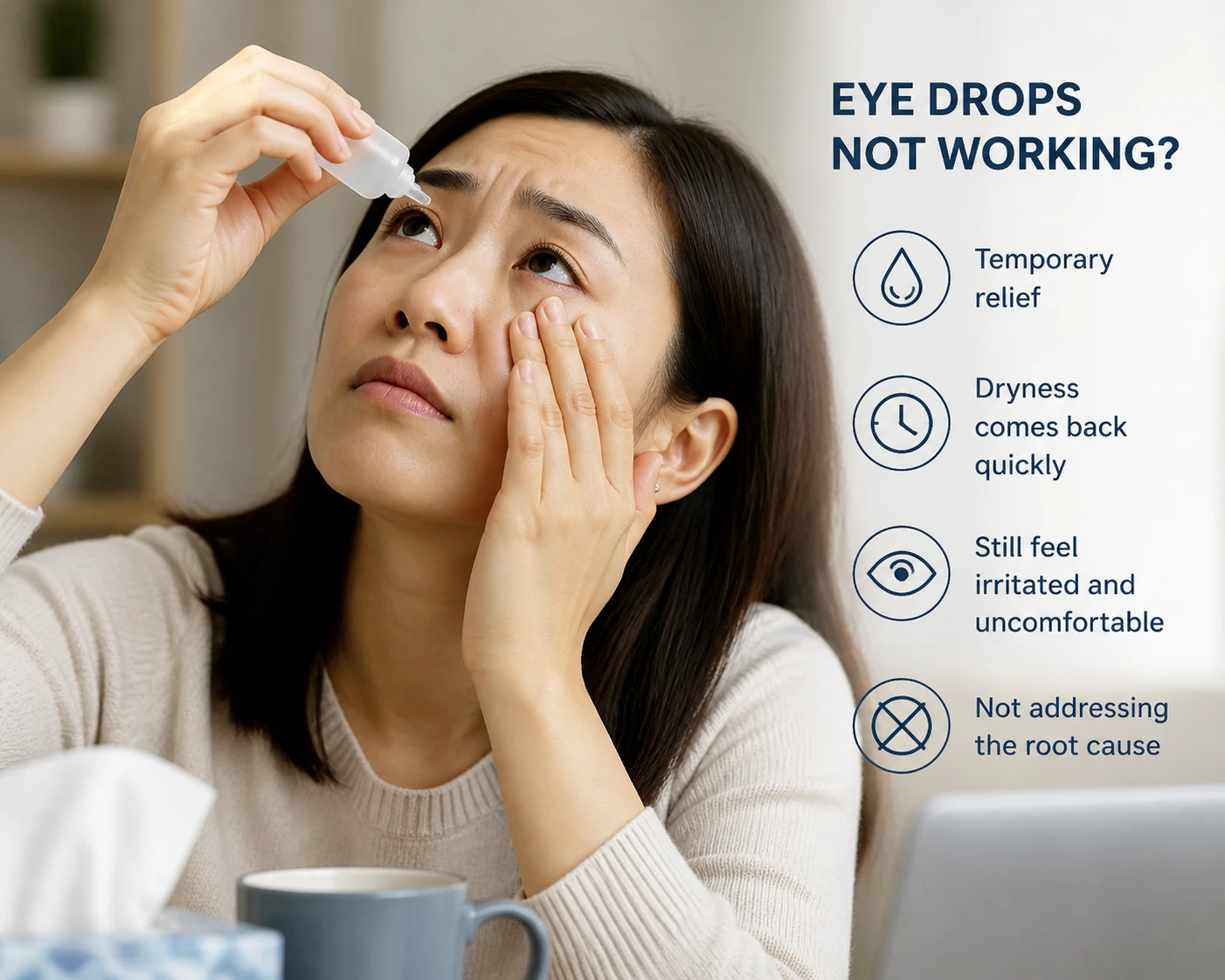
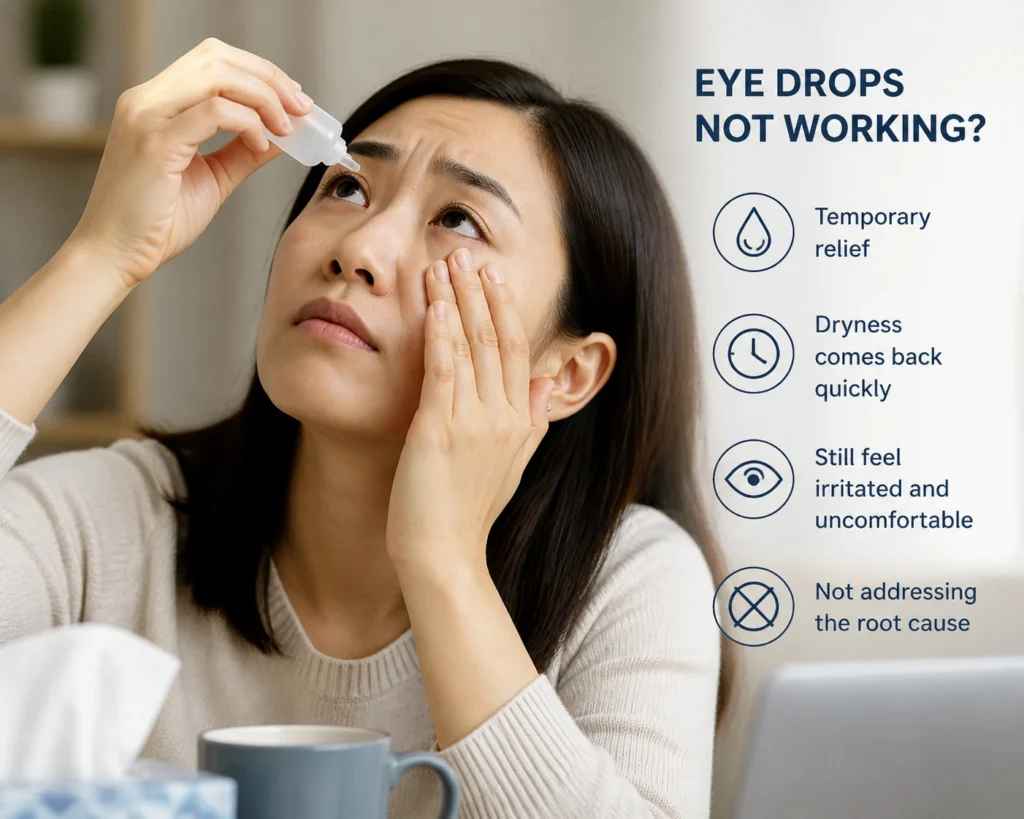
If you find yourself reaching for drops multiple times throughout the day, your eye drops, on their own, have stopped working. If you’re still dealing with dryness, irritation, or blurry vision, you’re not alone. Eye drops can provide temporary relief, but they don’t address one of the most common causes of chronic dry eye, meibomian gland dysfunction (MGD). When these meibomian glands become blocked or stop working properly, your tears evaporate too quickly, no matter how often you use drops. That’s why many people hit a point where eye drops stop working and need a different approach that targets the root cause, not just the symptoms
At a Glance
Eye drops only add moisture, they do not fix the oil layer of the tears. If relief only lasts minutes, your tears may be evaporating too fast. Fast evaporation is usually caused by Meibomian Gland Dysfunction (MGD). Treatment needs to target the oil glands, not just involve adding more drops.
- Eye drops can give quick relief, but they don’t fix the root cause of many dry eye cases.
- Most ongoing dry eye is linked to meibomian gland dysfunction, where the oil layer of your tears is poor quality or missing.
- Without healthy oil, tears evaporate too quickly, even if you use drops often.
- Signs drops aren’t enough: frequent use, short relief, blurry or fluctuating vision.
- When this happens, treatment needs to target the oil glands, not just add moisture.
- In-office options like radiofrequency (RF) gently heat the eyelids to help unblock glands and improve tear quality.
- A proper dry eye assessment can confirm the cause and guide the correct next steps.
Why Did Eye Drops Stop Working?
Eye drops can add temporary moisture, but they don’t fix problems with the oil layer of your tears. In many cases, dry eye is driven by meibomian gland dysfunction, where the glands either don’t produce enough quality oil or the oil has difficulty expressing on to the surface of the eye, to keep tears stable. If the oil layer is missing, no amount of drops can stop your tears from evaporating.
Signs You’ve Outgrown Eye Drops
- Relief only lasts a few minutes
- You still feel dryness, irritation, or burning
- Vision comes and goes or feels blurry
- Eyes water excessively, but still feel dry
- You’re using drops multiple times a day
What’s Actually Happening
When the oil glands in your eyelids become blocked or sluggish, this is often a condition called Meibomian Gland Dysfunction (MGD). These glands are responsible for releasing the oil layer that mixes in with the rest of your tears.
When that oil layer is missing or poor quality, your tears evaporate too quickly, leading to dryness, irritation, and unstable vision. This is known as evaporative dry eye, and MGD is one of the most common causes of it. At this stage, treatment needs to focus on restoring gland function, not just adding more moisture with eye drops.
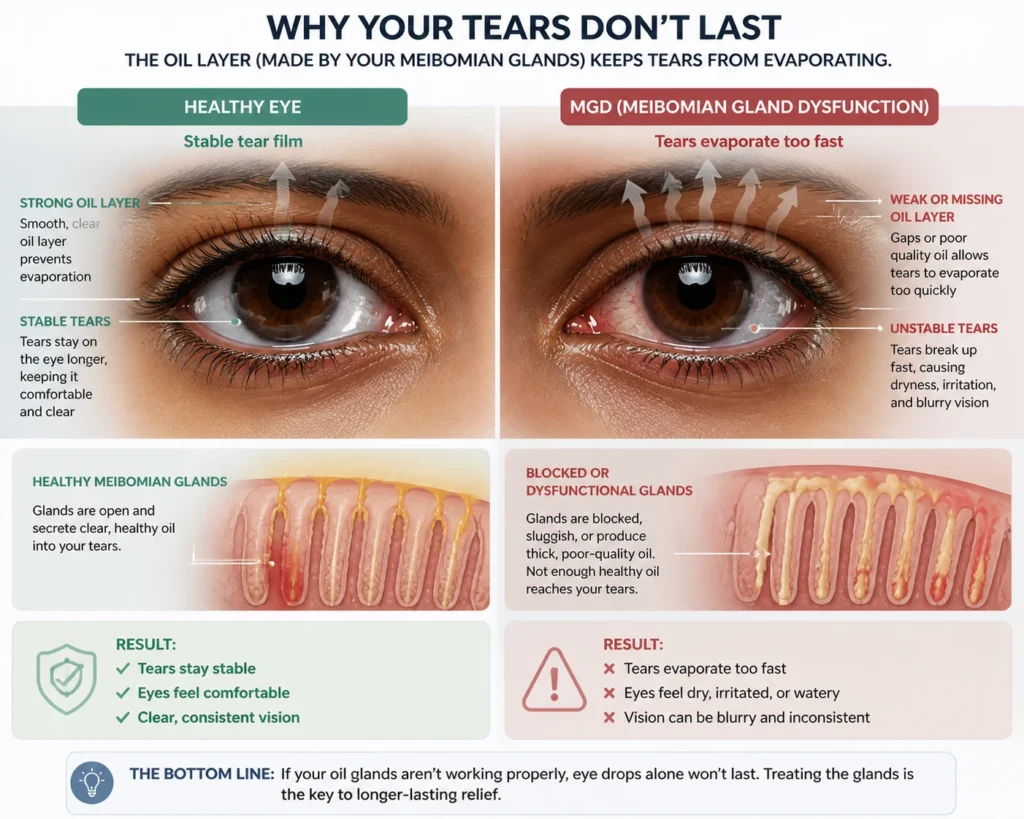
Meibomian Gland Dysfunction is one of the leading causes of evaporative dry eye, which is why treating the oil glands is key to lasting relief.
What Causes MGD?
Meibomian Gland Dysfunction happens when the tiny oil glands along your eyelids stop releasing enough healthy oil into your tears. That oil layer matters because it helps keep your tears from evaporating too quickly. When the glands are blocked, sluggish, or producing poor-quality oil, your eyes can still feel dry even after using eye drops.
This is one of the big reasons eye drops can stop feeling helpful. Drops may add moisture for a short time, but they do not always fix the oil problem underneath. If your tears evaporate too fast, the relief disappears quickly, and the dryness, burning, watering, or blurry vision comes back.
MGD can be linked to inflammation, aging, screen use, contact lens wear, eyelid hygiene issues, and other dry eye triggers. In many cases, it needs treatment that targets the glands directly, not just another bottle of artificial tears
Learn more about meibomian gland dysfunction treatmentDo I Need More (Stronger) Eye Drops?
If you feel like your eye drops only work for a few minutes, you’re not imagining it. In many cases, it’s not about needing a stronger drop, it’s about treating the right problem.
You may need more than eye drops if you notice the following:
- Relief only lasts for minutes after using drops
- You’re using drops multiple times a day
- Your eyes feel watery but are still dry or irritated
- Your vision gets blurry, then clears, then blurs again
These are common signs that your tear film isn’t stable. Instead of just lacking moisture, your eyes may be missing the oil layer that keeps tears from evaporating too quickly.
This is often linked to meibomian gland dysfunction (MGD), where the oil glands in your eyelids aren’t working properly. When that happens, eye drops can only give temporary relief because they don’t fix the underlying issue.
If this sounds familiar, it’s usually time to look beyond drops and focus on treatments that improve how your tear film actually functions.
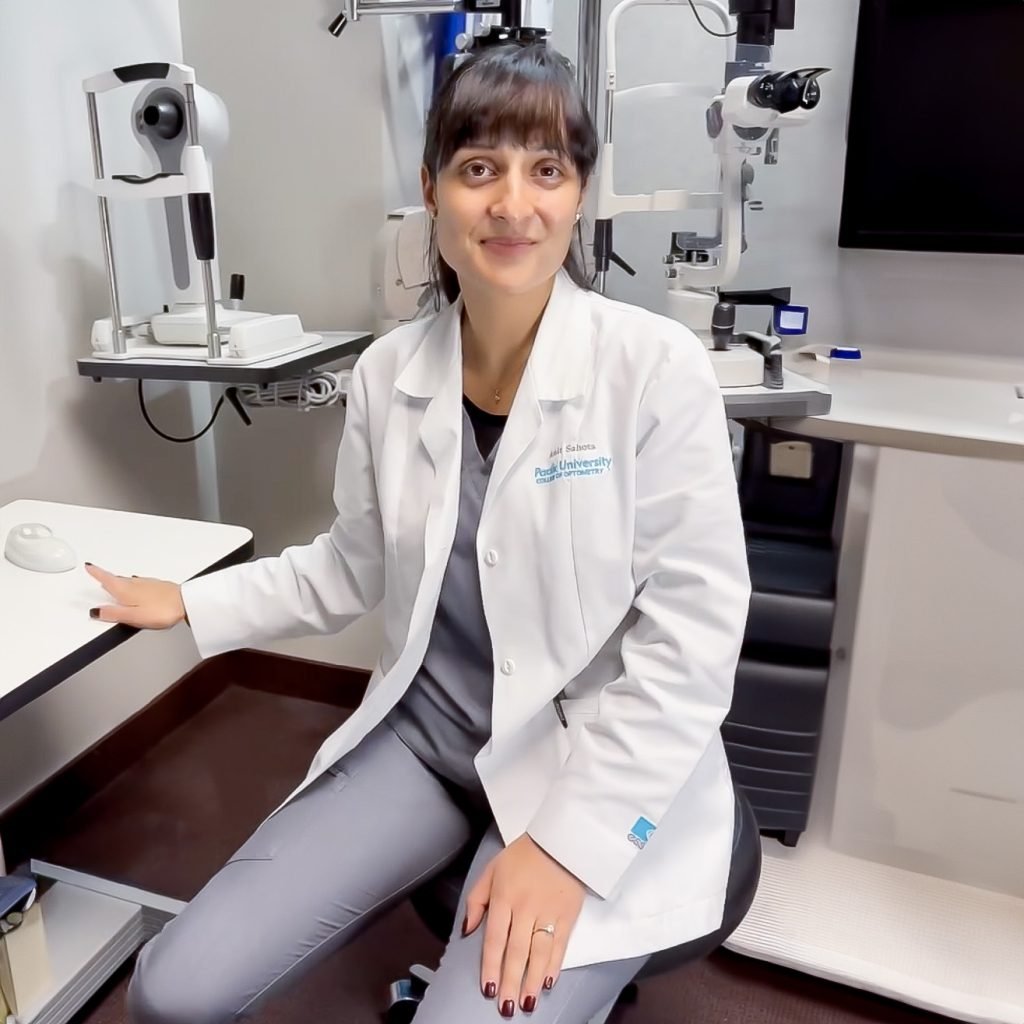
Medically Reviewed by Dr. Amit Sahota, Registered Optometrist (BSc, OD)
July 2, 2026
What Type of Dry Eyes Do I Have?
Not all dry eye is the same. There are two main types, and many people actually have a mix of both.
Why this matters:
Each type needs a different approach. If your issue is evaporation, adding more drops will not fix the root problem. The right treatment starts with identifying which type you actually have.
Evaporative Dry Eye (Most Common)
Key insight: You may have enough tears, but they are not lasting.
What’s happening: Your tears evaporate too quickly because the oil layer is poor quality or missing.
Common cause: Meibomian Gland Dysfunction (MGD)
Signs:
- Burning or stinging
- Watery eyes that still feel dry
- Blurry vision that comes and goes
Aqueous-Deficient Dry Eye
Needing drops frequently just to stay comfortable.
What’s happening: Your eyes do not produce enough tears.
Common cause: Tear gland issues or certain health conditions.
Signs:
- Constant dryness
- Gritty or scratchy feeling
Not sure which type you have? A dry eye assessment can identify whether your symptoms are caused by MGD and what treatment will actually work.
Book a Dry Eye ConsultationWhat Works Next?
Are eye drops only giving you short bursts of relief? It usually means the problem isn’t just dryness, it’s the oil layer of your tears. This is where treatment needs to shift from “adding moisture” to actually fixing how your tear film works. If MGD is the root cause, treatments like radiofrequency can help restore normal oil flow and improve tear stability.
Here’s what that progression typically looks like:
Heat helps soften and melt the thickened oil inside your eyelid glands so it can flow again. This can improve tear quality and reduce evaporation, but results depend heavily on consistency and proper technique. Good starting point, but often temporary.
Warm compressesMore controlled heat treatments go deeper and stay at therapeutic temperatures longer, helping unblock glands more effectively than a basic compress. Often paired with gland expression to physically clear blockages for short-term relief.
MGD ExpressionRF is a non-invasive treatment designed to target the root cause of evaporative dry eye.
It uses targeted heat to reach deeper into the eyelids, melting stubborn oil buildup and restoring gland function. This helps your eyes produce a healthier oil layer so tears last longer.
RF targets the root cause by improving oil flow and tear quality, rather than masking symptoms
What to Expect From RF Treatment
How it feels
RF treatment is gentle and warm, not painful. Most people describe it as a relaxing heat massage around the eyes. The goal is to safely heat the eyelids to melt blocked oil and improve gland flow. Mild redness or warmth can happen right after, but it usually settles within a day.
How many sessions
Most people need a series of treatments, often 2 to 4 sessions, spaced a few weeks apart. Each session builds on the last, helping restore healthier oil flow over time.
When results show
Some people notice improvement after the first session, but results usually build gradually. Many patients feel more comfortable after a couple of treatments as the glands start working better again. The goal is not just quick relief but longer-lasting comfort and more stable vision.
Dry Eye Treatment Near You in Burnaby
If you’re dealing with dry, irritated, or inconsistent vision, getting the right treatment close to home makes a difference. At Real Eyes Optometry in Burnaby, we focus on identifying the root cause of your dry eye, not just managing symptoms.
Located in Metrotown, our clinic is easy to access whether you’re coming from Burnaby, Vancouver, or nearby areas. With convenient free parking and everything in one place, it’s simple to fit your appointment into a busy day.
This is a good fit for you if:
- Eye drops aren’t lasting anymore
- Your eyes feel watery but still dry
- You’re dealing with blurry or fluctuating vision
- You want a long-term solution, not just temporary relief
We’ll walk you through what’s actually causing your symptoms and recommend treatments that match your eyes.

Dr. Sahota has a special interest in dry eye care and advanced in-clinic treatments, including radio frequency technology, and is known for providing thorough, personalized dry eye consultations in multiple languages.

Dr. Pati enjoys caring for patients of all ages, with a particular passion for family eye care and pediatric eye health, helping kids build strong visual habits early in life.

Dr. Wang is highly experienced in contact lens fitting, with a special focus on specialty lenses, and has helped many patients who thought they could never wear contacts comfortably.
Disclaimer: This information is for educational purposes and does not replace professional medical advice
FAQ about what to do when eye drops stop working?
Why do my eyes feel dry even right after using eye drops?
Eye drops add moisture, but if your oil glands aren’t working properly, tears evaporate too fast. That’s why relief disappears quickly.
How do I know if my dry eye is caused by oil gland dysfunction (MGD)?
Signs include watery but dry eyes, fluctuating vision, and needing drops often. These point to an unstable tear film, not just low tears.
What’s the difference between temporary relief and actually treating dry eye?
Temporary relief adds moisture. Real treatment improves tear quality and gland function so your eyes stay comfortable longer.
When should I stop relying on eye drops and consider in-office treatments?
If you’re using drops multiple times daily with minimum relief, it’s time to look deeper at the cause.
How does RF treatment improve dry eye compared to drops?
RF targets the oil glands directly, helping restore the tear film instead of just adding surface moisture.
Can watery eyes and blurry vision come from the same problem?
Yes. Poor tear stability can cause both excess watering and fluctuating blurry vision at the same time.
Will drinking more water help my dry eyes?
Drinking more water can help support your overall tear production, so it may improve mild dry eye symptoms, especially if you’re dehydrated.
However, for many people, dry eye isn’t just about not having enough tears. It’s often caused by poor tear quality, especially when the oil glands in your eyelids aren’t working properly. This leads to faster tear evaporation, so your eyes still feel dry even if you’re well hydrated.If you notice symptoms like watery eyes, burning, or blurry vision that comes and goes, hydration alone likely won’t solve the issue. These are common signs of evaporative dry eye, where tears don’t stay on the eye long enough.